Showing posts with label AllOut. Show all posts

Tuesday, 27 December 2011

2011 round up: Part two: The growth of international projects

NEW DELHI, INDIA - NOVEMBER 27:  A boy dances ...
Image by Getty Images via @daylife
By Paul Canning

I'll be rounding up the year in a series of posts - in which no doubt I've missed something, so please let me know what I've missed in the comments!

The growth of international projects

The May 17 International Day Against Homophobia and Transphobia (IDAHO), initiated by the black gay French leader Louis-Georges Tin, exploded this year with events from Lebanon to Fiji - in all over 70 countries took part.

One highlight amongst many: the presence, the voice of Burmese LGBT at events in Thailand. The spread of participation also highlighted the gaps - such as most of the Middle East and North Africa and elsewhere in Africa - as well as the almost total absence of IDAHO events in the United States.

The 'It Gets Better' project tackling bullying of LGBT teens and suicide drew large (although almost completely partisan) participation in the US but extended beyond to Finland, Canada, the UK, the EU, Malaysia, South Africa and Sweden. Diaspora Middle Eastern gays produced videos. In other countries, like the Netherlands and the UK, their own anti-bullying projects were launched with state backing.

In Africa we've seen the growth of networks (and networking) such as via the now 831-member strong International Lesbian and Gay Association (ILGA) African branch, headquartered in South Africa, as well as of other pan-African networks like Amsher, which focuses on HIV/AIDS projects for both gay men as well as men-who-have-sex-with-men (MSM). There was also new LGBT media in Africa: The news website Behind The Mask, again out of South Africa, grew with many new correspondents covering much of the continent. There are two new LGBTI magazines in Kenya, one online and another in print. In September Q-zine launched as "the pan-African voice for LGBTI and queer youth".

'Pride' and the rainbow flag became increasingly visible in India with marches seen both in new cities and more and bigger events in the biggest cities. 2011 saw increasing depictions and discussions of homosexuality in the Indian news media and by Bollywood.

The impact of international funding and organised training in Africa and elsewhere showed in more professional organising and in improved relationships with both civil society and with local media. A particular highlight is Kenya which now has scores of groups including ones in remote areas. International HIV/Aids funding began to recognise a requirement to fund gay/MSM local projects and to oppose the criminalisation of homosexuality because of its impact on HIV/Aids prevention, however 2012 will likely see a setback with the announcement of a funding crisis at the biggest funder, the Global Fund.

Organised religious support for LGBT rights in Africa also grew, particularly marked by the work of the group Other Sheep, and the international activism of Anglican Bishop Christopher Senyonjo, from Uganda.

The international LGBT-specific 'clictivism' project allout.org grew to over a million members, highlighting the core role of the Web and social media in LGBT activism everywhere, but also the flip-side of activism's susceptibility to monitoring and crackdown - as has been tried in Turkey.

Earlier this month the United States announced that it was embedding international LGBT human rights engagement throughout government, including creating a new fund for grass-roots projects and directing that anti-discrimination be encouraged from USAID contractors. This announcement builds on earlier efforts, mainly of some European governments like the Dutch, who announced this year the creation of a huge fund for MSM/gay HIV/Aids projects that will help isolated communities, mainly in Africa.

In a development which will have long term implications, the Inter-American Commission on Human Rights (IACHR), which covers Latin America and the Caribbean, set up an LGBT rights unit.
Enhanced by Zemanta

Thursday, 24 November 2011

Western leaders condemn Russian 'gay propoganda' law

Arrest of Nikolai Alekseev at St Petersberg Pride in June 2011
By Paul Canning

Both the British and the American governments have condemned Russia's 'gay propaganda' law.

The law, which has been rushed through the St. Petersburg Legislative Assembly, prohibits so-called propaganda of ‘sodomy, lesbianism, bisexualism and transgenderism, and pedophilia to minors.’ It passed second reading this week but lawmakers have delayed the third reading until 30 November, according to a video statement by Russian lesbian leader Polina Savchenko.

The bill was introduced by Vladimir Putin’s ruling United Russia party and the same law is reportedly being considered by the Moscow region and also federally. It is broadly written, so could potentially ban wearing a rainbow flag badge or even a public presentation about or concert of music by the gay Russian composer Tchaikovsky where his sexuality was mentioned. It also deliberately conflates homosexuality and paedophilia, as have its proponents.

The UK Foreign Office and the US State department condemnations are unusual. Both been been condemned by Russian activists for a perceived acquiescence to Russian anti-gay actions.

Although the State Department did issue a statement after this year's Moscow Pride demonstration was banned and a number of people arrested, including two Americans, they had said nothing about previous Moscow Pride bans, said nothing when leader Nikolai Alekseev was kidnapped last year and when Hillary Clinton visited Moscow in 2009 to unveil a statue of the gay American poet Walt Whitman activists had then appealed to her to use the opportunity to support LGBT rights in Russia - she didn't.

The organizers of St Petersburg Pride asked the US Consulate in St. Petersburg last year to help by screening the documentary, Beyond Gay, the Politics of Pride, which features the differences between several Gay Prides around the world. The Americans refused, and the excuse was:
“We cannot show a Canadian documentary in the US consulate.”
The State Department made no statement following the banning and subsequent arrests at the St Petersberg Pride demonstration in June this year.

The UK Foreign Office said:
The message of this law, that homosexuality is unacceptable, let alone in any way similar to a crime like paedophilia, is wrong.  It goes against European and Russian commitments to human rights, including the guarantee of non-discrimination set out in the European Convention on Human Rights.

The idea that children need protecting from ‘gay propaganda’ is also mistaken.  In the UK we have also had discussions about how to teach children about sex and relationships.  But as Prime Minister Cameron said in 2010  - ‘We need good sex and relationship education. That education should teach people about equality and the sort of country we are – that we treat people the same whether they are straight or gay, or black or white or a man or a woman. It is important that ethos is embedded in our schooling’.
The UK has assumed the Chairmanship of the Council of Europe, which includes Russia, and says that the law will be raised both by the Consulate General in St Petersburg and at the next EU-Russia consultations later this month.

The UK has also initiated condemnatory joint letters from 12 European countries to authorities in St Petersberg.
"The United States places great importance on combating discrimination against the LGBT community and all minority groups," the State Department said. 
"Gay rights are human rights and human rights are gay rights."
Lance Price, Director of the UK-based international LGBT group Kaleidoscope Trust, said that he believed that international pressure on the authorities is working.
"We hope that our government, in conjunction with others around the world, will maintain the pressure," he said.
Nikolai Alexseyev called for pressure on the European Court of Human Rights to speed up consideration of the complaint before the court regarding the first 'gay propaganda' law, in the Ruzlan region.

Interviewed by Doug Ireland in August last year regarding the attitude of foreign governments to supporting Russian LGBT activists, Alekseev said that Russia prior to 9/11 was often criticised internationally for human rights abuses but after, not so much:
"You know, if tomorrow the Kremlin starts to put us in jail, do you think someone will care? Does someone care when human rights activists are arrested? Not anymore. They used to care," said Alekseev. 
"Europeans have experienced the collateral damages of the fight between Russia and Ukraine on the issue of imported natural gas. When Russia switched off the gas to Ukraine, Western Europe started to be cold as well. The Europeans understand that they have limited margin of maneuver with Russia... Human rights activists in Russia are the hostages of this geopolitics. And I am including us in that pot," he said.
Savchenko said of the delayed third vote on the St Petersberg bill:
"This victory is a very small step. The threat to the LGBT community and human rights remains very real and there is still a very long way to go. This delay by lawmakers wins us time to CONTINUE TO PRESSURE our government. We ask you to continue your support by:
  • Requesting your leaders to contact our politicians and speak out against this law
  • Requesting your mass media to cover the issue and approach our politicians for comments
  • Signing the petition on AllOut (www.allout.org/russia_silenced)"
AllOut.org Co-Founder Andre Banks said that their petition, which is directed at world leaders and being used to lobby foreign ministries, was nearing 200,000 signatures:
"It's moments like these that highlight exactly why we launched All Out just under a year ago: to stand with our friends around the world when they’re under attack, and to keep opportunistic governments from playing politics with fundamental rights," he said.
Enhanced by Zemanta

Saturday, 5 November 2011

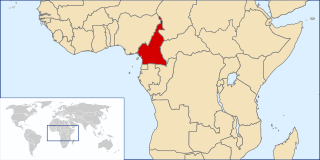
Cameroon: Police Crackdown and Increased Violence


By F Young

At least ten men have been arrested and imprisoned for homosexuality in Cameroon so far this year. Not only for what they do, but for who they are, or even appear to be.

“We are receiving an increasing number of reports that individuals are being targeted not only because of their sexual behaviour, which is the subject of these discriminatory laws, but because of their real or perceived sexual orientation or gender identity. This use of criminal law to punish identities, as well as behaviours, is deeply concerning,” said Salil Shetty of Amnesty International in a statement issued on Sept. 26.

“We have received information that at least some of these men were subjected to torture or other ill-treatment while in custody,” said Kenneth Roth of Human Rights Watch in the same statement.

According to the Amnesty International website, "Homophobia is endemic in Cameroonian society and even the National Human Rights Commission refuses to recognise and defend the rights of lesbian, gay, bisexual and transgender (LGBT) people. Arrests, prosecutions and trials of gay men occur on a regular basis."

A police crackdown is not the only problem. There was a surge in anti-LGBT violence in early September.

"In the last two weeks violence against gay people in Cameroon has skyrocketed to unprecedented levels: the situation is quickly becoming a crisis," said Alice Nkom, one of the few lawyers willing to defend LGBT clients, in a letter posted online on Sept. 15. "I've heard countless recent stories of homophobic violence throughout the country," she adds. "I'm 66, and in ten years of defending lesbian, gay, bi and trans (LGBT) people in Cameroon, it has never been this bad"

There have been reports of at least two attempts to burn gay men in Cameroon this year, on Jan. 28 and May 14.

In Cameroon. adult consensual gay and lesbian sex is punishable with a fine and up to five years in jail. A proposed reform would increase the prison term to 8 years when it involves a person between the ages of 16 and 21 and 15 years, and to 15 years when it involves sex with minors under 16.

In mid-September, Nkom launched an international online petition against homophobia in Cameroon. On Oct 10, she said the online petition already had an impact; the government knows that the world is watching. So far, the petition has been signed by over 61,000 people, but Nkom is seeking 100,000 supporters.

Cameroon is a member of the Commonwealth, but the majority of its population speaks French. Its 19 million inhabitants are 70% Christian, with significant Muslim and animist minorities.

Wednesday, 2 November 2011

AllOut.org launching #WeAreNotIllegal blog: Invitation to submit photos / testimonials

By Joseph Huff-Hannon

On the heels of our campaign supporting Commonwealth Secretary General Kamalesh Sharma's call for decriminalization across ALL commonwealth countries (www.allout.org/wearenotillegal), All Out is working on a new project to highlight the personal stories of those who live in the 75+ countries around the world that criminalize LGBT relationships.

It's a new photo blog called #WeAreNotIllegal, and is in part inspired by the hundreds of moving, first person testimonials we received from All Out members around the world in the course of this campaign.

We've figured out a way to do this that will protect everybody's identity -- but that still display these stories in a simple and powerful way (see photo submission from one of our members in Malaysia).

It is similar in style to the new "We are the 99%" blog recently created as part of the "Occupy Wall Street" movement in the U.S. (http://wearethe99percent.tumblr.com/) -- where people write a testimonial on a piece of paper, hold it up against their face, and take a picture of it. This 99% blog has attracted media attention around the world -- because it allows people to tell their personal stories of dealing with the extreme economic inequality and injustice in the United States.

By using the same format to share first-person stories of those of us living with these colonial era laws -- we think it will be a powerful story-telling platform, a way to personalize this issue, and to give energy to the long-term fight to scrap these laws all over the world.

If you live in one of the 75+ countries where these archaic criminalization laws are still on the books and would like to share your story with the world, here are the three easy steps:
  1. Write a testimonial on a piece of paper, telling how criminalization effects you, and why these laws need to be eliminated. At the bottom of every testimonial, please write #WeAreNotIllegal. Anybody can do this -- LGBT, straight ally, friend, family, health care provider, everybody welcome.
  2. Take a picture of yourself holding up your statement. You can use the statement to cover up as much of your face as you want, to protect your identity as needed.
  3. Email that image to wearenotillegal@allout.org (or to me directly at joseph@allout.org). Please include your first name (or "anonymous" if you prefer), your country, and your permission for us to post this image to the "We Are Not Illegal" blog. We will launch the blog later this week, and use it to draw the world media's attention to the impacts on millions of us around the world of these colonial era laws.
Thank you so much and you have any questions, please feel free to write me directly!
Enhanced by Zemanta

Monday, 10 October 2011

Does the world care about gays in Cameroon?

Me Alice NkomN'Kom image via Wikipedia
By Paul Canning

Two men arrested in August in Cameroon for looking effeminate and who reportedly "confessed" to homosexuality after being tortured are being defended today 10 October in court by the legendary Cameroonian LGBT human rights defender Alice N'Kom.

This morning she sent out a message:
"I'm about to walk into a courtroom in downtown Yaoundé to defend Jonas, 19 and Franky, 20 - two Cameroonian boys arrested last July for the "crime" of being gay."
"It's going to be a tough one, but I've never felt so strong: I know I have your support and 55,000 people behind me."
N'Kom is referring to a petition by allout.org. A third man was arrested with Jonas and Franky but bailed, according to the Cameroon LGBT group Association for Defense of Homosexuality (ADEFHO), "thanks largely to his money". N'Kom continues:
"Your efforts are having an immediate impact. My cell phone has been ringing non-stop with everyone from diplomats to human rights organizations and high profile media telling me that they are now paying attention to the crisis here. Also, I just heard that today's case is being closely monitored at the highest levels of our government. The Ministry of Justice knows the world is watching and that Cameroon's reputation is at stake."
"This is really positive - but many of the people arrested because they are gay are still in jail, and the violence is ongoing. We need to show the authorities that we will not stop until everyone is released, and until homosexuality is no longer criminalized under Cameroon's laws."
At least ten men have been arrested and imprisoned for homosexuality in Cameroon so far this year. Roger Jean Claude Mbede is one imprisoned in Yaoundé Central Prison (Kondengui) for homosexuality. According to Alternatives-Cameroun he is suffering in a state of deplorable health and lack of food with his left eye without treatment or medications.
"He told us he slept on the ground since his imprisonment, and is abandoned by most of his family members who regard  him as a wizard," they said.
Amnesty International is running an international campaign demanding Mbede's release.

A proposed revision to Cameroon's criminal code will equate homosexuality with pedophilia, according to activists.

Two new by-laws punish homosexual acts on minors between 16 and 21 years of age to eight years in jail with 10-15 year terms available for acts committed on minors younger than 16, activist Stéphane Koche told AFP.

Although 55,000 is a lot the number pales in comparison to other international petitions. So N'Kom is asking for further support and to push the petition numbers over 100,000. Supporters can send a message via Facebook or Twitter. Another option is to tweet to President Biya's account.

Cameroon is a member of the Commonwealth, one of only two non-former British colonies to join.

There is a major campaign to get the issue of homosexuality and HIV/Aids onto the agenda of the Commonwealth leaders summit in Perth, Australia, from 28-30 October. Laws like Cameroon's stop people who are at greater risk of HIV from accessing key prevention services and life-saving treatment services. As a result more people are infected and ultimately more people will die.


Enhanced by Zemanta

Friday, 16 September 2011

Cameroon: Jailed for Texting? Major new campaign launched

Me Alice NkomAlice N'Kom image via Wikipedia
By Alice N'Kom

My name is Alice N'Kom, and here in Cameroon I am one of the only attorneys who defends people who've been jailed because they are gay.

In the last two weeks violence against gay people in Cameroon has skyrocketed to unprecedented levels: the situation is quickly becoming a crisis. The president of Cameroon can put a stop to this, and if he feels enough pressure he will do so.

I'm watching police in Cameroon conduct an anti-gay crackdown - over 10 people have been arrested on charges of "homosexuality" in the last month. One of them, Jean-Claude, has been sentenced to three years in prison merely for sending a text message to another man.

I've heard countless recent stories of homophobic violence throughout the country. I'm 66, and in ten years of defending lesbian, gay, bi and trans (LGBT) people in Cameroon, it has never been this bad.

Only one person can put an end to this gay bashing - President Paul Biya. He can stop the escalating crisis of homophobic roundups and attacks, and he can immediately release those still in prison and call for the end of Cameroon's laws against homosexuality.

Time is running out. I'm headed to Cameroon's capital, Yaoundé, to confront the President with these demands. He will not be able to ignore a powerful outcry from every corner of the globe. I am counting on your help.


Alice N'Kom is a Cameroonian attorney, founder of the Association for the Defense of LGBT Rights in Cameroon (ADEFHO). This appeal letter was written in partnership with Alternatives-Cameroun.

Enhanced by Zemanta

Monday, 12 September 2011

FIFA to investigate homophobic Nigerian women's football coach

No lesbians here
By Paul Canning

The Federation of International Football Associations (FIFA) say they have opened an investigation into homophobic comments made by Nigerian football coach Eucharia Uche.

In June we reported how Coach Uche, the former Nigeria Football Federation (NFF) technical assistant Sir James Peters, and the NFF's Chief Media Officer, Ademola Olajire, had all bragged to a Nigerian newspaper about driving lesbians out of the women's team.
"When I was drafted to work with the Falcons last year, I decamped some of the players, not because they were not good players, but because they were lesbians. It did not go down well with some of the players because we made sure that neither the 'husband' nor the 'wife' made the team,” Peters said.
"We have seen the result of our efforts and I can tell you that lesbianism is now a thing of the past in the camp of the Super Falcons [the team's nickname]," said Uche.
The controversy over the banning of lesbians from Nigeria's women's football team dominated coverage of their bid for the World Cup in Germany in June.

Uche told media covering the Cup that it was all a misunderstanding, saying "I'm sorry that such a situation has arisen. I've never made such statements."

Speaking to German television channel ARD during the Cup, Tatjana Haenni, FIFA's head of women's competitions, said that "FIFA is against all forms of discrimination." Haenni said FIFA would be talking to Uche about her comments and reminding the coach of the governing bodies statutes.

The investigation is promised in a letter from FIFA 5 September to the International Association of Gay and Lesbian Football (Iglfa), the Federation of Gay Games and the campaigning organisation AllOut.org.

Andre Banks of Allout.org, who led a campaign for action against homophobia in women's football which generated a 46,000 petition and protests during the Women's World Cup in Germany, said they were ""excited to see FIFA take a first, critical step."
"By launching an immediate probe into coach Uche's homophobic statements, the international governing body of soccer is sending a clear and important message: homophobia has no place in football, on or off the field."
FIFA has earlier been heavily criticised for awarding the Men's Word Cup to Qatar, where homosexuality is illegal.

Last month a leading French activist urged the French government and French Football Federation to seek "a specific intervention" with 2022 World Cup hosts Qatar "so that this country decriminalise homosexuality and put an end to discrimination suffered by people living with AIDS."
Enhanced by Zemanta

Monday, 1 August 2011

Facebook targeted in campaign to respect gender identities


Source: AllOut.org

AllOut.org, a global campaign organization dedicated to lesbian, gay, bisexual, and transgender (LGBT) equality, this week launched a campaign asking Facebook to stop  limiting its users' choice of gender identity to only male or female, while urging the social networking giant to add transgender options to its user profiles. With Google+ now offering its growing membership a third option for gender, AllOut.org is encouraging Facebook, the world’s second most popular website, to keep up with its newest competitor, Google+.

As part of the campaign, five AllOut.org members from around the world explain why Facebooks current sign up choices aren’t fully inclusive or respectful of their gender identity: See www.allout.org/facebook
"The right to an online identity is something that most of us have come to take for granted, yet there are millions of people in every part of the world who are denied the right to be themselves simply because they don’t fit into the “male” or “female” checkboxes,” said Andre Banks of AllOut.org. “The change we’re asking for is easy, and it’s the right thing to do."
In recent years, millions of transgender people around the world have gained increased respect and recognition. Countries such as Nepal, India and Pakistan have even expanded gender options on state documents to officially recognize transgender identities.
“I am proud to say that the highest court of Nepal has recognized the rights of transgender people to identity documents,” said Sunil Pant, the first openly gay member of Nepal’s Parliament.  “Now, it’s time for Facebook, one of the most influential companies in the world, to become a vehicle, not a roadblock to the worldwide recognition of transgender people.”
Facebook's extraordinary global reach, spanning 750 million members and cutting across every country and culture in the world, puts it in a unique position to influence attitudes and promote acceptance.

Thursday, 14 July 2011

Video: Protest continues on Nigerian football homophobia

Source:


A flashmob was held in Frankfurt, Germany yesterday before the opening whistle of the FIFA Women’s World Cup semi-final calling "loudly against discrimination" in protest at the banning of lesbians from Nigeria's women's football team.

The controversy began with a report in a Nigerian newspaper which was subsequently covered by the New York Times. In the report Nigeria Coach Eucharia Uche, the former NFF technical assistant Sir James Peters, and the Nigeria Football Federation (NFF)'s Chief Media Officer, Ademola Olajire, had all bragged to a Nigerian newspaper about driving lesbians out of the women's team.

45,000 people have signed a petition organised by allout.org. They say that FIFA has dodged the reports of homophobia in the Nigerian team with a bland statement broadly denouncing "discrimination" without mentioning homophobia explicitly or the specific allegations against Nigeria's coach.

Before leaving Germany Uche denied making the statements she'd been reported as making.

Friday, 24 June 2011

FIFA targeted after news of ban on lesbian football players

By Paul Canning

The International Gay and Lesbian Football Association (IGLFA), the Federation of Gay Games (FGG) with AllOut.org, a community of 500,000 people in every country in the world, have launched a campaign calling on football's governing body FIFA to pull out the "red card" on a homophobic witch-hunt of the Nigerian women's football team.

The campaign calls on FIFA to live up to its own ethics guidelines, and publicly condemn the systematic homophobic discrimination by the Nigerian soccer league.

On Wednesday we reported how Coach Eucharia Uche, the former NFF technical assistant Sir James Peters, and the Nigeria Football Federation (NFF)'s Chief Media Officer, Ademola Olajire, had all bragged to a Nigerian newspaper about driving lesbians out of the women's team.
"When I was drafted to work with the Falcons last year, I decamped some of the players, not because they were not good players, but because they were lesbians. It did not go down well with some of the players because we made sure that neither the 'husband' nor the 'wife' made the team,” Peters said.
"We have seen the result of our efforts and I can tell you that lesbianism is now a thing of the past in the camp of the Super Falcons [the team's nickname]," said Uche
The campaign is asking FIFA president Joseph 'Seph' Blatter to:
"Play by FIFAs own rules, and investigate the harassment and termination of players “suspected” of being gay. Blatter needs to condemn this blatant discrimination, as well as make moves to include sexual orientation and gender identity into FIFA’s anti-discrimination policy."
“FIFA has a truly admirable track record of challenging racism and discrimination,” says Andre Banks, co-founder of AllOut.org.
“Now it’s time to bring soccer in to the 21st century. FIFA can use its hard-earned moral authority to make sure that homophobia also no longer has a place on the playing field.”
"Like anyone else, LGBT people have the right to participate in sport without fear of discrimination on the grounds of sexual orientation and gender identity," says Mr Rowland Jide Macaulay, Co-Chair of Pan Africa ILGA (International Lesbian & Gay Association).
"We condemn the action of the Nigerian Football Association in its attempt to bring hatred to the passionate games of football."
FIFA has run a global “Say No to Racism” campaign and in its mission statement states a desire to use the game in, “overcoming social and cultural obstacles for women with the ultimate aim of improving women’s standing in society.”

“Sport can be, must be, a power for good. We must make sure that every athlete has the right to be part of sport’s mission for a better world, regardless of sex, race, religion or sexual orientation,” says Klaus Heusslein, Co-President of IGLFA.
“The right to participate in sport is a human right, a right for everybody, for all Nigerians, for all women, for all whomever they love.”
“The truest values of sport are those of sport for all. This means sport in which everyone is welcome and everyone is safe, whatever their sexual identity and sexual orientation,” says Emy Ritt, co-president of the FGG.
“The actions of the Nigerian team are contrary to our values of participation, inclusion and personal best for all, which should be the values of FIFA and sportspeople everywhere.”
FIFA has earlier been heavily criticised for awarding the Men's Word Cup to Qatar, where homosexuality is illegal.

The Women’s World Cup competition opens this weekend with a kick-off game between Nigeria and France, followed by a Nigeria vs Germany game 30 June.

Enhanced by Zemanta

Thursday, 16 June 2011

Major campaign launched for LGBT asylum seekers in UK, call for their removal from 'fast track' to removal

Eddy Cosmas (centre) at NUS LGBT conference
By Paul Canning

Two major progressive campaigning groups have jointly launched a campaign on the treatment of LGBT asylum seekers by the UK.

The campaign by the US-based international group allout.org and the British group 38 Degrees calls for the release of Tanzanian gay asylum seeker Edson 'Eddy' Cosmas and the removal of all sexuality based asylum claims from the 'fast track' system.
The group Movement for Justice, of which Eddy is a member, have been campaigning for him for several weeks.

As we have been documenting, Eddy has been told by an immigration judge that there is no risk for gay men in Tanzania.

Eddy told allout.org by phone from the Harmondsworth detention centre:
"Of course I’m in danger there in my country, They know who I am. They’ll arrest me when I get back there."
'Detained fast track' was introduced over a decade ago to deal with rocketing asylum claims and a large backlog of cases. It is all about removing people as quickly as possible because they're supposed to have no real claim - but we already know that the vast majority of sexuality-based claims are being rejected when first examined, meaning that probably most of them end up in 'fast track'.

In their May report 'Fast track to despair', reproduced below, Detention Action said:
"Our research suggests that the Detained Fast Track system is structured to the maximum disadvantage of asylum-seekers at every stage. Conditions and timescales operate to make it impossible for many asylum-seekers to understand or actively engage with the asylum process. Yet this system is entirely unnecessary, as the circumstances it was designed to address no longer exist."'
Fast track' leads to LGBT who may have been tortured and abused being automatically detained, often with fellow countrymen or women who continue that abuse. Yet earlier this year the government rejected a request that because their claims are always complex they, as a group, should be excluded from 'fast track'.

Because of a shortage of lawyers experienced with LGBT cases, charities like UK Lesbian and Gay Immigration Group (UKLGIG) who are stretched and because of the pressure of time in 'fast tracked’ cases, the sort of complex work which needs to be done to present - and win - a case very often simply does not happen.

Eddy Cosmas is 'lucky' because his case has drawn attention. There are many other LGBT asylum seekers whose cases are not known and face being removed - breaking the government's promise - to danger. This has already happened with those from dangerous countries like Uganda, Nigeria and Jamaica.

UKLGIG in their landmark report last year described the Home Office as "cruel and discriminatory." Stonewall's report last year had 21 recommendations for changes to make the system fair for LGBT - only three have been addressed.

Removing LGBT asylum cases from ‘fast track’ would be a real step towards meeting that government promise.

Fast Track to Despair
Enhanced by Zemanta

Monday, 9 May 2011

World acts to stop Uganda's 'kill the gays' bill

President Yoweri Kaguta Museveni of Uganda at ...Yoweri Musceveni image via Wikipedia  
By Paul Canning

This post will be updated

As we reported on Friday, the Ugandan Parliament is currently discussing the infamous Anti-Homosexuality 'kill the gays' bill and it may come to a vote this week.

Committee hearings continue today on it. We understand that no critics of the bill have been called to testify.

Update, May 10: Warren Throckmorton reports that the bill is on the Parliament agenda for Wednesday 11 May. Jim Burroway explains the reasons why we can expect that the bill may well come to a vote, such as Bahati's political influence.

The death penalty IS in the bill. Amendments could be offered to remove it tomorrow. Update: Throckmorton quotes a Parliament PR officer saying that changes have been made to the bill:“They found a few things to remove here and there that were extreme, but I don’t know exactly which ones.” Update: Bahati tells Throckmorton that the committee report will recommend the removal of the death penalty and the attempted homosexuality planks. The sentence for homosexuality will be reduced from life but he did not say to what – Martin Ssempa has previously suggested 7-20 years.
 
Update: Warren Throckmorton quotes Brian Nkoyooyo that:
Human Rights Commission, Sexual Minorities Uganda and the Coalition on Human Rights presented testimony in opposition to the bill. The hearings are still being held, although he did not know who else intended to testify. He was not sure if hearings would take place tomorrow but believed that the bill could come to the Parliament for discussion by Wednesday.
Update: Warren Throckmorton reports that the bill coming to a vote appears to hinge on the completion of the committee report by the Committee Chair and the willingness of the Parliament's Speaker to bring it to the floor on Wednesday.
If this does not happen, the Speaker would have to call the MPs together sometime during the festivities of the Presidential inauguration and the swearing in of the new Parliament on the 18th.
Update: AP have reported and quote Stephen Tashobya, the head of the parliament committee, saying that the bill should be prioritised.
"Due to public demand the committee has decided to deal with bill," Tashobya said. "The bill has generated a lot of interest from members of the public and members of parliament and that is why we spared some time deal with before this parliament ends."
Update: San Diego Gay and Lesbian News interviews Bishop Christopher Senyonjo, former Ugandan Anglican Bishop and longstanding friend of that country's embattled LGBT. He spoke at today's Committee hearing and believes that the bill will be passed.
When the bishop spoke at the hearing, one of the parliamentarians thought that he was going to support the bill and was surprised to hear him opposing it.

“I am not advocating for the LGBT community,” Bishop Christopher told the astonished member. “I am just dealing with reality.”
The bishop spoke specifically to the effect that criminalization of homosexuality has on access to information about HIV and AIDS, prevention and care.

“If we criminalize the LGBT community further, it will drive Ugandans further underground and compromise the relationship of medical, counselors and clergy that is sacrosanct and needs to remain confidential,” the bishop said. “How can we expect doctors to treat everyone when this bill will require them to report on their patients who are LGBT?”
Update: Audio of today's hearing has been uploaded by 'spiralx' (HT: Bombastic Kasha):


Check this out on Chirbit

Update: The 31 member Ugandan Civil Society Coalition on Human Rights and Constitutional Law has issued a press release which is headed 'Is Uganda’s “Kill the Gays” Bill being used to blind the world?'
"Speculation is rife that the Bill, once believed to have been permanently shelved by Cabinet in light of its many absurdities, is being used to blind the world to everything else that is going on in Uganda."
As we reported on Friday, the blogger GayUganda suggested that the bill's revival was related to the mass protests currently going on in Uganda against price rises and human rights abuses.

They add that:
The Coalition has been reliably informed that attempts have been made to find a ‘win win situation’ which protects both National and International interests by amending those portions of the Bill which are most offensive to international best practice. We also hear that Honorable Bahati, has proposed a number of amendments to his original Bill.

As a Coalition we do not believe that there is any conflict between national and international perspectives on the failings of the original Bill, nor do we believe that amendments in any way offer an acceptable way forward; while the wording may change, the intention of an Anti-Homosexuality Bill will remain the same: to Kill the Gays. We therefore reject the original Bill, together with any attempts to amend it, in their entirety.  
An appeal from the international LGBT campaigning organisation allout.org notes that:
"While some conservative members of parliament have staked their political careers on this bill, Ugandan President, Yoweri Museveni has shown himself to be sensitive to international pressure. Last year, a massive response from people around the world pushed him to stop the bill in its tracks."
Update: allout.org's petition has topped 100,000 signatures in 15 hours. A number of celebrities 'retweeted' it including Sarah Brown and Stephen Fry.

Update, 10 May: the massive international activist group Avaaz has now released its own petition with an aim for one million signatures.It passed half a million in four hours.

The sensitivity allout notes may increase with the knowledge that the US government has moved increasingly to tie aid to human rights, including LGBT human rights. The US Treasury Secretary, Timothy Geitner, last month indicated that the US will use its influence in world bodies which provide Uganda with a big chunk of its budget. Already Germany has stopped aid to Malawi following anti-gay moves, including criminalising lesbians, in that country and funding for a huge infrastructure project only went ahead after reassurances on human rights from Malawi's government. The European Parliament passed a resolution 16 December 2009 against the bill, which threatens to cut financial aid to Uganda.

We understand that representatives from the US Embassy have been attending the bill's committee hearings and that the British Foreign Office as well as other embassies are closely watching developments.

A group of Italian radical MPs, the country's LGBT group Arcigay and Everyone Group are petitioning that country's Foreign Minister. The group are also petitioning UNHCR to "provide support to homosexual refugees if the unjust law is passed as it would lead to a tragic exodus."

The UNHCR is currently going through a serious and in depth process to look after the needs of LGBTI refugees, which includes an ability to provide for expedited resettlement. However these changes will take some time to implement. We have reported on how the Hebrew Immigrant Aid Society has resettled a Ugandan refugee from Kenya and at the beginning of this year the Organization for Refuge Asylum & Migration (Oram) resettled a Ugandan refugee in San Francisco, the first in a new programme. However we have also reported on how delays at the Canadian mission in Nairobi is making Canadian resettlement for Ugandan LGBT refugees "unrealistic".

Update, 10 May: The bill had not received much media attention within Uganda, bar one brief mention on TV. Frank Mugisha reports that this has changed:
"Anti gay Pastor Sempa on UBC TV promoting kill the gays bill accusing NGOs including amnesty for promoting homosexuality,oh God he is lying that we where asking for marraige & pride marches at parliament but Sempa !"
The Civil Society Coalition statement was published 10 May in the New Vision newspaper.
Enhanced by Zemanta

Tuesday, 19 April 2011

Online, international LGBT activism steps up

PhotonQ- The World Neuro Net of Joel de RosnayImage by PhOtOnQuAnTiQuE via Flickr
Source: Campus Progress

By Jessica Mowles

In January the world mourned the death of David Kato, a prominent Ugandan LGBTQ rights activist. Social media deeply shaped Kato’s life and death. His name first became known when Ugandan magazine Rolling Stone, which isn’t the U.S. rock-and-roll magazine, published Facebook photos of him and other Ugandans, labeling them homosexuals and calling for their death. Online petitions sprang up around the world, pushing for the Ugandan government to penalize the publication, as Kato and others were threatened and harassed as a result of the article.

When Kato was beaten to death by an intruder into his home, who police say was Enock Nsubuga, vigils were quickly organized across the United States, Europe, and South Africa via Facebook, Twitter, and other social media outlets.

The United Nations’ High Commissioner for Human Rights, Navi Pillay, addressed the role of the public in decriminalizing homosexuality in her remarks on Kato’s murder. “Today, with the presence of social media and internet-based campaigns, the potential impact of public education is greater than ever,” she said.

Around the world each year, thousands of LGBTQ people are murdered, sentenced to stoning, raped, threatened with deportation, or are otherwise harassed. Exact numbers are impossible to calculate worldwide, but in the United States alone, nearly 1,500 hate crimes against LGBTQ people were reported in 2009. Headlines of LGBTQ people undergoing everything from harassment to murder are far more prevalent than they did ten years ago. That’s the good news.

The bad news is that extreme violence and discrimination against LGBTQ folks still exists in every corner of the globe. Even so, recent increased attention to human rights abuses that target LGBTQ people reflects greater universal acceptance of LGBTQ rights. And the ways human rights organizations are advocating for LGBTQ rights increasingly relies on young people’s use of social media.

Friday, 28 January 2011

London vigil for murdered Ugandan activist David Kato; delivery of Brenda Namigadde petition

The UK's new Home Secretary, Theresa May, givi...Theresa May image via Wikipedia

The allout.org petition which sends email messages to Home Secretary  Theresa May to stop the removal of Ugandan lesbian asylum seeker Brenda Namigadde is passed 40,000 at 4pm GMT today and is adding many thousands every hour. Her office has said they are "deluged." As well many hundreds, if not more, supporters have sent individual emails and there is at least one other petition.

The petition was delivered to May at 12.30pm today, when that number stood at 22,000.

A vigil in memory of murdered Ugandan activist David Kato at 11am today (to coincide with David's funeral) at the Ugandan High Commission, demanded that Brenda not be removed.

Photos by James Murray.

Thursday, 9 December 2010

Major new international LGBT solidarity organisation launches


All Out, a new organization dedicated to building a movement to accelerate full equality for LGBT people around the world, was announced today.

The group's website explains that:

"All Out is bringing together people of every identity - lesbian, gay, straight, transgender and all that's between and beyond -- to build a world in which everyone can live freely and be embraced for who they are." 
The goal, All Out writes, is "to change culture - and policy - so that LGBT people everywhere can lead lives of dignity and share fully in community life."

To accompany the announcement, the organization produced a short video made in collaboration with activists in over 10 cities on five continents - from Buenos Aires to Tokyo, Kathmandu to Beirut - "that seeks to express both the challenges, and common aspirations, shared by a broad and diverse LGBT community around the world."

Among the disconcerting statistics pointed out in the video is the fact that 76 countries around the world treat being LGBT as a crime; and in 10, it is legal grounds for life imprisonment - or execution.

All Out, which will begin campaigning in early 2011, was founded by Jeremy Heimans, founder and CEO of Purpose and co-founder of Avaaz.org and GetUp.org, and Andre Banks, director of strategy at Purpose and former deputy director of ColorofChange.org.
 It is supported by an international advisory board of renowned civil rights organizers, online and offline campaigners, issue experts, policy makers and analysts, and human rights activists from around the world.

Learn more at www.allout.org.

Related Posts with Thumbnails