
 |
| Image via Wikipedia |
I'm rounding up the year in a series of posts - in which no doubt I've missed something, so please let me know what I've missed in the comments!
Backlash and repression
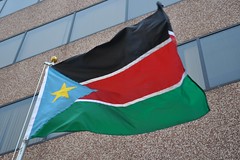
A whole new country, South Sudan, was born with a sodomy law and exclusion of LGBT from rights supposed promised to 'all'.
Turkish LGBT groups suffer repeated attempts to legally shut them down and to block their websites.
The increasingly visible LGBT organising in Malaysia suffered a backlash including law change proposals in two states and the banning of events.
An attempt to use gay rights as a 'wedge' issue failed in Zambia as the opposition leader Michael Sata was elected President. Gay rights was also used as a 'wedge' in Zimbabwe, most awfully to divide the Anglican Church leading to Church resources like orphanages closing and children going hungry.
Malawi criminalised lesbians. This was an issue, but a minor issue, in a subsequent aid reduction by the country's biggest donor, the UK. It was mainly the Malawian government's other walk-backs on human rights and a diplomatic spat which caused the UK's change of approach on aid, but it was played up by them as a 'wedge issue' against the opposition with protests against the state of the economy and human rights abuses called 'gay rallies' in state media.
The so-called 'Kill gays' bill failed to pass at the end of Uganda's parliament in May, probably more by luck than design. It has been reintroduced into the current parliament. The bill provoked the biggest international petition drive for LGBT rights ever, well over two million supported different efforts. Activists pleaded for such support to be offered in the context of the general human rights problems in the country, but most solidarity work continued to single out the gay issue from the bigger crisis. Protests against the bill raised, again, the use of development aid redirection from governments and other government-to-government 'leverage' by Western countries in front of and behind the scenes. The atmosphere generated by the bill led to increased government and societal repression of Ugandan LGBT, highlighted by the murder of leader David Kato in January. Three brave Ugandan activists won international human rights awards, including one described as the most important after the Nobel Peace Prize.
There were a series of arrests of gays in Cameroon, followed by convictions including some based solely on people's appearance, not their acts. There was violent rhetoric, organised hunts for gay people using entrapment and the government ended the year proposing a 'tightening' of the anti-gay law.
Anti-gay rhetoric in Ghana's media and agitation by religious leaders over the past few years produced a proposed witch-hunt by a state leader - and subsequent international attention. In the ensuing fallout, local human rights and civil society groups failed to defend LGBT. The year ended with proposals in parliament for further criminalisation of gay people.
Nigeria reintroduced anti-gay legislation which was then extended in the parliament to attack any pro-LGBT human rights organising, potentially fatally undermining HIV/Aids work amongst other impacts.
There were sporadic reports of death sentences for homosexual offenses in Iran but little follow-up on these reports by either media, human rights or LGBT groups due, in part, to issues with verification and dangers to sources in Iran.
Honduras finally acted on the large number of unsolved murders of LGBT in that country, after US prompting. The rate of murders of LGBT elsewhere in Latin America - particularly in Brazil, Mexico and Venezuela - drew little international attention. As did the failure of the international community to support devastated local LGBT in Haiti following the earthquake, though the UN finally pledged a response.
Anti-gay laws were passed or proposed in Russia and in Ukraine. Pro-gay demonstrations in Russia, and in Belarus, were banned and violently broken up - whilst vicious anti-gay ones permitted. Though Russians finally won a European Court of Human Rights ruling that the ban on Moscow's gay pride march was illegal.
There were reports of arrests of gay men in Tanzania, Kurdish Iraq, Bahrain, Saudi Arabia and Abu Dhabi.
The Serbian gay pride march was banned, reportedly for political reasons. The gay pride march in Split, Croatia was attacked, video of which ensured worldwide attention but in the capital, Zagreb, pride went ahead with no problems - and little attention. In Montenegro the government publicly backed LGBT rights.
The fake 'Syrian lesbian blogger' scandal in June created a huge international storm, outraging real activists participating in the revolution there. Local LGBT in the Middle East/North Africa (MENA) region report mixed feelings about the potential outcomes of the 'Arab Spring' for them - in Syria, gays are reportedly divided on participation in that country's revolt. The devastating impact of the Iraq war on LGBT continued to be felt. A new project documented those who have fled to Jordan, but the year went by with almost no media attention to these 'forgotten people'.
A criminalisation attempt in the DRC (Congo) parliament was started then put on hold.
The UK's foreign aid policy relationship to LGBT human rights became the focus of a major backlash following an anti-aid story in a right-wing British newspaper, particularly in Africa and including from some LGBT activists. In a messy PR foul up, the UK was forced to clarify it wasn't planning to remove aid but redirect it.
The so-called 'curing' of LGBT people continued to spread worldwide from its US origins with a backlash in Ecuador leading to closure of some 'clinics' and the discovery of supposed 'conversion therapy' being payed for by Hong Kong's government. In the US itself 'cure the gay' drew both ridicule and outrage, the latter in particular highlighted by a media expose about the suicide of some gay people forced when they were children to go through it and the discovery that a Republican presidential candidate's camp husband was selling 'conversion' therapy.






 RSS feed


 Join our page

