Showing posts with label greece. Show all posts

Thursday, 19 January 2012

Report: Who are the refugees 'lost' at Europe's borders?

Source: W2eu.info

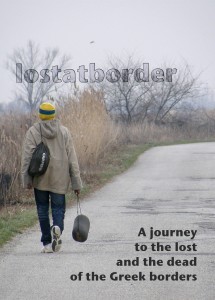
LOST AT BORDER reports on the reality of loss and death at the Greek borders. As a close friend of ours said once:
“If you are a refugee and you die nobody asks any questions. But for living somewhere, everybody is questioning you!” We want to break the silence and ask: What happened with all these people whose traces got lost?
Accidents and death at border belong unfortunately to the daily experiences of refugees trying to reach a safe haven. The European Border Control Agency FRONTEX in co-operation with national authorities are heightening and thickening the fences and walls around us, controlling and patrolling the borders and externalizing them to European neighbour states such as Turkey, Morocco, Tunisia a.o.

They have created treaties of co-operation in deportations and huge refugee detention camps at the gates of Europe. Trying to cross a number of borders, among them the ones of Fortress Europe is a huge risk of death! The numbers are shocking: more than 2,000 people died in the Mediterranean Sea only in 2011. Each single person left behind a big gap in the life of relatives and friends.

LOST AT BORDER gives the voice mainly to refugees searching and mourning for their beloved. The report was made by a group of antiracist activists from different countries who have been already involved in the search of migrants who got lost at the border between Greece and Turkey.

It can be quite difficult to find information on what has happened when somebody is missing at the border. Apart from the report we want to help and fill this information gap by a new Blog. We want to connect the relatives and friends of border victims to each other and we want to let you know and feel that you are not alone on this journey! We will never forget. We promise to overcome the murderous border regime and to continue our struggle for a welcoming Europe.

Lost at Border

Saturday, 7 January 2012

In Greece, asylum seekers are economic scapegoats in racially motivated attacks

Source: The Guardian

By Hans Lucht 

On the morning of 25 May, Kelly from Ghana was on the bus going to a pickup place at the outskirts of Athens, where African immigrants and asylum seekers go to look for work, when he was attacked by a mob. He saw them from afar, standing at the bus stop – a group of about 10 young men – but thought nothing of it. They were probably going to one of the demonstrations, he supposed. But as they entered the bus, they pulled out bats, iron rods and knives, and attacked him.

As Greece struggles to avoid economic meltdown, dark-skinned immigrants and asylum seekers have become scapegoats in racially motivated attacks that, according to the United Nations high commissioner for refugees, have become an almost daily occurrence in Athens.

Last week, in cases pertaining to asylum seekers caught entering the UK and Ireland, the European court of justice upheld that asylum seekers could not be sent back to Greece because they risk being subjected to "inhuman or degrading treatment".

Ninety per cent of undocumented immigrants enter the EU via Greece. The Greek response has been to announce the construction of a barbed wire wall on the Turkish border, though the EU has made clear that such a wall will receive no funding. The influx of migrants has not been welcomed by some segments of the Greek population. Thus the extreme rightwing party Golden Dawn won its first ever seat on the Athens city council in November 2010 on an anti-immigrant agenda.

On top of the many struggles they face, asylum seekers like Kelly now live in constant fear of attack. I met Kelly while doing anthropological fieldwork in Athens in February of this year. He was a friend of a friend, and he had agreed to show me around the west African immigrant quarters, where he and a group of several hundred young Ghanaian migrants and asylum seekers had settled, looking for a route into Europe.

Thursday, 1 December 2011

Research help: LGBTI refugee detention in Greece and Mexico

HelpImage by LiminalMike via Flickr
The George Washington University Law School International Human Rights Clinic, in collaboration with The Organization for Refuge, Asylum, and Migration (ORAM) is researching the human rights implications of subjecting LGBTI individuals to immigration detention in Greece and Mexico.

Immigration detention inherently implicates numerous human rights norms, and the probability that LGBTI detainees will experience multiple levels of marginalization is especially acute. This project seeks to expose the unique protection gaps LGBTI detainees face in immigration detention, identify the international, regional and domestic legal obligations of the detaining States, and to make recommendations for States to better address these shortcomings that have previously not garnered any attention.

The IHRC Detention Team is seeking individuals who can share relevant experiences of detention in either Greece or Mexico for inclusion in the report we are authoring. Testimonials from migrants and refugees, including former and current detainees, would be used to give an accurate portrayal of the situation in Greece and Mexico, and to ensure appropriate representation through compelling personal stories

If you know of individuals or service providers that would be willing to assist, please contact Katerina Herodotou at kherodotou@law.gwu.edu. We are completing this project in mid-December.
Enhanced by Zemanta

Thursday, 22 September 2011

Greek refugee detention: 'Not enough food, dirty water, no fresh air': EU complicit

There have been numerous reports on the state of Greek detention centres as well as the hostile and sometimes violent atmosphere in Greece against migrants. There is a new report from Human Rights Watch (see below) on why asylum seekers should not be returned from other EU countries to Greece and the role of the EU agency Frontex in perpetuating inhuman treatment.

This story illustrates what is going on in Greek detention centres.

Source: Infomobile

Yesterday we received a phone-call from relatives of Syrian refugees, who have been prisoners in Fylakio (Northern Greece) since a few days:
Today I talked with somebody who was released a few days ago from Fylakio prison about his experiences there. He didn’t want to talk about it first. He said he didn’t want me to feel sorry for something that happened to him, and make me suffer, me and my family. But I said to him: 
“Tell me the whole truth. The people have to know what happens in there!” 
They get food once a day. The food is hardly enough to survive.
The drinking water is dirty. Sand is coming out of the tap.
The toilets are dirty.
There is no fresh air. No ventilation. 
Once a months they are allowed to go out in the yard. Never they see the sunlight and they are always locked in. In 46 days they have been two times outside to breathe. 
Only once, at the 3rd of September, when the prison was burning. This day they had to stand for four hours in the sun, no shadow anywhere. Collective punishment? 
One guy started a hunger strike. Nobody was interested in his protest. So finally he tried to hurt himself with a knife. The police was just watching. Later they transferred him into another cell. Seven days isolation. Afterwards they brought him back to the big cell, back to all the other prisoners. The demand of his hungerstrike had been to get released. But nobody listened. Nobody outside even noticed his protest. 
Something else: Police beats people. They beat you in a life-threatening way. Beating and abusing this is normal in Greece. They beat the people in there, they torture them. 
If somebody gets sick there is no doctor. 
He told me: 
I did not apply for asylum. I took a private lawyer who said to me if I do, I will have to stay very long in this prison and there is no chance to get asylum in Greece anyway. The lawyers always promise some things but they lie a little bit, about the chances of getting released. 
The situation inside is horrible. There is no electricity. The people sleep three in one bed. If one is falling from the bed, he can break his hands or his skull and nobody is taking notice. Once and Afghan fell down. He was bleeding heavily and nobody did anything to help. 
There are different nationalities and ethnicities in one small room. If they start a fight the policemen stand outside laughing about it until the fight is over. Or until somebody gets a fracture or something else happens. They don’t care. 
There are many people in one cell and all the time new people are pushed inside. 
My only wish was to escape from this situation. Only to get out of there. Even if I would be deported. Anything would be better than this prison. This is why nobody wants to apply for asylum here. Because it’s so horrible in this prison and nobody wants to be forced to stay here for the whole six months – even not for one day longer!
Imprisoned refugees in Fylakio protested 3 September. They set the mattresses on fire. This is the ongoing revolt after a series of revolts in prisons in (Northern) Greece where people are locked because they are searching for a safe place to stay. Revolts and hungerstrikes we will make public. Publicity is the only (weak) protection against the brutal repression that follows the revolts in most cases:

In August 2011 Medicins sans Frontieres announced that for almost a month, there has been no medical care to immigrants and asylum seekers in detention.

~~~~

EU: Border Agency Exposes Migrants to Abusive Conditions

Source: Human Rights Watch

Sunday, 4 September 2011

Remembering the dead: Migrants at Europe's borders

John plants a tree for Jane
Source: the border is the problem…

John lost his wife Jane and Tahera her husband Bashir in the Evros River. They represent hundreds of other migrants who drowned in the water, were killed by landmines or are still missing.

Their dead bodies were treated disrespectfully: In 2010 we discovered a mass grave in Sidero where the corpses could not be identified.

We returned to give back a piece of dignity to the death and also those who survived.

Tichero, 30 August 2011

We came together today, here on the road to Tichero.

We gathered in Tichero around this fountain for remembering the dead of the European border regime.
Immediately when we arrived here, we were reminded of the currency of this memorial ceremony: The Turkish newspaper Hurriyet reported that a migrant was killed when Frontex patrol opened fire to migrants crossing the Greek-Turkish border at Evros River. A group of migrants tried to cross the border from Evros in Greece towards Edirne, as Frontex forces opened fire on them. From the gun shots one of the rubber-boats sunk. The migrants swam to the Turkish river side. One migrant who was waiting to board on a boat at the Turkish side was shot in his back. This is one of the shattering news of these days.

In 2011, up to now, 70 people were found dead in the Evros River, 47 of them have not been identified. And more than 2.000 refugees and migrants died in the Mediterranean Sea this year, mainly when they tried to reach Malta or Italy from Libya or Tunesia. The numbers of deaths at the European borders have increased tremendously. Something has to be done about it!

All of these deaths have a face, a name. All of them leave behind relatives and friends. Besides the bodies also their hopes and dreams are lost.

We want to give back a piece of dignity, to those whose death disappeared – right here – into the senselessness of the European borders.

We gathered for giving back a piece of dignity also to those who survived. A piece of dignity that was lost on the way to Europe, like the passports or the photographs showing the faces of the beloved ones that disappeared in the water.

We want to give back a piece of dignity to all of us, who feel ashamed in the moment of these deaths because we failed in our attempt to stop this murderous regime and to create a welcoming Europe.

We came with different backgrounds: S., she lives here in this region. Some came from a Noborder camp that took place in Siva Reka in Bulgaria, where they shared some days of protest against this deadly border regime. M. and R. have been helping people to search relatives and friends they have lost in this region. S. is searching right now for his friend Saaid, whose trace got lost here in this region two weeks ago, not knowing if Saaid is dead or alive. John came to mourn his wife Jane who got lost at this border. Some of them will speak to us later. Thanks to all of you, that you found your way to here to be together at this ceremony of commemoration. Thanks also to those who cannot be here today, but are nevertheless with us right now, like Tahera who lost her husband Bashir in summer 2010 in Evros.


Tahera is a refugee living in Hamburg with her children. She is not allowed to travel and so she cannot be here with us today. Tahera wrote a letter to her husband Bashir. It will be read out in Farsi and it will be translated into Greek and English afterwards.

LETTER OF TAHERA

Wednesday, 29 June 2011

Audio: Progress on LGBT asylum in the European Union

Back in April, the European Parliament voted on a resolution to provide more protection to LGBT people seeking asylum in the EU. Another similar text is being worked on right now, but what does it all mean for LGBT asylum-seekers?

To find out, the European Parliament's Intergroup on LGBT Rights interviewed Members of the European Parliament Jean Lambert (Greens-EFA/UK) and Tanja Fajon (S&D/Slovenia). They are both working on asylum and migration issues in their political groups. They present the state of play around current negotiations, and what could change for LGBT people claiming asylum in the European Union.


Enhanced by Zemanta

Saturday, 16 April 2011

In Europe, "torture and severe abuses" of migrants documented

Source: New Europe

By Simone Troller

I was not prepared to document torture and severe abuses when I started researching the human rights situation for migrants in Europe. After all, I was working on Western Europe, the developed world with a rule of law, independent judiciaries, functioning social services, and oversight bodies.

Yet, speaking with hundreds of adult and child migrants across Europe over the past several years, I heard credible, detailed, and consistently corroborated accounts of serious abuses:
  • Greek coast guards punctured rubber boats carrying adults and children before pushing them back toward Turkey. Some migrants never made it to shore.
  • Ukrainian officials tortured migrants and asylum seekers with electric shocks after Hungary and Slovakia deported them, often after denying them an opportunity to lodge asylum claims.
  • The French airport border police tried to deport a 5-year-old Comorian boy alone to Yemen, a country he had passed through, not knowing where his parents were or why he had arrived by himself.
  • Various ships passed by and ignored a damaged, leaking, overcrowded rubber boat drifting for days in the Mediterranean. After finally being rescued by a Turkish freighter, the 140 sick and exhausted African migrants had to wait another four days to disembark as Italy and Malta debated which was responsible for taking them.
These abuses do not occur in a vacuum. Rather, they are the consequence of European governments’ boundless efforts to deter, stem, or divert the flow of migrants and asylum seekers trying to enter Europe.

Saturday, 22 January 2011

Dublin agreement sunk, no more returns to Greece says Euro Court

The hole in the ship Amalthea after the bomb p...Image via Wikipedia
Source: Free Movement

The European Court of Human Rights has just held that it is unlawful to send asylum seekers to Greece under what is widely known as the ‘Dublin II’ Regulation for their asylum claims to be processed there. The case is MSS v Greece and Belgium, no. 30696/09, 21 January 2010 (BAILII link to follow when available but available now on HUDOC or Word .doc file (large)).

In this landmark judgment the Court holds that the detention conditions to which the claimant was briefly exposed amounted to a breach of Article 3 and that the living circumstances of the claimant also amounted to a breach of Article 3. It then goes on to find that the Greek asylum process is so woeful that it amounts to a breach of Article 13 of the Convention. To top it all, the Court concludes that Belgium violated Articles 3 and 13 of the Convention by returning the claimant to Greece and thereby exposing him to these other breaches.
To cap it all, substantial damages are then awarded to the claimant against Belgium.

In respect of detention conditions, Strasbourg already found in an earlier case last summer that Greek detention facilities amounted to inhuman and degrading treatment. See AA v Greece, no. 12186/08, 22 July 2010. In this new case the Court goes on and finds as follows:

Friday, 14 January 2011

Digital Diasporas: how migrant communities are embracing new media

NEW YORK - SEPTEMBER 01:  In this photo illust...Image by Getty Images via @daylife
Source: University of Cambridge

Across the world millions of people live and work huge distances away from their home communities and only rarely get the chance to visit them. In the past, these migrants relied on letters and occasional phone calls to keep in touch. New media has changed that.

Today, even those on modest incomes are able to choose from an expanding range of new media to communicate, often on a daily basis, with family and friends.

A conference taking place at Cambridge University this week will look at how diasporas have increasingly embraced new media, how they make use of communication technologies and how new media play a significant role in shaping their experiences and relationships. Topics discussed will include whether new media isolate communities or help them to integrate within a host country, and whether access to cheap long distance communication is acting as a spur to greater migration.

Digital Diasporas: Migration, ICTs and transnationalism, which will take place at CRASSH (The Centre for Research in the Arts, Social Sciences and Humanities) on Thursday and Friday, will bring together researchers from throughout the UK and overseas to share their research and discuss common themes.

Monday, 10 January 2011

Greece to build wall to keep migrants out

BERLIN - OCTOBER 27:  A chair rests next to a ...Image by Getty Images via @daylife
Via Ecre

Greek Public Order Minister Christos Papoutsis announced the decision to build a 12-km wall along the border with Turkey, in an attempt to prevent irregular migrants from reaching Greek territory. Papoutsis considers that Greece has exceeded its limit in its capacity to accommodate migrants. According to him, 100, 000 people crossed irregularly the Greek/Turkish border last year.

The decision has been criticised by ECRE, the Greek Council for Refugees, Greek NGO Aitima and the UNHCR which considers that this meaure could also prevent refugees from entering EU territory, thereby denying their legitimate right to seek asylum.
“Regardless of how tall, how strong a wall would be, many people trying to cross this border left Afghanistan, Iraq and Somalia fleeing for their lives, they can´t just stay at home. It's Europe's responsibility to allow them to reach safety and respect their right to seek asylum”, said Bjarte Vandvik, ECRE's Secretary General.
The European Commission said that fences and walls have proved in the past to be short term measures that do not help to address migration flows in a structural manner. The Commission asked Greece to instead set up structural measures to discourage traffickers and smugglers and to build an efficient asylum system.

In addition to the fence, the Greek authorities announced that they are considering to using Dutch ships as sea-based detention centres for irregular migrants. The Netherlands have used such boats in the past for this purpose receiving strong criticism from the Council of Europe's Committee for the Prevention of Torture and Inhuman or Degrading Treatment or Punishment (CPT).

According to the CPT, these boats are characterized by confined spaces, poorly ventilated cells, high levels of humidity and a lack of rest areas. The CPT urged the Netherlands to “cease, at the earliest opportunity, to use boats as facilities for immigration detainees”. One of the boats closed in 2009, the second is expected to close in 2012.
Enhanced by Zemanta

Thursday, 16 December 2010

Greek asylum facilities so over crowded "detainees cannot lie down to sleep"

Source: Human Rights Watch

Greek officials should immediately transfer migrants from overcrowded and inhumane detention sites in the Evros region to an empty facility on Samos Island and protect the 120 unaccompanied migrant children among them, Human Rights Watch said today. These migrants have crossed into Greece from Turkey in recent weeks and months, and come from countries such as Afghanistan, Eritrea, Iraq, Algeria, Syria, Iran, and Morocco.

The number of migrants arriving in northern Greece from Turkey has risen dramatically in 2010. They include asylum seekers, unaccompanied children, single women, and families with young children.  Human Rights Watch conducted research in the northern region of Greece during the first week of December and witnessed conditions so overcrowded that detainees cannot even  lie down to sleep. Women and children are crammed in cells with men. Toilet facilities are so limited that guards sometimes escort detainees to defecate and urinate in nearby fields. These conditions clearly risk the health and safety of detainees, and constitute inhuman and degrading treatment, in violation of binding international law, Human Rights Watch said.


"Authorities told Human Rights Watch last year that they transferred migrants from the islands to the north to prevent overcrowding." said Simone Troller, senior researcher with Human Rights Watch. "But now they need to respond to the overcrowding in the north, which is creating dangerous, unhealthy conditions." Greece should send detainees to detention facilities in the islands where there is more space, should separate single men from women and children while respecting family unity, and, where possible, seek alternatives to detention, Human Rights Watch said. When the European Unions's Belgian presidency discusses the situation of unaccompanied children at the EU's external border at a conference in Brussels on December 9 and10, 2010, it should address the situation in Greece as a matter of urgency, Human Rights Watch said.

Tuesday, 30 November 2010

Greece adopts Presidential Decree to deal with asylum backlog

Coat of arms of Greece since 7 June 1975.Image via Wikipedia  
Source: Ecre

A Presidential Decree establishing the transitional procedure to be followed for all pending asylum applications in Greece has been published on 22 November in Greece’s Official Journal. The backlog of 7,000 pending first instance claims and 47,000 pending second instance claims will be dealt with through this procedure.

These pending asylum claims will be examined by 14 regional police departments situated in geographic districts with a high concentration of asylum seekers. Normal procedures will last up to six months and accelerated procedures will be limited to three months. The decree sets out also the creation of independent special 3-person appeal committees with no participation of police officers.

Also a draft of the new asylum law establishing procedures for the examination of new asylum applications will be presented to the Parliament in the near future. The text of the new asylum law is available for submissions until the 26 November 2010. This draft law is part of Greece’s National Action Plan on Asylum Reform and Migration Management.

At the First European Asylum Support Office Board Meeting, held in Malta on 25-26 November, Home Affairs Commissioner Cecilia Malmström said that one of the priorities should be supporting Greece in implementing its National Action Plan on Asylum Reform and Migration Management.
Enhanced by Zemanta

Monday, 29 November 2010

New information on refugee flows into Europe

Source: Ecre

[EU agency] Frontex has released an updated map [PDF] of the situation at the external borders of the EU, taking into account the number of detections of illegal-border crossing and refusals of entry from January to September 2010.

Compared to the same period in 2009, 71% less migrants have attempted to cross irregularly through the EU maritime borders. It is mainly noticeable in the Canary Islands (-99%), Malta (-98%), Greece (-76%) and Italy (-65%). The map also shows an increase of 369% of migrants crossing the Greek-Turkish land border. This map doesn’t take into account the ongoing RABIT operation at the Greek-Turkish border. Among the people identified by Frontex as trying to access the European territory in an irregular manner, there are nationals from refugee-producing countries and territories, such as Afghanis, Palestinians and Somalis. Information is not provided on whether they had access to an asylum procedure.

Frontex should be complemented in 2011 by a European border surveillance system, EUROSUR, as presented in the Commission’s Communication on the EU Internal Security Strategy. It is announced that the EU will launch in 2011 a pilot project at its southern and south-western border “exploring synergies on risk analysis and surveillance data concerning different types of threats, such as drugs and people smuggling”.
Enhanced by Zemanta

Saturday, 13 November 2010

Asylum law in Germany: a 'big lie'

Bundesverfassungsgericht, KarlsruheImage by Al Fed via Flickr
Source: Süddeutsche Zeitung

By Heribert Prants

Translation by Heinz Leitner

Since 1963, the German asylum law is straightened to its needs. It simulates protection where there is none. It defines safe states that don’t exist. The Federal Court of Constitution has joined in these lies – up to now.

Since 17 years, since 1993, the German asylum law is simulating justice. This big lie has stopped now. The Federal Court of Constitution does not join in this hypocrisy any more.

The Federal Court of Constitution examines whether automatically deportation of asylum seekers is in agreement with the basic law.

Tuesday, 26 October 2010

Now Belgium stops sending asylum seekers back to Greece

Source: ECRE

Belgium’s Secretary of State for asylum, Melchior Wathelet, has announced that Belgium will not transfer asylum seekers to Greece and will give priority to the examination of these asylum claims. Amnesty International, CIRE, the Belgian Committee for Aid to Refugees, ECRE, JRS-Belgium and Flemish Refugee Action welcomed this decision but demanded a complete revision of the Dublin Regulation, which allows refugees to be sent back to countries that do not provide sufficient protection.

The UN Special Rapporteur on torture, Manfred Nowak, has also called this week on the EU to stop transfers of asylum seekers to Greece and to renegotiate the Dublin II Regulation.

Belgium’s decision follows the reception of a letter in which the European Court of Human Rights states that pending the adoption of its judgment in MSS v. Belgium and Greece - which assesses whether sending asylum seekers back to Greece violate the European Human Rights Convention-, all transfers will be temporarily suspended in any case where an asylum seeker challenges his or her return to Greece.

The UK and Norway have also stopped tranfers to Greece and are applying the sovereignty clause and therefore assuming the examination of these asylum applications. The Netherlands is suspending transfers for those who appeal the decision.

ECRE supports the establishment of a mechanism to suspend transfers of asylum seekers to states that cannot guarantee a full and fair examination of their claims or proper receptions standards. Suspension should also be accompanied by supporting measures that seek to rectify the asylum situation in a Member State.

Sources:
For further information:
Enhanced by Zemanta

Thursday, 14 October 2010

The Netherlands will not return asylum seekers to Greece

Still image from the documentary film "Wa...Image via Wikipedia  
Source: ECRE

Following a letter from the European Court of Human Rights, Dutch Justice Minister Ernst Hirsch Ballin announced on 6 October that the Netherlands would no longer send asylum seekers back to Greece. This suspension will affect 240 asylum seekers who should be returned under the Dublin Regulation. Dorine Manson, Director of the Dutch Council for Refugees, welcomed this news, saying that they had been fighting for this for a long time. She recalled that there was a huge difference in the recognition rate for Somalis who have a 65% chance to receive protection in the Netherlands vs. none in Greece.

On 20 September, the UK Border Agency also decided to suspend the return of asylum seekers to Greece, pending the result of a case that has been referred to the Court of Justice of the European Union (CJEU) from the UK Court of Appeal. In Denmark, after the Danish authorities decided to forcefully return hundreds of asylum seekers to Greece, the Danish Refugee Council has stopped the return of 15 asylum seekers through the European Court of Human Rights. In its proposal to amend the Dublin Regulation, the European Commission has proposed to introduce a mechanism for the temporary suspension of transfers to particular Member States for example if the level of protection that falls below Community standards.
Enhanced by Zemanta

Monday, 11 October 2010

Video: The jungle of Athens, the battle for Attica Square

Source: journeymanpictures


October 2010

It's the first time that an EU country has seen its treatment of refugees described as a humanitarian crisis by the UNHCR. This report gets to the heart of the escalating tensions in Greece.

"I've seen too many. They cross the river like bees", sighs a local fisherman. With as many as 400 people crossing the Evros river each day, arrests of illegal immigrants in Greece have exploded from 3,500 to 20,000 in a year. Most choose to turn themselves in, but they have no idea what awaits them. Infested with rats, Greece's detention centres are now critically overcrowded. Those who try to avoid this fate end up on the streets, such as in Attica Square, home to hundreds of Afghan refugees. With no government support, crime is rife here, and as frustration builds, racial attacks by local vigilantes are escalating beyond control. Ghulam's family sleep on a bench in the square - his four-year-old son was recently attacked in the middle of the night.

"If I'd stayed in Afghanistan I might have been beaten, but they would have at least spared my children. I cannot believe this is Europe."


Source: the border is the problem…

Since five days the fascist neighbourhood movement of St. Panteleimon and Attiki is occupying and defending the Attiki Square from the “unwanted” refugees living in that area. Even members of the movement are entering migrants shops shouting at people and threatening them. This reality has become daily life.

Meanwhile everyday exhausted newcomers are arriving from the border of Turkey, where they are kept like animals in degrading detention centres. Some of them remain homeless after their arrival in Greece and are forced to sleep on the streets and in the parks. Nowadays not even that is possible. Not just because of the cold weather conditions or the police that has started a war against the undocumented and the „unwanted“, patrolling the streets, yelling at them to leave, even kicking women and minors away and taking their blankets and clothes from them. Nowadays its because one has to be afraid of Greece’s neonazis.

Tuesday, 21 September 2010

UK suspends returns of asylum seekers to Greece

Source: NCADC

The UK Border Agency has announced today the suspension of the return of asylum seekers to Greece under the Dublin Regulation. With immediate effect, the backlog of approximately 1300 cases and all new cases will have their applications heard in the UK, and not Greece.

This will come as a great relief to all those facing return to the “broken asylum system” of Greece. The decision-making process in the UK leaves a lot to be desired but at least we have legal aid (for now, and only just) and the initial success rate is more than Greece’s 1%.

The decision comes as a result of the Court of Appeal’s decision to refer the case of NS (formerly known as Saeedi) to the Court of Justice of the European Union. It appears that this process could take up to two years, so the UK Government has decided to use it’s powers to assess asylum claims in the UK during this period, rather than have the applicants wait for the outcome.

The decision comes as a result of the Court of Appeal’s decision to refer the case of NS (formerly known as Saeedi) to the Court of Justice of the European Union. It appears that this process could take up to two years, so the UK Government has decided to use it’s powers to assess asylum claims in the UK during this period, rather than have the applicants wait for the outcome.

The UK Border Agency has stressed that this decision is purely pragmatic, and is in no way related to the multiple human rights abuses and the near impossibility of claiming asylum in Greece, as highlighted time and again by the United Nations refugee agency, the Council of Europe Commissioner for Human Rights, Human Rights Watch, Amnesty International etc.

Monday, 20 September 2010

Video: Reporter visits migrant mass grave in Greece

Source: AlJazeeraEnglish

The Greek government says it is planning new laws to cope with the enormous influx of illegal immigrants heading to the country.

Almost 60,000 people were caught trying to enter Greece in the first six months of this year alone.

Barnaby Phillips reports from Athens.
 

Saturday, 4 September 2010

Video: Iranian asylum seeker in Greece sews his lips

Source: Freedom and Democracy for Iran

When Iranian Asylum seekers enter Greece, instead of getting support they have to go to prison for three months or more and finally they deport them from the country. They flee Iranian prisons and end up in prisons elsewhere in the world and in this case Greece!

Demonstration is outside UN offices in Athens.


Source: the border is the problem…

Update 2: Victory!

Just found the information on the UNHCR website. We wrote:

We were discussing with a lawyer here in Greece, and she said that she would find it highly unlikely if they received political asylum, since the actual asylum system has been suspended. The Ministry of citizen protection itself has pointed out that it cannot brake the law by giving asylum based on a suspended presidential decree and said that only in September, when the new presidential decree would enter into force, asylum could be granted.
The UNHCR says:
Given the imminent threat to the health and lives of Iranian asylum seekers continued hunger strike in front of the Office of the High Commissioner of UNHCR, the Ministry of Civil Protection has decided yesterday to activate the Appeal Board for the accumulated applications provided by Presidential Decree 81/2009, “on humanitarian grounds and very exceptional, [...] despite the government’s steadfast position that the current asylum procedure is impractical, ineffective and outdated.
So yes, our doubts were right, and yes, they did indeed get a proper asylum status. That is very good. Congratulations, we are so happy that all went well in the end! Why did our friends have to take such drastic measures in the first place?

Update 1: Victory?

Today, on the 30th of August, there was the announcement that the six of the seven hunger strikers will obtain political asylum, and that the seventh might likely receive it tomorrow. That would be a huge success. The hunger strikers have since been brought to the hospital, and we are very lucky that the hunger strike is concluded.

You notice the question mark in the headline? We were discussing with a lawyer here in Greece, and she said that she would find it highly unlikely if they received political asylum, since the actual asylum system has been suspended. The Ministry of citizen protection itself has pointed out that it cannot brake the law by giving asylum based on a suspended presidential decree and said that only in September, when the new presidential decree would enter into force, asylum could be granted.

So we were wondering if the hunger strikers were granted humanitarian protection rather than asylum? That would leave them in a much more difficult status, since it would not allow them to leave Greece as some hunger strikers have wished, and the access to social support in Greece would also be much more precarious. We really do hope that the hunger strikes did obtain a proper refugee recognition, and we will continue to look for more precise information. If you know something, please post it in the comments.

Related Posts with Thumbnails
