
The Iranian Railroad for Queer Refugees (IRQR) works to increase public awareness about, and provide support such as legal services and financial assistance, to refugees and immigrants leaving Iran because of persecution bases on their sexual orientation and gender identity.
We spoke with their leader on his recent visit to London.
Showing posts with label IRQR. Show all posts
Showing posts with label IRQR. Show all posts
Friday, 28 May 2010
Video: Interview with Arsham Parsi, Iranian Railroad for Queer Refugees



Thursday, 8 April 2010
IRQR says Iranian transsexual refused help by UNCHR

The Canadian based Iranian LGBT exile organisation Iranian Railroad for Queer Refugees (IRQR) has put out a call to action for an Iranian transsexual, Mahtab, and her husband, Saleh.
The couple fled to Turkey in 2007 and IRQR say the United Nations High Commissioner for Refugees in Ankara has rejected their claim for refugee status.
"They do not have any protection in Turkey and now, due to local circumstances they have to go back to their country since UNHCR did not recognize them as refugees," said IRQR. "They risk being deported back if they do not leave Turkey voluntarily."
Although Iran officially recognises transsexuals, including paying for half the cost of gender reassignment:
"Many transgender surgeries are actually performed on gay men who report being coerced. They and actual Iranian transgendered people report being persecuted, tortured and coerced to undergo sex reassignment procedure."Says IRQR:
"Mahtab was abandoned by her family and her brothers and was afraid that they were going to kill her because she was an embarrassment to her family. Saleh and Mahtab lived together several months in Iran and since they had an underground relationship, nobody was able to find out."In February a Human Rights Watch led coalition of human rights and gay groups accused Turkey of inaction on "an ongoing pattern of violence" against transsexual people. Since November 2008, at least eight transgender people have been murdered in Istanbul and Ankara.
"Unfortunately, Sahel's family was informed about it and they were threatened. Mahtab and Saleh had no choice but to escape, they lived temporarily at Saleh’s friends’ place. Afterwards, Mahtab and Saleh had to leave Iran to Turkey and had to seek asylum from the UNHCR office in Ankara."
"They officially got married in Turkey in August 2008 because they loved each other and they could not do it in Iran easily because of the stigma around transsexual marriages, thus, living in Turkey helped them achieve this dream. They have been living together for the last three years since they arrived in Turkey. It is their right to love each other and live together but unfortunately, the UNHCR’s decision created more problems and made their lives more difficult."
"Most people in their current city of asylum found out about Mahtab’s previous life as a transsexual and they always point them out in the streets when they are in public. They are in a very bad situation in Turkey and we request all of your support ... They can not go back to Iran because they will be arrested or killed by their families or the authorities."
![Reblog this post [with Zemanta]](http://img.zemanta.com/reblog_e.png?x-id=aa960a5f-f532-4007-9930-a346df91678a)
Tuesday, 6 April 2010
On film, the trials of an Iranian lesbian activist (at the hands of UK authorities)

In a new feature film, “Cul De Sac,” London-based Iranian directors Ramin Goudarzi-Nejad and Mahshad Torkan tell the story of a lesbian woman who flees Iran’s repressive Islamic regime. The script draws on the real-life experiences of Kiana Firouz, who plays herself in the film. Hossein Ghavimi, a correspondent for RFE/RL’s Radio Farda, asked Goudarzi-Nejad and Firouz about their motivation in making the film.
Ramin Goudarzi-Nejad: The story is in fact based on the life of an Iranian homosexual woman who attempts to draw the world’s attention to the voices of Iranian lesbians. She consequently finds her return to Iran impossible. She claims asylum in the United Kingdom, but the Home Office incredibly turns the case down.
She had been making a documentary film about Iranian homosexuals back when she lived in Iran, but the Iranian Intelligence Service found the footage and started following her. She managed to leave the country because she realized that the security service had become suspicious about her activities and the existence of her film. They started to investigate regarding the identity of the filmmaker and interviewees and the content of the documentary, but she was already here in the U.K. to study and work for human rights.
The evidence clearly shows that she is a lesbian [facing persecution in Iran.] But the Home Office did not consider the facts and refused her asylum application.
RFE/RL: What motivated you to make this movie?
Goudarzi-Nejad: I made a short film in 2007 called “Have I Ever Happened?” which at the time was reviewed by Radio Farda. It was about an Iranian poet who was also a lesbian. The film was screened at two international film festivals together with other events. I received lots of messages from Iranian homosexuals, especially lesbians, and they gave me the impression that they were quite impressed and admired the work. They kept asking me to make more movies about homosexuals’ lives.
Once Kiana called me while she was in Iran and briefed me on her filmmaking experiences in Iran. She was considering making a documentary film about Iranian homosexuals. She was concerned with finding out whether there would be a chance to screen the film after completion. I gave her my best knowledge about the dangers and risks that she has to take into account, but she seemed determined to do it. So I agreed to support the distribution of her film and to help publicize the voice of this innocent, vulnerable minority internationally.
RFE/RL: Did Kiana write the script of “Cul de Sac” herself?
Goudarzi-Nejad: No, she wasn’t involved with writing the script, but it was written based on her life story.
RFE/RL (to Kiana Firouz): I’m interested in what inspired you to act in “Cul de Sac.” Can you tell us some details about your role in the film?
Firouz: Sure -- I played the role of an Iranian lesbian in this film. The story is mainly based on my life.
In my opinion, the film potentially falls into the genre of docudrama. It was important to me as an Iranian lesbian to play a role like this. I believe the best way to enlighten people is to raise public awareness through free media, and film is the most powerful medium that can share the difficulties that all Iranian lesbians are experiencing. I strongly believe this film will touch everyone.
RFE/RL: What stage of completion is the film at now? Will it be screened soon?
Firouz: The movie is scheduled to be screened next month. The trailer has been on YouTube since December 2009, and it was watched by more than a thousand viewers just in the first four days.
RFE/RL: Will it appear at film festivals?
Firouz: Yes, it will definitely be shown at film festivals. So far, two film festivals in San Francisco and Canada have invited us.
RFE/RL: Can you tell us about the difficulties you’ve faced in applying for asylum in the United Kingdom?
Firouz: As an Iranian lesbian activist, I sought asylum in the U.K. My application was turned down and ignored by the Home Office, despite the serious threats to my life that I’ll face if they deport me to Iran.
I’m shattered and emotionally devastated that they have dealt with my application so irresponsibly. A serious campaign has been already launched to support me and save my life.
The Iranian Queer Organization and the U.K. Gay and Lesbian Immigration Group are also supporting me. I am ready to take any further risks to fight for our rights.
The situation for homosexuals is not only terrifying and horrible in Iran, but also for those who have escaped to seek asylum in other free countries, mostly signatories of the Geneva Convention, and especially Turkey. It seems to me that fate still does not wish us a peaceful life. We are going to resist and we will take every possible action until the day the whole world hears our voices.
- Petition: Stop Deporting Kiana Firouz
![Reblog this post [with Zemanta]](http://img.zemanta.com/reblog_e.png?x-id=dd5039cd-41de-491a-a619-595e1486a7a1)
Monday, 5 April 2010
Four gay Iranians have Canadian sanctuary
 Image by scawjcgk via Flickr
Ramak, a 36 year-old Iranian gay man who left Iran to Malaysia on the basis of his sexual orientation, has been accepted as a refugee by the UNHCR in Kuala Lumpur.
IRQR is also reporting that an Iranian gay man Mohammad has been accepted by the UK from the UNHCR refugee program.
![Reblog this post [with Zemanta]](http://img.zemanta.com/reblog_e.png?x-id=32941d58-fee2-4e5d-bbd7-dc691ce501cd)
Saturday, 20 February 2010
How to Save a Life: Arsham Parsi and The Iranian Queer Underground Railroad

By Lorette C. Luzajic
Which would you prefer- to be chopped in two with a sword, or beheaded by the same weapon? Maybe it sounds like more fun to be thrown from a mountain or high building, or, go out with the good old fashioned Old Testament stoning.
It’s not the kind of thing I spend my days mulling over, not when there’s a new-ish Pet Shop Boys album and Cheap Martini Wednesday at Lola Lounge.
But what if, upon leaving the martini festivities tomorrow, everyone at the party is executed?
If you’re queer in the theocracy of Iran, none of the above scenarios are far-fetched at all. They happen all the time. Iranian President Mahmoud Ahmadinejad told Columbia University, “In Iran, we do not have homosexuals — not like in your country.” But Iranian minister Mohsen Yahyavi told British MPs that he thought “Homosexuals deserve to be executed or tortured and possibly both.” Still others don’t think the sodomy laws are really much of a threat. Harvard professor Afsaneh Najmabadi says that because Islamic law requires five witnesses to the act, the death penalty is not easily carried out.
Whether gays ‘deserve’ torture, or don’t exist at all, or if the laws are difficult to, well, execute, the fact remains that over four thousand Iranian homosexuals have been put to death in the past three decades, ever since Ayatollah Khomeini moved to power in 1979. The country then became the fundamentalist Islamic Republic of Iran.
The death penalty is official, but unofficially, countless queers commit suicide, unable to face a society that would rather they don’t exist, a culture that believes they are better dead than alive.
Arsham Parsi was a bright and handsome Iranian teen with a secret. When some people in his community committed suicide, Arsham knew why. People were dying because they were gay, like him, living with the terror of imminent torture, whipping, drugging, and exile. Lesbians were also facing rape, hormone treatments, and enforced marriage.
Arsham bravely started an internet site called Rainbow Group, where LGBTQ people could learn more about themselves and find solidarity. He then started Persian Gay Boy, along with some connections in Norway. His work was done anonymously, of course. “I started to work underground,” Arsham tells me. “No one knew about this, not even my closest friends.” There was also Voice Celebration, which brought together about fifty gays and lesbians, discussing in code names ways to achieve civil rights in a government that didn’t even afford them human status.
Arsham’s websites were among the first efforts for gay civil rights in Iran. Earlier efforts in the 1980s to set up an LGBTQ organization meant 70 people were put to death. When officials started closing in on this anonymous community leader, Arsham fled his city of Shiraz for Tehran. Several gays had been arrested in Shiraz, and he feared for his life. “They were looking for me, too,” he says. “I didn’t want to stay there if I couldn’t continue my cause.” But it was too dangerous to stay in Iran at all, so he escaped into Turkey. “I left my family, my friends,” he says. “It was so hard. They didn’t know what I was doing. I told them I was a human rights activist and had to go to Turkey to continue some education.”
In Turkey, it was only marginally safer. Arsham and a gay friend were beaten nearly to death while crowds just stood and watched and no police came to their assistance. It was this incident that cemented in his mind a burning desire to help save others, through education, advocacy, and activism. Originally, he had wanted to be a veterinarian. He could hardly have imagined he would become the world’s foremost activist for Iranian queers. Three short years ago, Arsham landed safely in Canada as a refugee through the United Nations Office of the High Commissioner of Human Rights. Today the young hero is the courageous founder and chief executive of the Iranian Queer Railroad, the only active NGO for gay Iranians.
It’s not just about internet chatting and educational brochures, though Arsham says a little education could go a long way. “In Iran, the lack of information is what drives animosity. It’s not just Islam- according to most religions, they do not agree with homosexuality. It’s not ‘natural.’ But in Canada, we have resources to learn more about people and science and equality. In Iran, there are no books, no publications…we have…denial.” And so, informing friends, families, networks, and educators both here and abroad is important work. But the IRQR is a railroad in the same way that the Underground Railroad brought African American slaves to safety in our continent’s more troubled times. It’s a hands-on freedom fighting organization.
“We help Iranian gay, lesbian, bisexual and transgendered refugees all over the world. We help when Iranian queers are threatened with deportation back to Iran. We also assist Iranian queers in obtaining asylum in friendly countries. IRQR helps these refugees through the process and, whenever possible, provides funds for safe houses from donations, because most of queer people are not physically safe in their transit country either.” The IRQR “documents human rights violations, Iranian queer persecution on base of their sexual orientation, provides letters of support for Iranian queer asylum seekers and refugees, and supports anti-homophobia/anti-persecution efforts.”
Arsham’s railroad has moved almost 100 queers out of Iran into Turkey, where they await asylum in gay-friendlier nations. There are more than 100 others whom he is working to free from Iran right now. The IRQR has had a positive impact on 69% of the cases they’ve worked on. Many have now made it to safe countries where they can begin a new life.
A few short years ago, if you Googled “Iranian Queers” or “gays in Iran” hardly anything came up. Now, thanks in no small part to this young hero’s fearless efforts, you’ll get thousands. Arsham is proud “that I could bring this taboo issue out of the closet and say queer rights are human rights.”
Of course, there’s never enough money to go around, and it takes a lot of money to bring just one person to freedom. From simple telephone expenses to airfare to food for refugees to legal expenses, saving a person from deportation, or bringing them out of Iran into safety is expensive. But every donation or sponsorship the IRQR receives literally saves the life of an LGBTQ Iranian.
Arsham hopes eventually the railroad will pick up enough steam to pay him a living wage. So far, he lives courageously on faith, without a salary. He and his partner occupy a tiny cooperative in Toronto, in a somewhat unsavory part of town. It’s clean and bright, and they welcome me with a nice pot of spiced tea. For a man whose mission is saving lives, it’s a surprisingly humble, normal atmosphere. There’s a Sodoku puzzle book and a yellow table and abstract artwork, but the trappings border on spartan. They have no money, because every cent goes into Arsham’s rescue work.
But there’s no time to worry. He’s active in the democratic Iranian communities in Canada. He’s a keynote speaker at conferences for human rights all over the world, flown here and there by generous donors who know the gifted and passionate speaker can change the world. He’s in panel discussions, and on first name basis with Canadian members of parliament. He’s in documentaries like Jihad of Love and in newspaper and magazine articles about gay rights, including last month’s Out Magazine feature on Iran. He is writing letters to governments and news agencies. He is petitioning potential donors to help him support his refugees, afford them food and shelter and medical care as needed, and pay his legal fees. He is also cultural ambassador for Stockholm-based International Lesbian, Gay, Bisexual and Transgendered Association, advisory boards for umpteen world gay rights organizations, and a recipient of excellence and pride awards for his unwavering commitment to human rights.
Petitioning, lobbying, paperwork, legal documents is no small task. Arsham works with the United Nations High Commissioner for Refugees, but it’s an arduous process. Iranian queers awaiting asylum, safety, refugee status, hope- well, there’s a long line up and they can be waiting for years. Without advocacy, they are waiting in vain, and some will be deported back to a world where they will pay with death for their love. There are nearly 32 million refugees from around the world right now, and only so many U.N. workers to go around. Arsham works tirelessly to bring attention and immediacy to desperate Iranians, many who are homeless, hungry, and in still in danger.
It’s determination that fuels Arsham to bring Iran’s “gay problem” out of the closet, and he has made extraordinary strides already. He has reconciled with his family, who now know why he had to go, and though it took them awhile and a lot of education, today they accept him as gay. He can’t go home, but he is so grateful to Canada for his freedom from oppression and death. “After four days in North America, I said ‘I have freedom!’ You are born here, you don’t know what freedom is. I’m sad to see so many youth in Canada and the U.S. who are narrow-minded, who have no idea what is happening on the other side of the world. They don’t know about the torture.”
Arsham’s determination comes from his faith. “I’m not religious,” he tells me. “But I have faith. It’s not just about Islam. There’s an energy and I’m part of it. I studied spirituality in Iran, and I don’t agree with how religions define God. Once, I had that feeling that I was a sinner and had to become normal…but now, what I’m doing right now, helping other people, that is my spiritual practice.”
Like another legendary human rights leader who risked everything to advance equality, Arsham Parsi also has a dream. It’s a dream he almost died for, and he’s not out of danger yet. But his work is just beginning, and already, he has saved hundreds of lives. “I, Arsham Parsi, a queer activist who must live in exile say, ‘I have a dream, too.’ My dream is that one day the rights of all queers will be recognized and respected. That one day no one will be executed, tortured, arrested, imprisoned, isolated by society or disowned by their family and community for being queer. A day when our sexual orientation will not deprive us of our rights. That is my wish and the wish of all those who cannot speak for themselves.”
Resource:
How you can help:
- Get more information to spread in your community, and learn how you can fundraise or donate to the Iranian Queer Railroad
- If your community would like to host a fundraiser for the IRQR, contact Arsham personally for information and inspiration: info@irqr.net
- Stay informed and show support on Facebook: http://apps.facebook.com/causes/177888?recruiter_id=8956913
Thursday, 18 February 2010
Four LGBT cases recognised by UNHCR
Image by scawjcgk via FlickrThey are:
- Sepideh, a 36 year-old Iranian male to female transsexual
- Daniel, a 23 year-old Iranian gay man
- Alireza,a 43 year-old Iranian gay man
- Ghazal, an Iranian transsexual who has left Turkey for a new life in the USA
![Reblog this post [with Zemanta]](http://img.zemanta.com/reblog_e.png?x-id=c5966ec2-2ddd-47c9-ac0a-d0bc613870b3)
Thursday, 4 February 2010
Finland orders gay Iranian out, told 'be discrete'
 Image via Wikipedia
By Ms. Ahmad and Sengupta, IRQR volunteers
Naser fled Iran because he feared for his life. As an Iranian queer, Naser was left no choice but to leave his family and whole life behind. In Iran, he was obligated to marry, but when he did, his ex-wife found out about his past relationship with another man. After finding out his sexual orientation, Naser was reported to the authorities and was tried for his sexual orientation. During the trial, there were a number of witnesses used against him, one of which was his former boy-friend. With the statements made by the witnesses, he was sure to be found guilty for his actions, which may have led him to death.
He fled Iran to Dubai, where he found a new life. He knew of the dangers that existed there however, he hoped to live as well as he could. After 8 years of establishing himself, he was reported to authorities in Dubai. Once again, he escaped for fear of his life. He traveled to Germany, where he held a visa, but continued on to Finland to seek refuge. He applied as a refugee to seek asylum in Finland however, he was denied on the basis that his claim was not sufficient enough. The Finnish government like many other European governments recommended Naser to return to Iran and keep his identity a secret.
In his plea with Finnish court officials, Naser states, “I cannot return to Iran because of the laws that exist against homosexuality. The strongest proof I have for my case is ME! I am homosexual and being homosexual is against the law in Iran and I will be persecuted by the government”.
Naser currently lives in fear of returning to Iran. He keeps his immediate family notified of his situation but cannot return because the government knows of his departure.
In the phone interview with Naser, he spoke of hope for a better future in Finland. He hopes to live with all the rights he deserves as a human being and hopes that the Finnish government will honour that. To the world today, Naser would like to say that “Iranian queer exist! They are real and I am proof of the struggles they face. Please do not turn your gaze away! Please do not deny us! We need the world’s support to change the circumstances we are in and will continue to struggle until freedom is in our grasp.”
On one hand, in Iran, Naser must hide his identity to live a safe life; and on the other hand, the European government requires him to prove his identity to live a safe life. Naser is in limbo and desperately needs help because of his risky situation. Naser is just one of many Iranian queer refugees who is in this situation. Like Ashgar, who is facing deportation in Norway and other Iranian queer asylum seekers in Europe, Naser must prove his sexual identity in Finland in order to grant asylum. Please show your support by contacting your members of parliament, government and politicians to revise these regulations.
![Reblog this post [with Zemanta]](http://img.zemanta.com/reblog_e.png?x-id=1eb0ee76-3f7a-43a0-b6ef-2f2c1220d5f5)
Tuesday, 2 February 2010
No executions in Iran: A new campaign

Source: 346 No Executions campaign
Today, five human rights advocacy groups in five Western nations announced the official launching of the 346 No Executions campaign, a coordinated worldwide effort to inspire at least 346 citizens in each member nation to submit letters of petition to their respective foreign ministries, specifically requesting that diplomatic pressure be applied to the government of Iran to abolish its death penalty. The Iranian regime routinely carries out government-sanctioned executions in arbitrary, capricious and inhumane fashion to homosexuals, women, young girls, religious minorities, minors and now Green protesters, all of which are in defiance of the Universal Declaration of Human Rights to which Iran is a signatory.
The five participating groups in the 346 No Executions campaign to date are: The Iranian Homosexual Human Rights Councils (Canada, United States), OutRage! (United Kingdom), The Hirschfeld-Eddy Foundation (Germany) and the Everyone Group (Italy). The participants hope to recruit more human rights groups in other countries to the campaign as word spreads. '346' is derived from the official figure of executions carried out in Iran in 2008, according to the latest Amnesty International report.
Mr. Arsham Parsi, who represents the campaign as communications director of the Iranian Homosexual Human Rights Councils, recently stated that AI's official figure of 346 does not accurately reflect the actual number of executions carried out annually by the Iranian regime:
"Three-hundred and forty-six is a conservative estimate," Mr. Parsi stated in a recent interview. "The unofficial number is likely much higher. Iran must stop taking innocent lives in such cavalier, arbitrary and brutal ways. Our campaign's mission is to petition member governments to apply diplomatic pressure on Iran to cease and desist with these barbaric and unjust executions.
"It is the express goal of the 346 No Executions campaign to bring these arbitrary executions in Iran to an end. We seek to do this through letters of petition and by expanding the campaign to other nations, particularly in the European Union. Many EU member states conduct a great deal of commercial trade with Iran, yet the EU is also signatory to the Universal Declaration of Human Rights. This dichotomy between principles and actions represents a clear conflict of interest in the EU vis-a-vis trade with Iran and the fundamental human rights EU member nations swore to uphold in the Universal Declaration.
"It is our hope that these letters of petition will compel as many governments as possible to address the situation in Iran, and will as a result apply diplomatic pressure on the regime to uphold its own legal, moral and human rights obligations under the Universal Declaration. We also hope that by increasing awareness of this intolerable situation in Iran to concerned citizens and human rights advocacy groups around the globe, that even more governments will pressure Iran. There is great strength in numbers."
For more information on the 346 No Executions Campaign, members of the press and the media are welcome to inquire further at info@noexecution.com and www.noexecution.com
If you are a member of a human rights organization or NGO and would like launch your own 346 No Executions campaign in your country, we will gladly assist you. Please contact Mr. Arsham Parsi direct at info@noexecutions.com.
![Reblog this post [with Zemanta]](http://img.zemanta.com/reblog_e.png?x-id=1d88ca2e-6a7e-40bd-a359-a4d07b9cda61)
Sunday, 24 January 2010
Action: Norway Threatens to Deport Asghar Hedayati to Iran

Source: Iranian Railroad for Queer Refugees (IRQR)
Asghar Hedayati is 40 years-old Iranian gay man who has been seeking asylum in Norway since 2003. He is one of IRQR refugee cases who has not lucky so far, but he is still fighting for his rights.
"I was waiting for good news, everyday for the last seven years," he says. "I was optimistic that I can start a normal life here in Norway. Unfortunately, it did not happen for me, I lost my hope, energy, happiness, and future when I got negative answers from Norwegian authority.
"There is no light for my future now but I never ever give up," Asghar says in a letter to Iranian Railroad for Queer Refugees - IRQR.
Asghar was in love with his boyfriend, Mr. J [for security reason we can not publish his name] and they were so happy but their happiness until Asghar's family forced him to get married.
It was really difficult time for Asghar and "J" as they could not 'come out' for their families and Asghar did not have any reason to convince his family that he did not want to get married. Finally, he was forced to get married.
"I did not love her, I did not like her, and she was not the right person at all," he says. "We lived together but we were together just at kitchen table. I could not stop thinking about [Mr. J] for a moment."
After all the difficulties, he left Iran for Denmark and sought refugee status on basis of his sexual orientation. Unfortunately, his asylum application was refused by the Danish government and he was scared to death because he did not want to be deported back to Iran.
So he fled Denmark, going to Norway where he applied for asylum. At that time, he did not imagine that one day he will be in the same situation again. He has now received a letter from the Norwegian government that he has to leave by January 25, 2010 and he does not know what will happen in next day.
He has been told by the Norwegian authorities he can go back to Iran and "nothing will happen for you if you do not come out".
"How it can be possible? Can they recommend it to Norwegians as well to just shut up and do not ask your basic rights?" Asghar said.
His life is now in danger and the Norwegian government has to grant his asylum because there a lot of evidence that Iranian gays in Iran are threatened because of their sexual orientation and gender identity. There is no doubt his life will be in danger.
Asghar Hedayati is in an unjust situation and needs your urgent action. Please show your support by writing to the Norwegian government to urge them to grant refugee status to Asghar Hedayati. You may copy and paste the sample letters (below) into an email and send it to the provide emails below or you may write your own letter in support of Asghar Hedayati. Please CC IRQR: info@irqr.net for tracking purposes. Thank you for your support.
Send your letters to:
Mr. Knut Storberget
Minister of Justice and the Police
E-mail: postmottak@jd.dep.no
Phone: Switchboard +47 22 24 90 90
Mailing address: Postboks 8005 Dep, 0030 Oslo, Norway
And
Immigration Appeals Board of Norway - Utlendingsnemnda
Email: postmottak@une.no
Telephone: +47 21 08 50 00
Mailing address: Utlendingsnemnda, Postboks 8165 dep. 0034 Oslo, Norway
In addition, if you or your organization is interested in hosting an event to support Asghar Hedayat or interview him, please contact us at info@irqr.net as soon as possible. Thank you for your support.
- - - - - - Sample Letter - - - - -
Date:
To: Minister of Justice and Police, Mr. Knut Storberget, postmottak@jd.dep.no
Immigration Appeals Board of Norway, postmottak@une.no
CC: IRQR, info@irqr.net
Subject: Norway threatens to deport Asghar Hedayati to Iran - Please stop him deportation
Dear Minister,
I am contacting you to request your assistance on a very urgent case involving Asghar Hedayati a gay Iranian, who is currently in Norway. I received some information about him through the IRanian Railroad for Queer Refugees, based in Toronto, Canada.
Asghar Hedayati is a citizen of Iran, with case number DUF 2003 046 114 08. He escaped Iran in 2003 because of his well-known fear of persecution on basis of his sexual orientation. He applied for asylum in August 2003, but the Norwegian Government unfortunately denied his asylum status for several times and he is now at risk for deportation.
His asylum judge said that he can live in Iran if does not 'come out', which is against fundamental human rights. I would like to express my deep concern about his situation, as he will experience imprisonment, torture, and even execution upon his forced return to Iran.
I am urging you to reconsider this case under the spirit of respect for human rights and I am requesting you to grant Iranian queer refugees the full state of asylum in Norway because there a lot of evidence that Iranian queers in Iran are threatened because of their sexual orientation and gender identity.
Sincerely
X
- - - - - - - End of Sample Letter - - - - - -
![Reblog this post [with Zemanta]](http://img.zemanta.com/reblog_e.png?x-id=e9823c2d-deea-481d-93e6-1340f389cf53)
Saturday, 23 January 2010
Iranians win refuge in US, Germany and UK
Iranian Railroad for Queer Refugees (IRQR) has announced that Maryam, an Iranian lesbian who fled Iran to Turkey, has been assisted by IRQR and UNHCR to leave Turkey for a new life in the USA. Mohsen a 29 year-old Iranian gay man sheltering in Turkey has also been accepted as a refugee by Germany.
With the support of Pride London and Age Concern an Iranian gay man has been granted asylum in the UK
The Iranian man was a guest speaker at the Pride London Communities Liaison meeting Thursday January 21. He told them how his father had been arrested by the Iranian authorities and interrogated for hours about his son's actions in the UK. The young man was later branded a UK spy by the Iranian authorities and was sentenced to death in his absence.
He applied for asylum but was refused by the Home Office on the grounds that should he return to Iran he only needed to keep his head down and not show that he was gay. The Home Office also expressed doubts about his claim to have been branded a spy.
At a court hearing Friday January 22 the Judge decided half way through that this man had been treated unfairly and, according to Pride London "publicly told the Home Office that he is granted Asylum".
Pride London said, "this man would have faced imprisonment or even death if he had been sent back to Iran. We are delighted that our friend can now stay in the UK where he can express his sexuality and live his life free from prejudice and hate."
Thursday, 31 December 2009
Iran: 2010 New Year Resolution

Dear Friends,
In these last few days of 2009, I write to thank you all for what you have done for us here at Iranian Railroad for Queer Refugees (IRQR). I want to thank you for your support, your generosity, your activism, your spirit – and for your courage, which is the fuel of change.
IRQR is working on about 250 Iranian refugee cases now. In the last twelve months 36 of our asylum applicants have been recognized as refugees, with 43 of them resettled in Canada, the United States, Germany and the Netherlands. We received 32 new cases in 2009.
This leaves about 200 refugees who are in a limbo situation – desperate today for aid in finding safe haven, legal support, or resettlement assistance.
In 2009, the Iranian Railroad for Queer Refugee (IRQR) received its Canadian Federal Corporation status. We celebrated this important step because it helps us to expand the cause for Iranian human rights and to support those who escape Iran on the basis of their sexual orientation and gender identity.
In the past year, we helped vulnerable persons obtain their refugee status: Hassan got his status after a 20-year wait in the United States. We lobbied the German government who stopped Mehdi N.’s deportation and granted him refugee status. Pegah received a letter from the British home office that her asylum application had been accepted and that she would remain in England. There are other moving examples that you can find on our website.
With our recent incorporation and strong track record, our New Year’s Resolution is to expand our services - to help those who are waiting so long for their asylum, to help ensure their safety after escaping Iran, and to lobby European governments to review their outdated and often false reports on Iranian queer human rights – governments that must conduct new investigations through their embassies in Iran in order to help Iranian queer asylum seekers. Our executive director has a meeting with the office of the German Minister of Foreign Affairs in early January 2010 to ignite new progress in these reviews and updates from there.
We want your own New Year’s Resolutions to include your continuing involvement in our struggle and activism. You can support us much more easily than you think. By donating the equivalent of less than $1 per day, you can obtain full membership with IRQR – indeed, for less than your morning coffee. Your support is easier to give than you think. In 2009, for example, a number of friends of Iranian queer joined our Refugee Sponsorship Plan to help some refugees with their basic needs. Also we were able to assist our refugees with more than $4000 in donations which we received from our worldwide friends. This figure though invaluable is one we need to triple in order to make significant headway into resolving more quickly the awful situations so many Iranian queers endure.
We ask you to please make your New Year Resolution now by subscribing to our $1 per day support here
There is another option for you to donate $10 per month and support the Iranian queer cause, if you are otherwise unable to join the $1 per day support program. We appreciate all of your support - even if you just write a note of support to asylum-granting governments for us.
Happy New Year and we wish you all the best in 2010!
Arsham Parsi
Executive Director
Iranian Railroad for Queer Refugees - IRQR
Tuesday, 17 November 2009
Iran: Call for Action - Send Appeal to Stop Execution of Three Persons For Homosexual Act
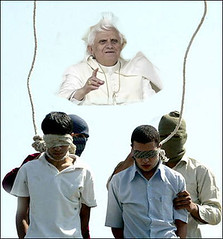
Nemat Safavi from the city of Ardebil, Mehdi P. from Tabriz, and Mohsen Gh. from Shiraz were all arrested, tried and sentenced to death in different courts in Iran, based on accusations of homosexual acts (known as "Lavat").
They were under the age of 18 at the time of arrest and have been kept in prison since then. In Nemat’s case, he was jailed for five years so that he would reach the legal age (according to Islamic law) at which death sentences can be carried out.
Human rights activists working on Nemat's behalf have determined that the authorities in Ardebil are claiming Nemat dons not even exist. Having observed many similar cases before, IRQR considers this statement to be reason for even greater worry.
Mehdi and Mohsen are awaiting their execution despite the fact that they have both pleaded innocent and have denied the allegations. There is not one single witness in either of the cases, and even the judge himself has no evidence whatsoever to prove that the plaintiffs are guilty. (According to Islamic law, the accused person would accept his guilt four times, or there would be four male adults testifying on the crime committed, before a court can legally rule on someone’s guilt.)
Nevertheless, the judge has ruled that Mehdi and Mohsen be sentenced to death by the powers vested in him by Islamic punishment rules, which allow a judge to issue a verdict based on his own personal knowledge, even when no physical evidence or witnesses were available.
IRQR is requesting the Iranian government to do the followings:
• Stop the executions immediately
• Give unrestricted access of Human Rights committees and organizations to these cases
• Allow these plaintiffs to be tried in legal courts of law following the international standards, which clearly indicate that no one should be executed for the crimes they have committed when they were children (below age 18 in Iran).
IRQR is asking all individuals, organizations and human rights activists to take action and help us to stop these unlawful and barbaric executions.
RECOMMENDED ACTION
Please send appeals to:
Head of the Judiciary
Ayatollah Sadegh Larijani
Howzeh Riyasat-e Qoveh Qazaiyeh (Office of the Head of the Judiciary)
Pasteur St., Vali Asr Ave., south of Serah-e Jomhouri, Tehran 1316814737, Islamic Republic of Iran
Email: info@dadiran.ir
Leader of the Islamic Republic
Ayatollah Sayed ‘Ali Khamenei, The Office of the Supreme Leader
Islamic Republic Street – End of Shahid Keshvar Doust Street, Tehran, Islamic Republic of Iran
Email: info_leader@leader.ir
via website: http://www.leader.ir/langs/en/index.php?p=letter (English)
http://www.leader.ir/langs/fa/index.php?p=letter (Persian)
To follow up please copy us on your email at info@irqr.net
![Reblog this post [with Zemanta]](http://img.zemanta.com/reblog_e.png?x-id=cfe016f9-356a-4f59-8bbc-800a04a9435c)
Tuesday, 10 November 2009
UNHCR accepts three gay Iranian refugees

IRQR supports the many Iranian gay refugees who flee to Turkey.
The three are Ali, 31 years-old, Ahmad, 30 years-old, and Farhad, 25 years-old.
![Reblog this post [with Zemanta]](http://img.zemanta.com/reblog_e.png?x-id=2c1032a3-fdc2-4ad5-a450-0895f64d9ec8)
Wednesday, 7 October 2009
Interview: Arsham Parsi of Iranian Railroad for Queer Refugees

By Johnny Simpson
Arsham Parsi, a gay Iranian activist, fled Iran for his life in 2005. He settled in Canada in 2006 and founded IRQR, an NGO that helps LGBTs flee Iran or fight their deportation back to certain death.
In early 2005, Arsham Parsi was engaged in perhaps the most hazardous profession in the Islamic Republic of Iran. Then a 24-year-old native of Shiraz, Iran's sixth-largest city, Mr. Parsi was working secretly in the city of his birth as a gay activist promoting LGBT rights in the Islamic Republic. In that capacity, Arsham operated a clandestine Yahoo chat room called Voice Celebration, counseled suicidal gay teens online, and had been assisting a doctor since 2002 with a study of HIV among local gay and bisexual men.
In 2001, Mr. Parsi had formed a small LGBT Internet group called Rangin Kaman, or the Rainbow Group, which was renamed the Persian Gay and Lesbian Organization in 2004. As the PGLO would not be recognized in Iran, a friend of Mr. Parsi's officially registered PGLO in Norway.
The PGLO later became the foundation for Mr. Parsi's Toronto-based Iranian Queer Organization (IRQO) in 2006. IRQO would later be reinvented and renamed as the Iranian Railroad for Queer Refugees, or IRQR, in 2008.
Arsham knew the risks inherent in his many activities on behalf of Iranian LGBTs in the Islamic Republic, and he had plenty to fear.
After the Islamic Revolution of 1979 the theocratic Shiite Islamist regime, founded by the Ayatollah Ruhollah Khomeini, had codified the persecution of homosexuals into Iran's Islamic penal codes. Just being gay in Iran became an offense punishable by death.
Human rights groups such as AI, Human Rights Watch and ILGA estimate that over 4000 Iranian gays have been exterminated by the Islamic state since the Revolution. Many LGBT advocates are calling Iran's state-sponsored pogrom a gay holocaust not unlike that perpetrated by Hitler's Germany during WWII, now symbolized by the pink triangles gay men rounded up by the Nazis were forced to wear in death camps such as Auschwitz.
Because of those very real dangers, Mr. Parsi was always most discrete in his activism. He operated under aliases both online and in his assistance with HIV research in his native Shiraz. In early March of 2005, Mr. Parsi received the news he had long dreaded: a friend who had been arrested and released informed him that the authorities were seeking out a gay activist named Arsham. They knew him by name.
On March 5, 2005, Mr. Parsi fled the country and sought refuge in neighboring Turkey. Mr. Parsi was eventually granted asylum by the UN High Commissioner for Refugees (UNHCR) and resettled in Toronto, Ontario in 2006.
The situation remains gravely desperate for LGBTs in the Islamic Republic. Yet even when Iranian LGBTs do manage to flee the country, the danger is far from over. Many LGBTs flee Iran only to face violence in Turkey. Ten have been murdered there so far this year. And even should Iranian LGBTs make it to more tolerant Western countries like Britain or Holland, asylum is not guaranteed.
Many refugees now in the West, well-known to the regime they fled in fear of their lives, face deportation and certain death in Iran. Because of dire situations like these for Iranian LGBTs both within and without Iran, the horrors of which Mr. Parsi knows all too personally, he founded the Iranian Queer Organization (IRQO) in Toronto in 2006.
In 2008, IRQO was restructured and renamed the Iranian Railroad for Queer Refugees. Modeled on the US Civil War-era Underground Railroad, which smuggled slaves in the South to freedom in the North, Mr. Parsi has been tireless in his efforts on behalf of Iranian LGBTs, seeking safe havens both within and without Iran, assisting with asylum applications, providing housing and financial assistance to those in desperate need, and petitioning Western and other governments of behalf of Iranian LGBTs facing deportation back to Iran.
Mr. Parsi is also co-coordinator and cultural ambassador to the Stockholm-based International Lesbian and Gay Cultural Network (ILGCN), an official member of the Brussels-based International Lesbian and Gay Association (ILGA), the Toronto-based Rainbow Railroad group, and the Berlin-based Advisory Committee of the Hirschfeld-Eddy Foundation for LGBT Human Rights. In April 2008, Mr. Parsi's former Iranian Queer Organization (IRQO) received the Felipa de Souza Award by the New York-based International Gay and Lesbian Human Rights Commission (IGLHRC). Two months later, Mr. Parsi's work was recognized with the Toronto Pride Award for Excellence in Human Rights. IRQR, of which Mr. Parsi is both a founder and Executive Director, is a federally incorporated international not-for-profit human rights organization based in Toronto, Canada.
IRQR also has European branch offices in the Netherlands, and operates secretly in Iran where it is banned. Mr. Parsi also plans to register IRQR in the United States as a 501(c) non-profit NGO in order to get more support for IRQR from the Americans.
I first became aware of Mr. Parsi and the Iranian Railroad for Queer Refugees when I began researching and reporting on the horrific human rights situation for LGBTs in Iran for Digital Journal back in March of this year. Mr. Parsi recently took time out from his hectic schedule to grant an interview for Digital Journal.
DJ: Given Iranian President Mahmoud Ahmadinejad's notorious statement at Columbia University in 2007 that "there are no gays in Iran," I would like to start with a question that I'm sure is on many of our readers' minds. Has life for LGBTs in Iran become even worse under Ahmadinejad's presidency?
Arsham: That is the first question many people ask me. The truth is, the situation for LGBTs in Iran has always been very bad, as far back as I can remember.
While I was still living in Iran, I secretly began working for the advancement of LGBT rights back in 2001 because the situation was so terrible. That was long before Ahmadinejad took office (in August 2005). I would like to add here that in late June of this year, when Ahmadinejad was being charged by the opposition with election fraud, he accused his opponents of officially pandering to "thieves, homosexuals and scumbags" in exchange for their votes. So as you can see, the cat is out of the bag now. Even Ahmadinejad admits there are gays in Iran!
DJ: Speaking of the opposition, has the Green Revolution changed the situation for LGBTs in Iran? If so, for better or worse? Or has nothing changed, given that Ahmadinejad is still President?
Arsham: Life still remains very bad for LGBTs in Iran. In some ways, it is a little worse. LGBTs were very prominent in supporting Mir Hussein Mousavi and the Greens. As I mentioned previously, Ahmadinejad lumped homosexuals in with "thieves and scumbags," so gays remain a very easy target for the government. And they are still being persecuted and sentenced to death in Iran.
So to answer your question, nothing has really changed much. Life for LGBTs in Iran is still as bad as it ever was. But the Iranian LGBT community is very angry today and is taking a stand, in addition to minorities like the Baha'i who are also persecuted by the regime. These are the people you see in the streets of Iran. They are all unhappy with the discrimination and being targeted by the government. They are saying, "Enough is enough!" They’re taking to the streets to support the Green movement and saying, "We do exist, we didn’t vote for you and we want our votes back."
DJ: You emigrated to Canada in 2006. Can you tell us how life has been for you here in the West? Any particularly memorable experiences, good or bad, that you would like to share with us?
Arsham: One day in early 2008 I was riding the subway in Toronto. I was on my way back from college and very tired. Somebody called out to me in Persian and said, "Are you Arsham Parsi?" When I said yes, he slapped me in the face and said, “I hate you and the organization for which you work, and all the lies you say about the situation of queers being bad in Iran!"
I just knew what he was going to say next. The first thing I told him was, “I can call the police, and I hope you know that to slap someone for their sexual orientation can result in imprisonment here. So I hope you have a good reason for doing it!"
He then asked me, “Have you ever heard of the tribe of Lut, who were stoned by God for committing sodomy?” We wound up standing and talking in the subway for nearly two hours. It might surprise you to know that afterward he hugged me, kissed my face, apologized and said, “If queers are the people you are talking about, I have no problem with them.”
We are now friends, and speak over the phone every few weeks, and sometimes treat each other to coffee.
That experience taught me a very important lesson. In order to fight homophobia we can't just write articles, post news items, publish books or run campaigns. We have to roll up our sleeves, stand on the streets, and fight against the hate it even if means we get slapped, because there is no guarantee that homophobic people will see or read these materials.
There is no substitute for direct human communication. A homophobic person changed who never would have without that direct human exchange of ideas. Someone with lack of access to information about queers had been brought up as a homophobic person.
It was interesting to see his attitude change when I gave him a key chain as a small gift and asked him, “How old are you?” He said, “In two days I will be twenty.” So I took a gift out of my bag that I had bought for one of my friends and gave it to him. He asked me, “What is this?” I said, “Isn't it your birthday? Happy birthday, take it!" In response he said, “I do not have a problem with real queers. My problem is with those who sell their bodies.” So now friends who work in support of sex workers had to give him a gift!
DJ: If you'll pardon the pun, what else has struck you profoundly since coming to the West?
Arsha,: One of my most personally moving experiences was seeing the movie about Harvey Milk last year. Of how he even had to fight other homosexuals in his battle for gay rights for all. I myself have confronted some of that same resistance and hostility from the Iranian queer community, so I greatly identified with that. But what struck me most of all in the film was when he (Milk) was shot. The first thing that popped into my mind was, "Is this what is going to happen to me?"
DJ: Have there been any threats that lead to believe you are in danger?
Arsham: Of course I get hateful emails from people who do not understand either myself or gays in general, but they are in the minority. The public's support for myself and IRQR has been overwhelming positive and supportive. I know that my very public activism may attract attention from some bad people who don't like what I do, but to answer your question, no. I don't feel like I'm in danger. And I cannot let such feelings interfere with my work. Too many other Iranian LGBTs are in far greater danger than I today. All I am saying is that watching Harvey Milk get shot affected me very personally as a gay rights activist.
DJ: Back to Iran and IRQR for a moment. After researching many of the refugee reports in the IRQR files, the case of Mehdi N. really stood out from the rest, and that's saying a lot. Your thoughts?
Arsham: A terrible situation. As a young gay man in Iran, Mehdi had to hide his sexuality from his friends and family. He was raped by his boyfriend and sexually abused by his boyfriend's friends. Mehdi was then forced to have sex with his boyfriend while the friends recorded it all on a cellphone camera without Mehdi's knowledge or consent.
That video of Mehdi being raped was emailed to all of Mehdi's friends, even to his family. Such a thing would be horrible even in the West. You can't imagine how bad it was in Iran.
Mehdi fled to Turkey in 2007 when he was 28 years old. He stayed there for six months, very lonely and always afraid that he would be deported back to Iran. He didn't know about his ability to apply for asylum with the UN High Commissioner for Refugees in Turkey, nor did he know about us (IRQR).
Eventually someone helped him get a flight to Germany. From what Mehdi told me, when he landed he told the police he was a gay man from Iran seeking asylum. A police officer shouted at him, "What are you doing here!" Mehdi feared for his life and began to cry. Even worse, the judge at his asylum hearing in Germany ridiculed and disparaged him, and told Mehdi he didn't even believe he was gay. Think about that. In Iran, Mehdi had to deny he was homosexual. In Germany, he had to prove it to keep from being deported back!
Shortly after the hearing, Mehdi received a letter informing him that his asylum petition had been denied, and that he would be deported back to Iran. The government reduced his subsistence payment to 135 Euros a month while he awaited deportation. At the time, he was living in a home with about seventy other refugees. The police came every few days to deport some people back. Mehdi feared death every time there was a knock on the door.
That was all back in March. I flew over to Germany myself to petition the government, and started an online campaign at IRQR on his behalf. Fortunately, we were able to find an excellent sponsor for Mehdi who paid all of his legal fees during his appeal.
On September 17th, Mehdi was finally granted official status as a refugee in Germany. Nobody was happier than I at the news, except for Mehdi of course. Even today he can hardly believe it himself. But it wasn't just me or even IRQR. We all received a tremendous amount of support in the way of letters from all over the world, both to Mehdi personally and petitioning the German government on his behalf. And of course from his generous sponsor who paid all his legal expenses.
Yet of all the terrible things Mehdi had to endure, the rapes, the graphic video clips sent to friends and family in Iran, the hiding, the doubts, the fear of deportation and death at every knock on the door, Mehdi's is a story with a happy ending. Had Mehdi been deported back to Iran to face arrest, imprisonment, torture and most likely execution, it would have saddened me beyond measure.
Knowing all the horrible details of Mehdi's life story as I do, it would have broken my heart. But today we can declare at least one small victory in a much larger war. There are still so many Iranian LGBT refugees in similar situations to Mehdi's. Some are even worse, if you can believe it. But we are doing our absolute best to help them.
DJ: Unbelievable story, Arsham. How many refugee cases are you and IRQR working on right now?
Arsham: IRQR is working on about 250 Iranian queer asylum cases worldwide at the moment. As you can see from Mehdi's case alone, each individual seeking asylum or fighting deportation back to Iran requires a great deal of work, a lot of petitioning and, in the best case scenarios like Mehdi's, some generous sponsors who can assist with living and legal expenses during the often long and arduous asylum and appeals processes.
DJ: How can those who wish to help with yours and IRQR's efforts to rescue Iranian LGBTs like Mehdi?
Arsham: There are many ways ordinary people can help. Even just signing petitions or writing letters on behalf of Iranian LGBT refugees can help more than you know. Though IRQR has no paid staff, we have a great success rate. More than 70% of IRQR's refugee clients have gained asylum status or are in the middle of the resettlement process. IRQR is currently the only progressive Iranian NGO working on behalf of the Iranian LGBT population around the world. Of course, any contributions help greatly, no matter how small. We also offer membership in our IRQR Refugee Sponsorship Plan, through which contributors can sponsor refugees directly. You can find a lot more details on all of our current refugee cases, active petitions and letter-writing campaigns at our main irqr.net web page and on Facebook.
DJ: Let us look to Iran's future for a moment, Arsham. The political situations are very complex both within and without Iran. There is certainly no shortage of worst case scenarios to go around regarding your homeland. But as both an Iranian national who loves his country and people, and as an Iranian LGBT, what is the best case scenario for Iran in your mind?
Arsham: You may not know this, but Iran may have been the first country in the world to have performed a same-sex marriage, way back under the Shah. It was even covered in the news, can you believe it? In the late 1970s, there was even a lot of talk among Iranian LGBTs about starting a gay liberation movement like those in the West. Of course, Khomeini and the Islamic Revolution changed all that. I think the best way is for Iran to become a democratic country, not just in name as a Republic but a real one. When we have a democratic government in which people can choose the lives they wish to live for themselves, and everybody respects each other rights, most of these issues will be resolved. We all want to be respected as citizens of Iran. That is all. If all we Iranians can understand, recognize and accept democracy and freedom, we can solve most of our problems. I am happy that many Iranians know about their rights now, but we are just starting our movement and we need global support, and of course global alliances. If I respect your rights and you mine, there should be no major challenges as there are today.
Wednesday, 1 July 2009
Gay Iranians and the 'Green Revolution'

Iranians are struggling for their rights and we, LGBTQs, are within people. We are active in this battle as citizens of Iran but we do not want to make any problem or additional pressure on our oppressed community.
From a letter to the author by Iranian gay students
Since the declaration of the results of the Iranian Presidential election on June 12 the world has been following what's been termed 'the green revolution' on the streets of Iran's cities.
Much has been written about how women are leading the protests and demands for democracy:
For these wives, mothers, sisters and daughters, their march to oust Iranian President Mahmoud Ahmadinejad has everything to do with their desire for equal rights.
The regime in Iran obviously feels threatened by peaceful female activism. They branded as illegal the One Million Signatures Campaign initiated by women's rights groups in Iran, a campaign to change discriminatory laws against women in that country. Dozens of women involved in the effort have been harassed or jailed by the government.
But there are other, minority, groups suffering in Iran who have bravely joined the protests.
Lesbians and gays suffer severe social disapproval in Iran as in much of the Muslim world (or the Christian, see Uganda or Jamaica) but, as in Iraq and Lebanon, have historically been discreetly tolerated - gay nightclubs existed during the Shah's rule as they did under Saddam's.
Following the Islamic revolution in 1979 they have faced a state which threatens them with death (Iran is one of only a handful of countries where death is the penalty in law for what Iran's version of Sharia law calls 'Lavat') and which uses entrapment and 'morality police'. The regime's homophobic violence has also spilled over into Iraq where Shia death squads hunt gays.
Click image to enlarge map
Over the past ten years Human Rights organisations have documented numerous executions however getting hard information has been clouded by the regime's tactic - aware as they had become of their international image - of using other charges than homosexuality, such as rape.
This is what was alleged in the infamous case of teenagers Mahmoud Asgari and Ayaz Marhoni which produced images whose currency internationally against the regime is as strong as those of Neda, the young women shot by a Basiji militia during the protests on the streets of Tehran.

It is not confirmed that they were in fact gay and information about this and other cases is also clouded by their use by competing exile groups as well as right-wing American groups as propaganda. Nevertheless executions are known to have taken place. The boyfriend of the young Iranian gay asylum seeker Mehdi Kazemi. who eventually won refuge in the UK, was killed by the regime.
The use of rape charges in particular is part of the hypocrisy and violence at the heart of the regime - rape is a tactic they themselves use to suppress and torture:
"It was on Saturday or Sunday that they raped me for the first time. There were three or four huge guys we had not seen before. They came to me and tore my clothes. I tried to resist but two of them laid me on the floor and the third did it. It was done in front of four other detainees.
"My cell mates, especially the older one, tried to console me. They said nobody loses his dignity through such an act. They did it to two other cell mates in the next days. Then it became a routine. We were so weak and beaten up that could not do anything.
"Then the interrogations started again. They said: 'If you don't come to your senses we will send you to Adel Abad [another prison in Shiraz] to the pederasts' section so that you receive such treatment every day.' I was so weak I did not know what to say. Then they asked for my contacts. I told them I had no contacts and I was informed about the demonstrations through the internet."
With the knowledge of what they face if arrested, the bravery of those not only on the streets but those who defy the regime and get word out via the censored and monitored internet is heroic.
All those (and it is around 32000) who have been following one young student on Twitter, Change_for_Iran, have heard first hand about the violent raid on Tehran University dormitories, his going into hiding in the city, his fears for his friends who could not be contacted and then his disappearance then reappearance on Twitter having got himself out of the city.
Gay students from Iran tell me that:
Iranian government is very sensitive about western media and they are monitoring the internet very carefully.
The students contacted me because of a letter which claimed to come from a gay Iranian student organisation which had been circulated by a Toronto, Canada, organisation. It had been quoted in an article I had distributed which was published by the Boston gay magazine Edge but none of them had signed it and they contacted 286 others throughout Iran and none of them had either.
They warned, in a letter signed by 28 named people:
"You will make a big problem for us by publishing this letter especially in this situation that many of students are subject of arrest by Iranian authorities."The fear comes from the suggestion of the existence of an organisation of gay students. Hossein Alizadeh, of the International Gay and Lesbian Human Rights Commission’s says that these fears are well-grounded:
"The reality is that gay people are always the easiest target for the government to go after. I’m worried that if there is a crackdown, they will be targeting gay people. LGBTs have a lot to lose if the result of this is that the current government is more entrenched."Part of the government's crackdown on the 'Green Revolution' has been to, quoting Mahmoud Ahmadinejad, label them "thieves, homosexuals and scumbags".
Yet the irony of this statement, apart from the fact that Ahmadinejad told an American audience in 2007 that "in Iran we don't have homosexuals like in your country", is that, in the case of gays, they do form part of the opposition.

'Morality police' assaulting a young man on a Tehran street
"The Iranian LGBT community is angry, in addition all minorities. These are the people you see in the streets of Iran," says Arsham Parsi, of the IRanian Queer Railroad (IRQR). Like women and young people who face harassment and worse from the regime's morality police they are unhappy with the discrimination and being targeted by the government, he says.
"Enough is enough. They’re going to the street to support the green movement and saying, ’We do exist, we didn’t vote for you and we want our votes back.’"LGBT activists in the west and their supporters and allies owe it to their incredibly brave brothers and sisters in Iran to do all we can to support the 'Green Revolution'

At a protest outside the London Iranian embassy
![Reblog this post [with Zemanta]](http://img.zemanta.com/reblog_e.png?x-id=400a1daf-8605-4afa-ab59-b11118a56539)
Thursday, 11 June 2009
Urgent - Call to Action: Two Iranian Queer Asylum Seekers Need Your Support
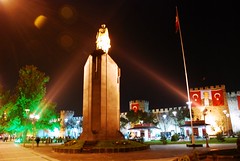 Image by sardic via Flickr
Thousands of refugees live in dingy flats behind the pastel facades, hoping to find a permanent home in this or another country. Among them, there are a few dozen LGBT asylum seekers who, even among these exiles, are exiled.
If everything goes smoothly, refugees will spend two or three years in this semi-existence before moving on to the United States, Canada, Australia, or Europe. It's an interminable wait. Leery of an influx of foreign labor, Turkey won't give refugees work papers or financial or social assistance, even while making them pay taxes.
Refugees are corralled into smaller cities where, perhaps, they are easier to monitor. LGBT refugees are doubly vulnerable. They are discriminated against by merchants, landlords, and employers not only for being Iranian, but for being gay. Yet, in comparison to Iran, Turkey is a square deal. " - Out Magazine, June 2009Roodabeh is a 30 year-old lesbian who fled Iran for Turkey in February, 2008. Ali is a 29 year-old Iranian gay asylum seeker who escaped in January, 2008. They claimed refugee status on the basis of their sexual orientation and well-known fear of persecution at the office of the United Nations High Commissioner for Refugees in Ankara.
Roodabeh and Ali still have not received refugee status. The common hardships that queer refugees experience are increased for them because they are in a very dire situation. Immediate attention by the UNHCR is critical!
They have been waiting for a UNHCR decision almost 18 months with no financial support. Our Executive Director, Arsham Parsi, traveled to Turkey several times and met with UNHCR staff regarding Iranian queer asylum seekers and their vulnerability issues. But unfortunately because of the large number of cases and limited resources, UNHCR is facing a backlog, the effect of which is devastating for asylum seekers who are living in a terrible situation.
Roodabeh and Ali had a difficult situation in Iran and they escaped to save their lives, but they still have no basic rights.
Please show your support by writing to the United Nations High Commissioner for Refugees (UNHCR) and urge them to expedite the refugee process for Roodabeh and Ali. There are two ways you can help:
1. You may copy and paste the sample letters in English into an email and send it to UNHCR; OR
2. You may write your own letter in support of Roodabeh and Ali.
Send your letters to Turan@unhcr.org and please cc: IRQR at info@irqr.net for tracking purposes.
You can also fax letters to the UNHCR at 0090-312-441-1738, ATTN: Legal Department. If you choose to fax your letter, please email a copy to info@irqr.net.
Thank you for your support and please send this call for your friends and list
serves to have more support.
To read a portion of Roodabeh and Ali's letters to IRQR about their situation and our sample letter please visit our website at WWW.IRQR.NET
![Reblog this post [with Zemanta]](http://img.zemanta.com/reblog_e.png?x-id=4c745809-f091-4bad-9250-8a62d725f51b)
Monday, 27 April 2009
IRanian Queer Railroad Refugee Sponsorship Plan
What is RSP?
RSP is an IRQR initiative that aims to provide aid and care for the most vulnerable and at risk Iranian queer asylum seekers, who have fled Iran to save themselves from torture, arrest, prosecution and death. It aims to create a community of friends and supporters who would be willing to sponsor Iranian queer asylum seekers during part or all of their stay in transit countries before they are assigned to and settled in safe countries.
What are the conditions of Iranian queer asylum seekers?
Most of Iranian queer asylum seekers have no source of income, no parental support, no work rights and no access to health resources and medication. They often live in crowded houses in traditional satellite cities in countries such as Turkey, Malaysia and European countries. Their houses often have no heat and sanitary facilities. Many of them are young educated individuals who have fled Iran due to a well-founded fear of threatened or ongoing violence or persecution on grounds of sexual orientation. They are often traumatized, tired, and destitute and in need of support, be it food, medical care, counseling or accessing the right legal advice.
How can you help Iranian queer asylum seekers?
With $50 a month, you can sponsor an Iranian queer asylum seeker and ensure his/her access to basic food and accommodation.
SPONSOR NOW
After completing your sponsorship, you will immediately receive more information about your sponsored friend. We will also mail you more about his or her life, including information about his or her status and ways you can communicate with him or her via phone or e-mail.
Just send an email to rsp@irqr.net or call us at 001-416-548-4171 and we will give you more information that how you can become one of RSP members. Become Member of IRanian Queer Railroad Refugee Sponsorship Plan - RSP
Please visit our website to find more information about this humanitarian plan http://www.irqr.net/RSP.htm
Subscribe to:
Posts (Atom)


 RSS feed


 Join our page

