Monday, 28 February 2011

New Archbishop of Nigeria Anglican Church declares support for homophobia

Source: Justice for Gay Africans Society


In an unexpected but dramatic turn of events at St Marylebone Parish Church London, the Coordinator of Justice for Gay Africans Society [JfGA], Mr. Godwyns Onwuchekwa, confronted the newly consecrated Archbishop of the Anglican Church in Nigeria on issues relating to lesbian, gay, bisexual and transgender people [LGBT].


"Let me say this; the Anglican Church in Nigeria, emphatically does not accept gay people. Our bible is against it, the word of God is against it. Gay or lesbianism or whatever… it is like saying we condone drug users. What we offer them is repentance and deliverance from that evil spirit. Do not come here to tell me about grace; what grace? We will never accept it”, the Archbishop furiously replied.

The Archbishop, the Most Revd. Nicholas Okoh succeeded the former well known homophobe Peter Akinola. Mr. Okoh was on a pastoral visit to Nigerians of the Anglican faith in the UK and held an interactive open meeting at St Marylebone Parish Church London.

In his question, Godwyns who was brought up a Christian of the Anglican faith quoted the controversial Leviticus 18:22 which condemns homosexual sex, but also compared it to the subsequent verses in the same line of laws in Leviticus 21:17 which outlaws priests with physical disabilities. He then asked how the Archbishop how he will turn a new page for the church in Nigeria to desist from influencing state-sponsored homophobia.

Event: Fleeing Homophobia conference

Each year, thousands of lesbian, gay, bisexual, transgender and intersex (LGBTI) asylum seekers apply for asylum in EU Member States. During the Fleeing Homophobia project, Sabine Jansen (COC) and Thomas Spijkerboer (VU University Amsterdam) have undertaken a comparative research about how these applications have been dealt with. Further to their findings, they have formulated policy recommendations.

During the conference:
  • The research findings will be shared with a wider audience.
  • The consequences of these findings for policy makers, decision makers, the judiciary, lawyers, NGO’s and activists will be discussed.
  • Academics and people working in practice will share insights and experiences, so as to make these mutually fruitful.
Speakers include Jenni Millbank (University of Technology, Sydney), Nicole LaViolette (University of Ottawa), Sabine Jansen (COC) and Thomas Spijkerboer (VU University Amsterdam).

Further information about the programme, participation and other details of the conference will be published on this website as of 1 April 2011.

Fleeing Homophobia is a project of COC Netherlands and VU University Amsterdam, in cooperation with the Hungarian Helsinki Committee, Avvocatura per i diritti LGBT/ Rete Lenford, and the European Council on Refugees and Exiles.

Fleeing Homophobia is funded by the European Refugee Fund, the Dutch Ministry of Justice, and the participating organisations.
Enhanced by Zemanta

Sunday, 27 February 2011

Event: London screening for new documentary on Ugandan LGBT asylum seekers


Source: UKLGIG

In the wake of the murder of Ugandan LGBTI rights activist David Kato, and following growing concern over the practice of removing sexual and gender minority asylum claimants back to their home countries, UK Lesbian and Gay Immigration Group (UKLGIG), the Refugee Law Project and the Civil Society Coalition on Human Rights and Constitutional Law are holding a public launch of a revealing documentary on the realities of gay, lesbian and trans asylum seeking in London.

For many LGBTI Africans, coming out to family and friends at home is not even an option. Before they can come out, they have first to get out. This means not only finding means to escape the political forces promoting homophobia at home, but also dealing with the hypocrisies and failings of asylum systems the world over.

Through the true stories of five individuals, 'Getting Out', a sixty minute documentary shot in Uganda, South Africa, Geneva and London, with supporting footage from Malawi and Zimbabwe, explores just what it takes ...

The screening will be followed by a panel discussion with guest speakers including:
  • Dr Chris Dolan, Director of Refugee Law Project; 
  • S. Chelvan, Barrister, No5 Chambers
  • Ugandan LGBTI Activist (tbc) and;
  • a representative from the Home Office.
After the discussion there will be the opportunity to interact with two of the asylum seekers featured in the film, as well as the producer and directors.
  • Screening date: Tuesday 29 March at 7pm (nb: running time is 60 minutes)
  • Venue: The Frontline Club, 13 Norfolk Place London W2 1QJ (Tube is Paddington)
  • RSVP to admin@uklgig.org.uk
On 11 February the Refugee Law Project (RLP) of Makerere University in Kampala, Uganda, in collaboration with the Civil Society Coalition on Human Rights and Constitutional Law launched 'Getting Out' in Uganda.
Enhanced by Zemanta

Saturday, 26 February 2011

Video: explaining US asylum and immigration law for LGBT

Source: SFGAM

Amron-Paul from SFGAM talked to Immigration Attorney Zachary Nightingale about the immigration laws for the gay and transgender communities in the U.S..

Part one


Part two

In Spain, NGOs win right of access to detention centres

Source: Migreurop

[Google translation]

We, the organizations belonging to the Spanish Migreurop [Abedie, Acsur, Andalucía Acoge, Asociación Pro Derechos Humanos de Andalucía, CEAR, Federación de SOS Racismo], welcome the resolution of Magistrate 6 Madrid, January 13 last dictation, defending the right of access for NGOs in the Centro de Extranjeros internamiento (CIEs) of Madrid, to ensure the rights of detainees, and directed management of the center to remove the obstacles currently impeding the exercise of this right of access.

Consider the resolution as a fundamental step on the path to the rights of strangers trapped in the CIEs.

Congratulations organizations Pueblos Unidos, SOS Racismo Madrid and the Ferrocarril Clandestino who, through their tenacity, have made this success possible.

Demand that the Spanish Government should take note of the basis for judicial resolution, incorporates the Regulation under the Foreigners Act (Ley de Extranjería) in development and takes into account the requests that we, social organizations , have sent him about it.

While arguing for the disappearance of CIEs, we require that their existence does not affect other rights that deprivation of freedom of movement, as reported in the judicial resolution.  To ensure this, we believe that the right of access in CIEs social organizations are exercising a right of paramount importance, as claimed by Migreurop throughout the EU.

Enhanced by Zemanta

Friday, 25 February 2011

Shallow reporting on LGBTI topics in East Africa

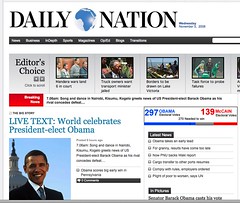
The Daily Nation on Obama NightImage by afromusing via Flickr
By Kenne Mwikya

I have generally kept off the news about David Kato’s death, followed by a sham investigation, BS analysis and the fact that his murder is being used in a myriad of ways and to achieve wide ranging selfish gains. The analysis around David’s killing has kept off assessing activism in East Africa and has largely been about eulogizing him to what end, I don’t know. The patterns on anything ‘queer’ or ‘homophobic’ Uganda are the same: blaming the US evangelical right, Ssempa and giving undeserved power to the likes of Giles Muhame while incessantly complaining that the ‘west’ should do more. Quickly after that is some potent form of disillusionment that leads commentators – largely comfortable and/or inhabiting western(ized) spaces to conclude on the concept of ‘African homophobia’ and wait for the next installment of the African queer drama. Perhaps what has changed is the fervor that used to be attached to such reporting. Even though the news of Kato’s death reverberated above the din of the unrest in Egypt, the news was faced with a sadness that impeded reason – sadly. Condemnation abounded and now, as blogs and tweets and some kind of ‘analysis’ suggest – the preferred route in remembering David is anecdotes on his personal life.

What infuriates me more than what is going on now is what the Daily Nation, Kenya and the Monitor in Uganda – both sister newspapers to each other – have done to Kato’s legacy with their (to put it strongly) bullshit feature on him which I read on the DN2 on Monday. The two page article in the DN2 was based totally on anecdotes from a homophobe who accepted his money, an ex-lover who was ‘relieved’ on hearing the news of his death, an ex gay man who was ‘recruited’ by Kato and a ‘doctor’ who doesn’t respect doctor-patient confidentiality with excerpts from Val Kalende’s blogpost as the only truthful account in the whole thing (and probably added to ‘balance’ it and make it sound somewhat true). Uppity asshole – that is what came out of a two page article depicting an LGBTI activist who most readers did not know and who, after that article, will never realize the magnitude of his work or the influence of his activism in Uganda and elsewhere.

Obama presses on with 'hard line' on undocumented migrants

2_12_11 Immigrant Protest Against Secure Commu...Image by openmediaboston via Flickr

Source: The New York Times

By Julia Preston and Kirk Semple

After months of internal wrangling and confusion over an ambitious nationwide program allowing state and local police agencies to identify immigrants with criminal records, Obama administration immigration officials have decided to take a hard line against communities that try to delay or cancel their participation in the program, according to documents made public late Wednesday 16 February.

The program, Secure Communities, was initiated in late 2008 and is a centerpiece of the Obama administration’s strategy for enforcing immigration laws. The documents include e-mails and other materials showing deliberations among officials of Immigration and Customs Enforcement, which runs the program.

The documents show that well into the second year of the program, as officials were moving forcefully to extend it to hundreds of law enforcement agencies across the country, the officials remained deeply confused over whether state and local governments could decline to join it. The internal discussions intensified as cities and states — including Arlington County, Va., San Francisco, Santa Clara County, Calif., Washington, and the states of Colorado, New York, Oregon and Washington — were considering whether to opt out.

But late last year, the documents show, officials from ICE, as the federal agency is known, reaffirmed its policy that every local jurisdiction in the country would be required to join the program by 2013. The officials developed a plan to isolate and pressure communities that did not want to participate.

Thursday, 24 February 2011

In Georgia, a grisly murder highlights vulnerability of gay people

Hotel Tbilisi Marriott in Rustaveli AvenueTbilisi Marriott Hotel via Wikipedia
Source: Eurasianet

by Giorgi Lomadze

A grisly murder in Tbilisi’s Courtyard Marriott Hotel is focusing attention on the issue of homosexuality in conservative Georgia.

Twenty-six-year-old French engineer Stéphane Cohen, an employee of the French transportation company Systra, was knifed to death on January 27 in his room in the posh hotel. Cohen was in Georgia to help the Tbilisi government set up a city tram system. A 17-year-old Georgian male, recorded on hotel security cameras, has confessed to Cohen’s murder.

Police say robbery was a possible motive – the detained suspect ran off with Cohen’s laptop computer, mobile phone and camera – but declined to comment further to EurasiaNet.org given the case’s “sensitive” nature and the ongoing investigation.

While questions remain about the circumstances surrounding Cohen’s murder, Tbilisi café owner Irakli Kutateladze, who describes himself as the dead man’s close friend, told EurasiaNet.org that the Frenchman met his suspected murderer through GayRomeo.com, a dating site actively used by gay Georgians. Other members of Georgia’s gay community confirmed that they saw Cohen’s profile on the dating site.

African nation to decriminalise gay sex

Map of São Tomé and PríncipeImage via Wikipedia
Source: Pink Paper

By Rex Wockner

São Tomé and Príncipe, an island nation located off the west coast of Africa, will decriminalise gay sex in upcoming revisions to its Criminal Code.

The news was announced by representatives at the country's United Nations Universal Periodic Review session on 31 January.

"Obviously there is a concern about sexual relations between persons of the same sex in our country," the delegation said. "Currently the Criminal Code goes back a very long way when the situation was entirely different and so the courts actually don't apply the penalty anymore. So, despite what's there in the text of the law, it's not applicable because it runs counter to constitutional principles. The new Criminal Code which we're drawing up does not penalize sexual relations between persons of the same sex."

The new code should be in place within four months, the delegation said.

The Micronesian nation of Nauru reportedly made a similar pledge days earlier at its UPR session.

The Universal Periodic Review, a project of the U.N. Human Rights Council, officially analyses the human-rights record of each of the 192 U.N. member nations on a rotating basis once every four years, and urges reviewed nations to protect all human rights and fundamental freedoms.
Enhanced by Zemanta

Wednesday, 23 February 2011

US refusing to extend protections against rape to immigration and asylum detainees

Source: Human Rights Watch

President Barack Obama should direct the Justice Department to apply Prison Rape Elimination Act standards to detainees in US immigration facilities, Human Rights Watch and 10 other organizations have said in a letter to the president.

The office of Attorney General Eric Holder, on February 3, 2011, released proposed standards under the law for detecting, preventing, reducing, and punishing sexual abuse of people in government custody. The standards would exclude detainees in US immigration facilities even though the law calls for establishing standards for all federal, state, and local confinement facilities.
"Rape is rape, whether in a federal prison, a local lockup, or an immigration detention facility," said Jamie Fellner, senior counsel for the US program at Human Rights Watch. "By excluding these detainees, the attorney general's proposed standards put an already vulnerable population at even greater risk than the general prison population."

In Botswana, "turmoil over the issue of homosexuality"

"A real Christian church"http://www....Image via Wikipedia
Source: African Activist

Lesbians, Gays and Bisexuals of Botswana (LEGABIBO) are speaking out about MP Pono Moatlhodi's remarks that "if he had power, he would have those who practise homosexuality killed." Moatlhodi is the Deputy Speaker of the Botswana National Assembly.

LEGABIBO spokesperson Caine Youngman believes that if Moatlhodi wants to be a leader, he needs to start acting like one. Behind the Mask reports:
Annoyed by the comments, a member of Lesbians, Gays and Bisexuals of Botswana (LEGABIBO) Caine Youngman said, “Moatlhodi is a leader and he needs start acting like one. What makes him think he is more Motswana than me, what defines a Motswana? I went through a lot to let anyone treat me or insinuate that I am a second class citizen now.”

He added, “Moatlhodi should remember that he is sitting in parliament because the people of Botswana, including gays and lesbians voted for him and that he gets paid because gays and lesbians of Botswana also pay their taxes.

In an effort to bust the myths that gay people learnt the sexual orientation from the West and that they were often victims of molestation, Youngman clarified, “I never resided in the West nor have I ever attended any school to be taught how to be Gay.  I was never molested nor do I tolerate molesting so why am I being called a western dog, a pervert, wrong and evil.”
A concerned mother wrote the Botswana Gazette angry that Rev. Butale and MP Moatlhodi had "incited confusion and unrest in our society with their misguided opinions."

Tuesday, 22 February 2011

In Denmark, rules tighten for bi-national couples

Source: BBC

By Chris Bowlby

Critics of Denmark's tightening rules on immigration and integration say the country is violating European norms, including human rights legislation. How much has Denmark's approach to these issues been transformed under pressure from a right-wing populist party?

It looks, at first, like a familiar Scandinavian scene.

Outside the Danish parliament in Copenhagen, an international crowd mixing Danish citizens, immigrants from all kinds of backgrounds, is enjoying music and theatre.

"Afro-Danes" are here, reflecting Denmark's long interest in African developments and its past offers of asylum to those fleeing conflicts in Africa and elsewhere.

The crowd laughs as a couple stage a mock marriage. An official asks whether they are marrying "purely for immigration purposes" and "plan to live in a ghetto".

Behind the humour, there is serious anxiety. Denmark has recently tightened its immigration laws again, with a points system designed to make it more difficult for "family reunion" to bring foreigners into the country through marriage.

In Ukraine, claims that refugees are being tortured

Migrants from Afghanistan, Pakistan, Palestine, Democratic Republic of Congo and Somalia peer out from behind a fence of a temporary holding facility for migrants in Chop, Western Ukraine.
Source: The Economist

The walls of fortress Europe have grown increasingly impenetrable of late. A planned fence on the Greek border with Turkey has received some attention. Not so the situation in western Ukraine, where there a growing community of refugees, mainly from Afghanistan and Africa, seeking entrace into the European Union have congregated. Effectively trapped in limbo, these asylum-seekers are subject to abuse, exploitation and torture.

The border crossing between Ukraine and Poland at Shehyni shows up the disconnect between Ukraine and its EU neighbours. On the Ukrainian side, merchants peddle cut-price booze and tobacco in dusty little shops. A smattering of middle-aged women gather in a dark café to tape packs of cigarettes to their arms and legs like bands of ammunition. They trundle through a long maze of gates and turnstiles on their way to the orderly Polish border control-office, where they will test their acumen with exhausted-looking young border guards. Outside, a dog travels freely between the EU and Ukraine via a small hole in the fence.

A lengthy, costly and often humiliating visa regime has made travelling west nearly impossible for most Ukrainians. After shelling out at least a month’s worth of the average Ukrainian salary for the proper clearances, travellers must often report back to the appropriate Kiev-based embassy with visual evidence of their movements: this usually means an impromptu slideshow with their digital camera. Ukraine has made numerous concessions in hopes of easing these restrictions; EU citizens can enter Ukraine for three months visa-free, for example.

In UK, is applying to stay from overseas a good move for foreign same sex partners?

May Hansen celebrating the vote on the same-se...Image via Wikipedia
Source: Free Movement

I’ve just been in court doing yet another case where a solicitor has advised a client to do the ‘right’ thing and go abroad to make an application for entry clearance. This is common in spouse cases and I have myself advised clients to do the same thing in the past.

Unfortunately, these applications are often rejected by Entry Clearance Officer's (ECOs), often but not always using one of the general grounds for refusal, leaving the couple separated for the months and months it takes to rectify the position through an appeal which will almost inevitably succeed.

There are good reasons (in theory) to go abroad and make the application from there. It is legally the right thing to do: making a voluntary departure then joining the queue and paying all the right fees, going through the right process and so on. There is also an important practical benefit: a successful application for entry clearance as a spouse leads to a grant of two years of leave followed by ILR (Indefinite leave to remain) followed a year later by eligibility for citizenship.

Monday, 21 February 2011

In US, gay illegal immigrants face legal, social challenges

Doug Gentry and Alex Benshimol
Source: The Press Enterprise

By David Olson

Doug Gentry and Alex Benshimol have been together nearly six years. The Cathedral City couple plans to spend the rest of their lives together.

But Benshimol, a Venezuelan immigrant, faces deportation for overstaying his visa. The couple's marriage last year in Connecticut doesn't protect them because the U.S. government does not recognize same-sex unions.

"We're married but we're nothing to the government," Benshimol said.

An increasing number of gay illegal immigrants are going public with their stories, some risking deportation to homelands in which lesbian, gay, bisexual and transgendered people face harassment or violence.

Some, like Benshimol, are in marriages, civil unions or domestic partnerships with U.S. citizens, legal bonds that are typically no help in gaining legal residency.

Others fled anti-gay and transgendered repression.

Egypt is no safe haven for refugees: will things improve? Or worsen


Source: Huffington Post

By Lindsey Parietti

Ghada El-Khafagy fled Iraq four years ago with her two young children, in a journey that took her to Jordan, back to Baghdad and then finally to Egypt, but after two weeks of an often violent uprising, this second homeland is no longer a refuge.

“Please do not ask me about how I spent the past week. It was really terrible. I spent most of the time crying at home,” the 31-year-old single mother said. “I’m afraid to go out, to see anyone. I don’t know what might happen.”

Her decision to leave underscores the desperate condition of many of the roughly 100,000 refugees and asylum-seekers living in Cairo. Facing shortages of food and fuel, marauding street gangs and tanks in the streets, many have decided to flee.

For years, Egypt has provided a new home for hundreds of thousands of African and Middle Eastern refugees, a safe haven in the middle of a tumultuous region.

Sunday, 20 February 2011

In Bahrain, over 100 men arrested for "conduct against public morality"

List of sovereign states and dependent territo...Image via Wikipedia
Source: Gay Middle East
Translated and adapted by Nedal Aziz, GME Arabic Editor

According to Al Wasat News Bahrainian police arrested in the early hours of Thursday morning (February 3, 2011) a group of over 100 young men, mostly from Bahrain and GCC countries (another article in Al Ayam claimed that in fact the number was 127 people, including a Syrian and Lebanese). 

One source mentioned (quoted by Al Wasat News) that the police was tipped off by local area residents complaining about noise levels emanating from the Rayan Hall in the el Had Sport Club.  Following the tip off, police immediately raided the party and arrested the men. Some were allegedly drunk, and others were described as wearing women’s’ clothing and make up. El had is a neighbourhood in Muharraq well known as being very devout, religious and conservative.

The attorney of Muharraq District, Nauef Yousef Mahmoud mentioned that group was arrested on the charge of conduct against public morals and will be referred to the Bahrain General Attorney. 

Al Ayam further claimed that the police is now engaged in a separation of the guests from the organisers of the party, and checking if any have a history of “debauchery or sodomy”.  Al Ayam also remarked that the process will take up to forty eight hours after which the embassies of the different nationalities will be informed.

At the time of publication of this article there were 144 extremely homophobic comments on the Al Wasat News article, using derogatory language and calling to apply the harshest penalties on the "sinners".

Traditionally Bahrain is known as relatively open minded and as the playground for the GCC (Gulf Cooperation Council) – where people can relax, drink and enjoy prostitution. This is the second incident in less than three months where the police raided such establishments. These incidents raise questions if this is a change of policy and of the traditional tolerance in Bahrain.
Enhanced by Zemanta

St Lucia: Double standards for acceptance of gays

Position of St. Lucia in the CarribbeanImage via Wikipedia
Source: Panos Caribbean

Joan Didier is considered a foremost expert on marginalized populations.  She works extensively with groups such as men who have sex with men (MSMs) in St. Lucia, advocating on their behalf and fighting to get what she says is their basic human right to “live and love as they want” without fear of retribution or jail.

Didier is a founding member of the AIDS Action Foundation (AAD) and she continues to be its Director.  AAD is a non-profit organization, formed following a meeting in Barbados in 2000 to discuss the regional fight against HIV/AIDS. A lab technician by profession it was Didier’s desire to stave off a disease she described as a “ticking time bomb”, that first influenced her to investigate and safeguard marginalized groups like MSMs from contracting it.

She wants education to play a leading role in that regard.
“There needs to be an education program that speaks to human rights,” Didier says. “Sometimes we can change attitudes without changing laws or we can change attitudes even before we change the laws.”
Didier agrees that stigma and discrimination are huge factors keeping MSM “in the closet.”  But she also believes that buggery laws and morality, as preached by churches like the predominant Roman Catholic faith, do as much damage if not more.

Swiss court upholds ruling to deport gay Iranian convicted drug dealer

No Commercial TransactionsImage by Stewf via Flickr
Source: swissinfo.ch

The Swiss Federal Administrative Court has rejected the appeal of a convicted heroin trafficker against deportation to his native Iran.

The 35-year-old gay Iranian, who is in a civil partnership with a Swiss man, said he feared for his life if he were to be returned since many homosexuals were sentenced to death in Iran.

However, the court ruled on Monday that the fears were not justified even if homosexuality is illegal in Iran and Sharia law provides for the application of the death penalty.

The court stressed that homosexuality is not unusual in Iran, and that it was tolerated as long as it remained hidden, and that it would be wrong to assume that gay Iranians are systematically discriminated against.

It was also noted that the Iranian had made several trips to Iran including two trips with his partner without being subject to any discrimination.

The court concluded that there was no reason to believe that the claimant would be exposed to any risks as defined by the European Convention on Human Rights which prohibits torture, punishment and degrading or humiliating treatment.

The Iranian was given a two-year suspended sentence for drugs trafficking, after being found in possession of 70 grams of heroin by a court in Bern. This meant the loss of his right to renew his Swiss residency permit.
Enhanced by Zemanta

Saturday, 19 February 2011

In Cameroon, young gay man nearly burned alive

Source: ILGA

By Stéphane Tchakam

[Google translation]

In late January 2011, Serges T. was nearly burned alive by a mob in Douala angry because of his homosexuality.

The mishap Serges T. occurred Jan. 28, 2011 at Bonaberi. It was then two o'clock in the morning when this young man is awakened by a cousin, himself dragged there by "a pack of about fifteen people," according to statements Serges T. There are in fact members of a vigilante group to a nearby neighborhood. Vigilante groups in some cities in Cameroon, are responsible for ensuring the safety of people at night. Groups that are often illustrated with blunders.

While Serges does not resolve open, self-defense force out the door and the occupant forcibly accusing him of being a fag.
"They told me they knew I'm gay and that homosexuality is a cult. They told me I had no right to live in the neighborhood.They decided to set fire to my room.  My lessor has begged him not to."
They collect money, however, mobile phone and other interesting object. Serge is dragged out of the room and beaten copiously.
"My body is swollen and they have used laths, sticks, anything they could lay their hands on."
We even suggested burning bright since he spends a tire around his neck and is doused with gasoline, as is done in some corners of the city with the thugs.
"These guys are self-defense of my own neighborhood who came to see what was happening and objected to what it burns me. Still, they kicked me out of the neighborhood and shot other people in the crowd have listed a number of my relatives and they also say that homosexuals are searched in the neighborhood to suffer the same fate."
This is worse off than Serges T. visited the office of master Nkom Alice to tell her story. Prepared to testify openly, but he made his way to his hometown to heal and rejuvenate.

Following the case of funding announced by the European Union LGBT Project, a wave swept homophobic in the Cameroonian press in particular. They are also journalists who issued a fatwa against homosexuals, inviting them to hunt down and burn them. For the association led by master ADEFHO Nkom, "it is the hunt that began homo."
Enhanced by Zemanta

Swiss Minister: 'hardline policies do not 'deter' asylum seekers

Simonetta Sommaruga, member of the Swiss Counc...Image via Wikipedia
Source: swissinfo.ch

Swiss Justice Minister Simonetta Sommaruga believes Switzerland’s asylum policy over the past 20 years has neither solved problems nor boosted public confidence.

In an interview with the NZZ am Sonntag newspaper, Sommaruga spoke of a “crisis of credibility”.
“Over the past 20 years the public has been fooled into thinking that multiple tightenings of the asylum law have made Switzerland unattractive for asylum seekers. But these revisions have neither solved the problems nor generated confidence among the public,” she said.
Sommaruga also addressed the issue of foreign workers. When asked about the dilemma that foreign workers were necessary in Switzerland but they also made local Swiss feel uncomfortable, she admitted this was “basically unsolvable”.
“I believe that for the moment we simply have to put up with this tension,” she said. “Look at the catering industry or care sector – without foreigners it doesn’t work.”

Better integration was necessary, she said, specifically concerning job chances.

She added that the government was keeping an eye on the events in Egypt, which she said could potentially trigger floods of refugees.
“The routes are short between us and North Africa over the Mediterranean and Italy via Turkey,” she said.

Enhanced by Zemanta

Prossy Kakooza: Kato "a hero and an inspiration"

David Kato
By Prossy Kakooza

It is three years and six months since I came to Britain from Uganda to ask for asylum because of my sexuality. Yet it feels like yesterday – especially with the recent news coming from my home country, which has brought back a lot of bad memories.

Hearing about the murder of the Ugandan gay rights campaigner David Kato was heartbreaking. I first heard of him when I was a young lesbian just coming to terms with who I was. Every single day there was a new threat to his life, but he stood tall and unwavering in the face of opposition. So many unknown gay people were disappearing one minute and turning up dead the next in mysterious circumstances; Kato was one of the few people who dared to ask why it happened. Before he died, he had just won a case stopping all major homophobic newspapers from "naming and shaming" gay people in Uganda. For me he was a hero, because he was my voice.

Following that news, it was very sad for me to hear that a lesbian from Uganda, known for legal reasons only as BN, was at Yarl's Wood awaiting deportation, on the grounds that the Home Office did not believe she was gay. Fortunately she has been granted a temporary reprieve. I can relate to this and know how hard it is to get asylum in the UK.

A lot happened to me in Uganda before I came to seek refuge here. I was imprisoned for being gay. I was also gang-raped, badly burned and beaten in a police station.

I managed to escape with the help of a family member. Naively, when I reached England I sighed in relief, thinking it was the end of my suffering and that I was going to be protected straight away – it never occurred to me that I was about to embark on the longest and toughest fight of my life. The asylum system is ruthless and can be very brutal.

Friday, 18 February 2011

Report: Blackmail, extortion the experience of LGBT in sub-Saharan Africa

Source: IGLHRC

Antiquated laws against same-sex sexual activity as well as deeply ingrained social stigma result in the all-too-frequent targeting of lesbian, gay, bisexual and transgender (LGBT) people in Africa for blackmail and extortion, said the International Gay and Lesbian Human Rights Commission (IGLHRC) in a new report.

The report, 'Nowhere to Turn: Blackmail and Extortion of LGBT People in Sub-Saharan Africa', illustrates how LGBT Africans are made doubly vulnerable by the criminalization of homosexuality and the often-violent stigmatization they face if their sexuality is revealed. Based on research from 2007 to the present, the volume features articles and research by leading African activists and academics on the prevalence, severity and impact of these human rights violations on LGBT people in Cameroon, Ghana, Malawi, Nigeria, and Zimbabwe.         

"The tragic reality is that blackmail and extortion are part of the daily lives of many LGBT Africans who are isolated and made vulnerable by homophobic laws and social stigma," says IGLHRC's Executive Director, Cary Alan Johnson. "The responsibility clearly lies with governments to address these crimes and the underlying social and legal vulnerability of LGBT people."

The report's authors vividly depict the isolation, humiliation and manipulation to which LGBT people are subjected by blackmailers and extortionists and describe the threats of exposure, theft, assault, and rape, that can damage and even destroy the lives of victims. Vulnerability to these crimes is faced on a regular basis and families and communities are not safe havens. For example, according to research conducted in Cameroon and featured in the report, "the bulk of blackmail and extortion attempts were committed by other members of the community - 33.9% by neighbors, 11.8% by family members, 11.5% by classmates, and 14.1% by homosexual friends. Police were often complicit in this - either by ignoring or dismissing it or, in 11.5% of cases, directly perpetrating it."

'Nowhere to Turn' explores the role the State plays in these crimes by ignoring blackmail and extortion carried out by police and other officials by failing to prosecute blackmailers, and by charging LGBT victims under sodomy laws when they do find the courage to report blackmail to the authorities.

IGLHRC urges States to take concrete steps to reduce the incidence of these crimes by decriminalizing same-sex sexual activity, educating officials and communities about blackmail laws, and ensuring that all people are able to access judicial mechanisms without prejudice.

Nowhere to Turn: Blackmail and Extortion of LGBT People in Sub-Saharan Africa

Dutch urged to find alternatives to detention

A SVG version of the Netherlands Coat of ArmsImage via Wikipedia
Source: Radio Netherlands

Amnesty International Netherlands says that the Dutch immigration authorities resort to detention too easily and keep illegal aliens incarcerated for far too long. The human rights organisation has called on parliament to take action.

The cabinet argues the detention centres are only used as a last resort, but Amnesty says in actual practice this is not true.

According to Amnesty, the number of illegal aliens held in detention centres averages around 9,000 a year. Judges regularly rule that an incarceration is unlawful. Amnesty says this is hardly surprising as the criteria for detention are too loosely applied.

Amnesty also says the authorities rarely avail themselves of alternatives such as electronic supervision, allowing illegal aliens to post bail, or allowing other persons to act as guarantor. The organisation says this is true even in cases involving vulnerable groups such as the elderly or victims of torture.

A June 2008 Amnesty report The Netherlands: Detention of Irregular Migrants and asylum-seekers included sharp criticism of the Dutch practice of detention and made numerous recommendations.

In 2010, Amnesty made an update of this report which concluded that the main recommendations from 2008 have not followed: Vreemdelingendetentie: The Battle of Human Rights (November 2010).

On January 20, 2011 Amnesty wrote a letter to the House prior to the general consultation on the issue.
Enhanced by Zemanta

Video: Ugandan gay refugee in Kenya tells his story

Source: Hebrew Immigrant Aid Society of Kenya


More on HIAS's work in Kenya

Thursday, 17 February 2011

Judge: Iranian activists in UK cannot be deported

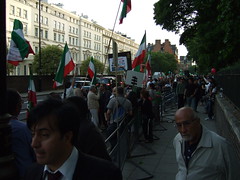
Iranians protest outside the Iranian embassy i...Image by jaimelondonboy via Flickr
Source: UK Human Rights Blog

By Alasdair Henderson

BA (Demonstrators in Britain – risk on return) Iran CG [2011] UKUT 36 (IAC) – read judgment – and SA (Iranian Arabs-no general risk) Iran CG [2011] UKUT 41(IAC) – read judgment.

The Upper Tribunal (Immigration and Asylum Chamber) last week allowed two asylum appeals by Iranian political activists, and laid down guidance on the factors the Home Office and immigration tribunals should take into account when deciding asylum applications and appeals based on political activities here in the UK.

In the midst of all the excitement over the events in Tunisia and Egypt, it is important to remember that most countries in the wider Middle East are still under the control of authoritarian regimes which give scant regard to basic human rights. In particular, the success of the recent protests in removing Presidents Ben Ali and Mubarak from office are a reminder of the very similar, but unsuccessful, protests in Iran following the re-election of President Ahmadinejad in June 2009. The Iranian regime brutally suppressed the protesters in 2009, and there has been a crack-down on opposition activists since. The same reaction by the regime has been evident at renewed protests yesterday and today. The Upper Tribunal had to consider the ongoing situation in Iran in two recent decisions.


The longer and more generally applicable judgment is that of Cranston J in BA (Demonstrators in Britain – risk on return) Iran. The applicant was an Iranian student in the UK who did not have much of a history of political activism in Iran, but who took part in protests outside the Iranian Embassy in London in June and July 2009. His presence at these protests was recorded in a video clip that appeared on YouTube, and his photograph appeared in a story about the protests in an anti-regime publication called Bamdad e Iran associated with a UK-based opposition group called the United Front of Iranian Nationals. He applied for asylum, on the basis that it was likely the Iranian authorities would have seen the video or publication and identified him, and that he would be at a real risk of persecution upon his return to Iran as a result.

Pay for sex gone wrong in Kato’s death? Or cover for religious homophobia and retaliation for winning lawsuit

By Antoine Craigwell

There are two possible motives for David Kato’s death, retaliation for a court judgment or as the police claim, he refused to pay for having sex with another man. The former is part of the wider culture of religiously influenced homophobia, while the latter, made out to be mundane, is being used as a cover for the former.

“I highly think his death is related to the homophobia from the religious groups and to winning the High Court judgment against the newspaper,” said Frank Mugisha, executive director, Sexual Minorities Uganda (SMUG).

Kato was brutally beaten over his head with a hammer in his home on January 25, and died shortly after on his way to hospital. Police reports state that Nsubuga Enock, also known as Sydney, was arrested and had confessed to the crime.

Against the backdrop of mounting international pressure to cancel the stalled anti-homosexuality bill which criminalizes anyone who is gay and tendered in parliament in 2009 by David Bahati, and scrutiny of abuses against members of the lesbian, gay, bisexual and transgender community (LGBT), it seems apparent that the Ugandan authorities are deflecting the motive for Kato’s murder from one of retaliatory action for the High Court judgment and the virulent homophobia to besmirching his memory.

Asylum policy in Europe: ILGA's position

EU flag at the European ParliamentImage by European Parliament via Flickr
ILGA-Europe has produced a policy paper which describes the current European Union's legislation recast process on asylum. It explains ILGA-Europe’s proposals and positions.

Their key demands are:
  • The recast of the “Qualification Directive” and of the “Procedure Directive” should be the opportunity to enhance protection standards offered to people persecuted on the ground of their sexual orientation and gender identity;
  • The definition of the asylum seeker’s “family members” should be improved to clearly include same-sex partners;
  • A new European agency, the European Asylum Support Office, is about to be established. Its role in terms of dissemination of good practices and training of national asylum officers can be of significant importance in the future, and LGBT organisations should be prepared to have an input.
ILGA-Europe is monitoring this recast process, and providing its input to improve the existing legislation. They say they are in a position to engage in a dialogue with the European institutions during the whole recast process. Another of their inputs is to bring to their members a better comprehension of the European standards.

ILGA-Europe will regularly communicate with its membership at national level. Lobbying and advocacy targeting national governments are also very important, they say, and national LGBT organisations have a role to play.

Following the entry into force of the Lisbon Treaty, the recast directives and regulations will be adopted under the co-decision procedure, which is a reinforcement of the European Parliament’s role. However, the Council still has to adopt all the new legislative proposals by a qualified majority, and the debates are expected to be highly controversial.

Ilga Policy Paper on EU Asylum Recast
Enhanced by Zemanta

Wednesday, 16 February 2011

Video: The World's Worst Place to Be Gay?

Scott Mills travels to Uganda where the death penalty could soon be introduced for being gay. The gay Radio 1 DJ finds out what it's like to live in a society which persecutes people like him and meets those who are leading the hate campaign. 

NB: The BBC does not normally ask for YouTube videos to be removed but if this one is please let us know.

Part one


Part two

Ugandan lesbian asylum case demonstrates a broken coalition government promise

By Paul Canning

Following the world-wide spotlight on Britain's treatment of lesbians and gays fleeing persecution in the case of 'BN', another lesbian asylum case from Uganda has come to light which underlines that the coalition govenment's promise to stop returning lesbian and gay asylum seekers to danger has not been realised.

This new case was decided just days before Scott Mills' BBC Three documentary on life for gay Ugandans. His show (reaction to which caused Mills' name to 'trend' on Twitter) graphically demonstrated how unsafe life is if your neighbours know you are gay and how deeply entrenched violent hatred of lesbians and gays is in Uganda. He met one lesbian forced to live in hiding and who had been raped in order to 'cure' her. He spoke with a number of prominent Ugandan agents of persecution including Giles Muhame, Editor of The Rolling Stone newspaper.

Kasha Jacqueline, Executive Director of Freedom and Roam Uganda, was one of those who won the injunction against The Rolling Stone (no relation to US magazine) that prohibited them from publishing any more photos of people (not all of whom actually were gay); stopping any newspaper from 'outing' them, a favourite method of persecution in Uganda. She described in Ugandan newspaper Kampala Dispatch yesterday her experience of being targeted:

In Switzerland, a new campaign addresses asylum seeker destitution

Source: Ecre

Four Swiss organisations – Amnesty International (AI), l'Organisation suisse d'aide aux réfugiés (OSAR), l'Observatoire du droit d'asile et des étrangers (ODAE) and Solidarités sans frontières – have launched a campaign criticising the Swiss “emergency assistance” system for asylum seekers whose applications have been rejected. Since 2008, this group cannot benefit from ordinary social assistance and are only entitled to “emergency assistance” which, according to the organisations, forces around 5,800 people to live in a precarious situation, in violation of their fundamental rights and human dignity.

The system was intended to have a dissuasive effect on people attempting to seek protection in Switzerland and also to convince people who have received a negative decision on their applications to leave the country. However, only 12-17% of the persons concerned by the measure have actually left the country.

Simonetta Sommaruga, the newly-appointed Minister for Justice, has recently criticised the current Swiss asylum system, considering that there has been no improvement over the past 20 years, and that there was a “crisis of credibility” among the public. The four organisations expressed their hope that Mrs Sommaruga will be sensitive to the issue of “emergency assistance”. The Campaign will include awareness-raising activities among the Swiss population and a petition addressed to Minister Sommaruga.
Enhanced by Zemanta

Report: The plight of refused asylum seekers in the UK

Amnesty International Refugee Day Rally - 9Image by lewishamdreamer via Flickr
Source: Oxfam

By Helen Longworth

At the parliamentary launch of our latest research I spoke to a refugee who had been forced into destitution during her passage through the UK asylum system. Ana told me that, to pay just £10 per week to cover some of the costs of staying at a friend’s house, she had turned to having sex with a man from a local pub. No one, under any circumstances, should ever be forced into such a situation.

Yet our research, launched today, is full of such stories. It shows for the first time the horrors of what is happening here in the UK, and that, despite government policy, people do find ways to survive.

Oxfam works with refugees all over the world. While the majority of refugees are hosted by developing nations, a very small number come to the UK. If they are refused asylum here, they are forced to resort to living on their friends’ sofas, surviving on handouts from charities, entering into overtly transactional relationships and sometimes illegal work, including sex work. In short, they are forced to live in destitution.

At Oxfam, we believe that two immediate changes in policy would help to create a fair, efficient asylum system that protects the rights and dignity of the people who use it. These are:
  • giving asylum seekers unconditional cash support until the point of return, and;
  • improving the decision making in the asylum determination process.

Tuesday, 15 February 2011

Video: new German film examines lives of young gay Muslims


Source: Yagg

By Yannick Barbe

[Google translation]

Shahada in Arabic means "testimony of faith." The Shahada, a pillar of Islam is a faith that can be translated as: "There is no other God but Allah and Muhammad is His messenger." How to reconcile faith and desires, religious practice and lifestyle, sometimes in contradiction? That is the question that the film 'Shahada' attempts to meet, crossing the stories of three young Muslims living in Berlin, including that of Sammi, a young gay who can not live openly his love affair with Daniel.

Ensemble film, then, but whose very form is often his greatest weakness: to want too many stories intertwine, Shahada loses strength. The first feature Burhan Qurbani then the costume is a little too light on the "message movie", which is not necessarily synonymous with good movies.

Its merit, however, is to break taboos, to show how fundamentalism can creep in us all, like Maryam, the daughter of Imam - Progressive - Ward, who, after having an abortion, opts for a radical vision of religion, inflicting a kind of divine punishment. Fate certainly the most striking of this work we would have liked unequal love more.

Enhanced by Zemanta

Don't go to Ireland if you need asylum

Source: Irish Refugee Council

On Friday 21st January 2011, the Irish Times reported that, according to a new report from Eurostat (the EU statistics agency), the Office of the Refugee Applications Commissioner rejected 99% of asylum claims decided between July and September 2010, giving Ireland the distinction of the lowest acceptance rate in the EU. In a statement to the newspaper, a spokeswoman for the Department of Justice said that it was not possible to make direct comparisons between Ireland and other jurisdictions as the caseload profiles differ.

For too long, the Irish authorities have explained the high refusal rate by effectively saying that Ireland simply doesn’t get the right type of refugees.  In other words, it maintains that the majority of those who come to Ireland are not in need of international protection. 

It approaches applications on the assumption that most applicants are lying and therefore dismisses their claims on the grounds that they are lacking in credibility.  In reality, it is exceptionally difficult to succeed in a claim for protection in Ireland when the decision makers start with that assumption as the focus will therefore invariably be on minor matters which cannot be explained to their satisfaction.  This is regardless of the prima facie evidence for suggesting that the account may be true.

Report: How immigration detention is increasingly on the United Nations agenda

Immigration detention has increasingly been on the UN agenda over the past two years.

The International Detention Coalition (IDC) has been working at the international level, as well as regionally, through education, networking, advocacy, reporting and research, with a particular focus on preventing and limiting the use of, seeking alternatives to, and using the least restrictive forms of, immigration detention. 

This IDC report aims to provide a brief on the developments and gaps on the immigration detention issue at the UN level over the past few years.


Developments on immigration detention at the UN

Enhanced by Zemanta

In Australia, refugee survivors of boat disaster jailed, isolated

Source: GreenLeft

By Jay Fletcher

Nine weeks after a boat carrying asylum seekers was smashed apart on the shores of Christmas Island on December 15, traumatised survivors remained locked up by the department of immigration. They are almost completely cut off from family and support.

At least 48 people may have died in the devastating shipwreck. The wooden vessel, named SIEV221 by authorities, was thrown onto rocks in savage seas to the north of the island at about 5am.

Christmas Island residents were the first to respond and tried to help. Some filmed shocking images of the shipwreck that were broadcast across Australia.

Refugees from Iran and Iraq drowned by the dozens in the five-metre swell. Others, including three crewmembers from Indonesia, struggled against waves as high as eight metres for more than an hour-and-a-half before customs and navy vessels made it to the scene.

Rescue efforts carried on for 48 hours, but by December 18 customs announced there were no more survivors.

The confirmed death toll was 30, including eight children, but the total deaths will never be known.

Jamal Daoud from the Social Justice Network in Sydney said survivors told him that up to 100 refugees were on the boat.

Monday, 14 February 2011

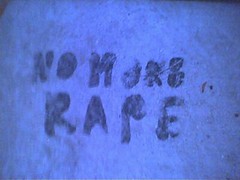
Victory for SA lesbians on 'corrective rape' as Minister finally agrees to meeting

No more rapeImage by Steve Rhodes via Flickr
Source: Behind The Mask

By Simangele Mzizi

The South African Department of Justice and Constitutional Development has confirmed that the department will meet with Cape Town gay rights NGO Luleki Sizwe for talks about the organisation’s petition calling for government to have corrective rape declared a hate crime and combated.

Over 1 million signatures supporting the petition have been collected worldwide, also calling for the harshest sentences to perpetrators of corrective rape and that government acknowledges the existence of corrective rape which, it says the government seems to deny at present.

“We will meet with Luleki Sizwe to discuss the matter. I called them last week to enquire about the logistical aspects of this meeting. They indicated that they would like the meeting to take place in Cape Town. In all likelihood the meeting will take place in Cape Town”, Tlali Tlali spokesperson for the Department of Justice and Constitutional Development said.

Meanwhile Ndumie Funda of Luleki Sizwe confirmed in her blog that the meeting with the justice ministry is “imminent” stating that Lulekisizwe has already received a phone call from the justice ministry enquiring about the venue for the meeting. 

Related Posts with Thumbnails