Showing posts with label australia. Show all posts

Thursday, 19 January 2012

Asylum seekers tunnel to freedom in Indonesia

Video by


Asylum seekers protesting on the roof of the V...
Image via Wikipedia
By Matt Brown

About 30 asylum seekers have escaped from an Indonesian detention centre by digging a tunnel under the wall.

The men escaped through the two-metre tunnel in Surabaya city after using spoons, nails and sticks to dig their way from a toilet, under the main gate to freedom.

As some dug, others had played the traditional South Asian board game of carrom to distract the guards.

All of them, including one who survived the shipwreck which killed about 200 people last month, are believed to be from the Hazara ethnic group.

Immigration officers learned of the Sunday night breakout when an elderly escapee was spotted on the road outside the detention centre in East Java.

So far just 12 have been recaptured.
"The migrants dug the tunnel from the restroom in the church, which is positioned close to the main gate," the head of the East Java provincial ministry, Mashudi, told AFP.

"They managed to dig a space wide and long enough to eventually find their way out."
The escapees said they were frustrated because they had been waiting more than a year for the UN refugee agency to assess their claims.

Some have travelled to Jakarta to press their case while others are believed to be trying to arrange a boat trip to Australia.

The immigration department chief in the province, Arifin Somadilaga, has ordered a crackdown on asylum seekers in the wake of the escape.

He has directed his staff to report all future breaches of discipline to the police who will be urged to treat the asylum seekers as criminals.

He says guards at the centre did not notice the detainees digging a hole under the wall because they are understaffed.

The escape comes after some of the detention centre's detainees told the ABC of beatings from guards.

One of the men who was beaten, Ali Mohammed, said he had earlier escaped the detention centre but was recaptured.
Enhanced by Zemanta

Friday, 6 January 2012

Deportation reprieve for San Francisco gay couple

Source: Gay Star News

By Greg Hernandez

Bradford Wells and Anthony John Makk, together 19 years and married since 2004, had been living under the threat of Makk's imminent deportation to his native Australia.

But they received at least a two-year reprieve this week from U.S. Citizenship and Immigration Services thanks to intervention from House Minority Leader Nancy Pelosi, U.S. Sen. Dianne Feinstein and state Sen. Mark Leno.
'We’re still dizzy from the news,'  Makk tells the San Francisco Chronicle. 'We are elated.'

Added Wells: 'I’m relieved, really excited and relieved. I am so grateful I don’t have to worry about Anthony being taken out of the country.'
The couple, who live in San Francisco's Castro District, were especially desperate not to be separated because Wells is suffering from illnesses related to AIDS and it is Makk who is his primary caregiver.
Pelosi gave the good news to the couple herself this week and issued the following statement: 'The positive resolution of Anthony’s immigration petition is a personal victory for Bradford and Anthony, and keeps this loving couple together.'

Makk has been in the U.S. legally but had run out of extensions on his visa. The two-year reprieve can be renewed, according to Immigration Equality, the advocacy group that championed the case.

Working in the couple's favor for future reprieves are new federal guidelines in these types of cases that take into account such factors as being a primary caregiver, a lack of criminal record, family ties, and a long period of living in the U.S. legally.

Wells and Makk married in Massachusetts in 2004 and the Australian native applied for a green card based on his marriage to a citizen. But his application was denied due to the Defense of Marriage Act (DOMA) passed in 1996 which bars same-sex couples from all federal marital rights.

The U.S. Justice Department announced last year that it would no longer defend DOMA in court but the law has not been officially repealed.
Enhanced by Zemanta

Tuesday, 3 January 2012

Indonesia 'mistreating' refugee disaster survivors

Asylum seekers protesting on the roof of the V...
Image via Wikipedia
By Paul Canning

Two new boats have arrived in Australia carrying asylum seekers as a group who survived a disaster began a hunger strike in Indonesia.

The 18 December boat disaster off the Indonesian island of Java left an estimated 200 dead.

Those who survived have begun a hunger strike after being moved to a detention centre where as many as 12 people are sharing each cell and they claim they are being taunted by guards and kept in inhumane conditions.
''One of us has lost 11 members of his family,'' said Noroz Yousefi, an Iranian asylum seeker.
 ''He is going crazy in here. There are 12 of us in one room and they won't let us go outside, even to get some air."

''When we asked, the guards shouted at us and said, 'This is our country and we can do with you what we want'.''
Activists have put part of the blame for the tragedy on Australian policy.
"The policy of detaining asylum seekers in Indonesia means asylum seekers risk imprisonment if they contact authorities if they are concerned about the seaworthiness of any boat. The fact that Australia impounds and destroys the vessels that bring asylum seekers here means boats used are more likely to be unseaworthy. The crossing from Indonesia is these boats’ last voyage,” said Ian Rintoul, Refugee Action Collective (RAC) spokesperson.

"It doesn’t matter how unsafe the boat is, refugees will try to get to Australia because that is often the only place where they can be safe.”
Meanwhile, controversy has erupted over claims that new media guidelines on privacy could lead to the disappearance of shots of arriving boats on TV. The Immigration Department say non-identification of asylum seekers had long been department policy, in part because identification could pose a threat to the families of asylum seekers in their home countries. But they have also been criticised for blocking investigation of detention centres and allowing cameras into them.

Sue Bolton, a spokeswoman for RAC, told the Sydney Morning Herald that identification was an important part of ensuring asylum seekers did not become dehumanised but stressed their consent should be sought.
Enhanced by Zemanta

Friday, 23 December 2011

2011 round up: Part one: Marriage equality

English: A woman makes her support of her marr...
Image via Wikipedia
By Paul Canning

What stood out on the international LGBT human rights front in 2011? A lot. But lets go out on a limb and pick three things.
  • The repeal of Don't Ask, Don't Tell, the ban on lesbians and gays in the US military, in September.
  • The appearance of LGBT organising, at some level, in most African countries. (See, for example, what's happening in Mozambique in a post from January).
  • The death of the last known gay survivor of the Holocaust, Rudolf Brazda, in France.*
I'll be rounding up the year in a series of posts over the next week - in which no doubt I've missed something, so please let me know what I've missed in the comments!

Marriage equality


In terms of The News, international reporting, this was the year of same-sex marriage.

Same-sex marriage (or 'marriage equality' or 'gay marriage') was a leading international concern - whether in the West or raised as a chimeric threat, particularly in Africa. This year it was legalised in the second most populous US state, home to the UN and intentional media - New York state. American polls also, for the first time, showed clear majority support for marriage equality.

The immigration problems of bi-national, same-sex couples due to the Bill Clinton-era federal Defense of Marriage Act (DOMA) drew national attention in America, but the Obama administration was criticised for being slow to act to use its powers to stop deportations of husbands and wives.

In the UK the Conservative-led government committed itself to marriage equality, there is to be a consultation next year, with Tory Prime Minister David Cameron famously saying he supported it because he was a conservative. The Scottish Nationalist government in Scotland appears likely to legalise same-sex marriage too, although there has been a strong, Catholic Church-led backlash.

In France, although marriage equality failed in the French parliament it is rumored that President Nicholas Sarkozy will announce his support in elections next year, supposedly inspired by Cameron's comments. But in Spain, lesbians and gays fear that a new conservative government may go backwards and convert gay marriages into gay civil unions.

It's been proposed by the Luxembourg government and by the Finnish government, and the Danish government permitted gay marriage in churches. The German parliament is going to vote on marriage equality next year. Civil partnerships are being mooted in Poland and Estonia - a first in a post-Soviet Union state.

Last month the governing Australian Labor Party supported same-sex marriage, though its leader does not and it is likely to fail when it reaches the parliament next year.

In July the Constitutional Court of Colombia ordered the Colombian government to legislate on same-sex relationship recognition - and that if they fail to, same-sex couples will be granted all marriage rights in two years.

Brazil's Supreme Court ruled that same-sex couples are legally entitled to civil unions, and same-sex marriage will be included in the new Nepalese constitution.

In October, in a little noticed but extremely interesting case, a Kenyan court recognised 'traditional' same-sex marriage.

In July, a court in Delhi, India, effectively recognised the marriage of a lesbian couple, whilst ordering that the state must protect them.

* NOTE: Brazda is the last known survivor of the concentration camps. Gad Beck, who managed to escape the camps and helped others survive, is still living.
Enhanced by Zemanta

Sunday, 18 December 2011

Activists say Australia shares responsibility for latest asylum seeker deaths at sea

Map of the Java island and its neighbors
Image via Wikipedia
Source: Refugee Action Coalition

Australia cannot evade its share of the responsibility for yesterday’s tragic sinking of another asylum boat off Java, according to advocates from the Refugee Action Coalition. The boat is believed to have been carrying Afghan and Iranian refugees.

“Australia’s push for Indonesia to detain asylum seekers and to criminalize people smuggling directly leads to the kind of tragedy we’ve seen yet again today,” said Ian Rintoul, RAC spokesperson.
“There’s nothing inherently dangerous about the passage from Indonesia – if it’s in proper boats. If the government is worried about people losing their lives at sea, they should decriminalize people-smuggling so that the voyages can be planned in the open and seaworthy boats can come here without having to sneak into Australian waters in secret.”

“But the policy of detaining asylum seekers in Indonesia means asylum seekers risk imprisonment if they contact authorities if they are concerned about the seaworthiness of any boat. The fact that Australia impounds and destroys the vessels that bring asylum seekers here means boats used are more likely to be unseaworthy. The crossing from Indonesia is these boats’ last voyage.”

“This time we tragically have hundreds of people likely to be dead. No doubt we’ll hear a lot of hypocrisy from government and opposition about the tragedy of lost lives. They’ll say the sinking shows Australia has to deter people from undertaking boat trips. But talk of stopping the boats only makes the situation worse. It doesn’t matter how unsafe the boat is, refugees will try to get to Australia because that is often the only place where they can be safe.”

“According to reports earlier this year, there were 1462 civilian deaths in Afghanistan in the first half of 2011 alone – a 15% increase. May this year was the deadliest month of the war for civilians since 2007. It’s no surprise that people are willing to risk their lives on the trip to Australia."

“Sending people to Nauru or Malaysia will make no difference. People trying to escape war and persecution in Afghanistan or Iran are still going to try and come here because they have no other option. And any refugees who are prevented from coming to Australia by government policies will just undertake other dangerous journeys to Europe or America, with just as much risk to their lives.”

“Australia’s obligation is to welcome asylum seekers. We have resettled a minuscule number of refugees from our region.”

“If the government and opposition really had a concern for asylum seekers’ lives they would institute the humane refugee policy Australia has needed for so long. They’d massively increase our refugee intake from the region, they’d end mandatory detention, decriminalize people-smuggling, remove offshore processing as a policy option, and process and resettle refugees from Indonesia.”

Enhanced by Zemanta

Friday, 2 December 2011

The hypocrisy of stopping the boats

English: Jewish refugees from Russia at port o...Image via Wikipedia
Source: ASRC

By Vince

For quite some time now, a more compassionate policy response to asylum seekers has been undermined by a campaign of delegitimisation and dehumanisation. This has partly been achieved by a series of popular untruths captured into oft repeated slogans that have come to dominate the national discussion.

Oversimplified and misleading catch phrases such as ‘illegals’, ‘queue jumpers’, ‘proper channels’, ‘border security’ and ‘stop the boats’ have caused many Australians to question how compassionate we ought to be to those arriving on our shores. Even though these myths have been thoroughly debunked time and time again, they continue to persist and fuel our prejudices.

But what if we were to put our prejudices towards today’s boat arrivals aside for one moment and consider how we would judge the national debate if it were being conducted about Jewish refugees fleeing the rise of fascism and Nazism in Europe prior to World War II? How would we react to those who labelled Jewish refugees ‘illegals’ and questioned their failure to arrive in a queue-like orderly fashion?

The analogy becomes more apt when we acknowledge that we had similar prejudices towards Jewish refugees during their time of persecution. At the Evian Conference in France in 1938 which was established to deal with the Jewish refugee issue, Australia’s delegate, Thomas W. White, declared that we could not increase our meagre annual quota of 5000 refugees because “as we have no racial problem, we are not desirous of importing one.”

In an attempt to bypass our quota system, what if Jewish refugees had made it to Australia’s shores in large numbers and the government’s response was to detain them for months and years to the point where they began self-harming and suiciding? Would the appropriate response have been to focus on their illegality, their use of improper channels, the threats they might pose to border security or the most effective way to ‘stop the boats?’

Would it not be considered abhorrent if someone today were to retrospectively ask what we could have done to stop Jewish ‘boat people’ fleeing Nazi persecution and to trap them in places of desperation and destitution without adequate protection for their basic human rights? Unfortunately, we don’t have to imagine. Boats filled with Jewish refugees fleeing persecution were turned back by western countries with horrific consequences.

In hindsight, even raising such options, let alone having them dominate the national discussion, would no doubt be considered highly offensive and extremely distasteful. The reaction is instinctive because we can all connect with the Jewish experience of persecution. Yet today, because of the campaign to delegitimise the current wave of ‘boat people’, many Australians have become so detached from the reality of the asylum seeker experience that we cannot make the same connection with an Afghan fleeing the Taliban or an Iranian fleeing an oppressive regime.

Indeed, the chairman of the human rights arm of B’nai B’rith Australia, Anton Block, remarked in a press statement late last year that the official government practice of detaining women and children asylum seekers “revived memories of a darker period of Jewish history” and endorsed the call of the Executive Council of Australian Jewry to end mandatory detention for these vulnerable groups, a position also outlined in their policy platform.

Such analogies are relevant not because the comparisons of suffering are identical. It is both callous and futile to measure one person’s experience of persecution against another. The point is that whether it’s the Jewish refugees of the past or the vast majority of those arriving on Australia’s shores today, all faced persecution and all are deserving of our willingness and capacity to provide protection and the provision of basic human rights. An inability to recognise this fact reveals our own deep-seated prejudices.

Such prejudices, fuelled by misleading slogans, do more than just undermine a more compassionate response; they distract us from acknowledging our own contribution to the problem.

For example, calls for ‘orderly processing’ are framed as legitimate moral concerns for fair and equitable treatment. Yet despite the fact that there is no just and orderly queue, the question that’s never asked is where are we implying asylum seekers go to find protection or await a durable solution? Australia’s answer (along with many other developed nations) is anywhere but here. The result is that over 80 percent of the world’s refugees are hosted in developing nations, often for decades, with minimal support from rich countries. In reality, pushing asylum seekers back into the ‘queue’ results in shifting what is an international problem over to the third world.

Of course, like all slogans and stereotypes, there often exists an element of truth hidden within the gross generalisations. There are legitimate concerns to be addressed when processing undocumented arrivals such as conducting identity, security and health checks. Yet none of these concerns require indefinite and non-reviewable mandatory detention which inevitably results in horrific physical and mental health outcomes. There are legitimate concerns, but there are also choices.

Wednesday, 30 November 2011

Australia releases detained asylum seekers

By Paul Canning

In a major reversal of past policy, Australia has begin releasing asylum seekers who have arrived by boat into the community.

Mandatory detention for them was the policy, adopted as a 'deterrent' by the previous conservative government.

Those released will have the right to work and access health services. Priority for community release under the new bridging visa program will go to asylum seekers who have spent the longest time in detention.

Boat arrivals will also be treated like others who arrive by plane and allowed access to the Tribunal which considers asylum cases. The special rules for boat arrivals saw decisions being consistently overturned on appeal, showing their unfairness.

It is only because of a High Court decision in December last year that boat arrivals could access judicial review at all.

Another legal decision has forced the government to change tack, the one which spiked the so-called 'Malaysia solution' where all boat arrivals would be sent to camps in that country.

Australia's High Court decision was based on a lack of protections for refugees in Malaysia, where beatings of them have been documented in the media and with Malaysia not being a signatory to the Refugee Convention.

Mandatory detention has come under increasing pressure, with moves made earlier to release children and a leading Australian current affairs program documenting the mental harm caused by long-term detention only last month.

Richard Towle, Pacific UNHCR representative, told ABC:
"What we're talking about is people who are claiming asylum and whether they remain in detention or go into the community whilst their claims are looked at and we've always said that it's much fairer and more humane to allow people who don't pose any threats to the community or security risks to the country to be released into the wider community where they can live as normally as possible while their claims are be assessed, that reduces the pressure on the immigration system, it's cheaper and it reduces the high risk of what we've seen recently of self-harm and suicides and very damaging consequences at immigration detention centres. So we believe all round it's a very positive development. That's an approach that's adopted by most asylum countries around the world and we're very pleased that Australia is moving in that direction."

"This is by far the widest practice by countries in the industrialised world, the whole scale and widespread use of mandatory detention for asylum seekers is not used by other countries by and large and that's why we're very pleased that Australia is moving away from those policies heading towards ones that are based on individualised risk assessment, so that by far and the large number of asylum seekers are allowed to remain in the community. They don't pose any threat, they're able ideally to look after themselves. Those with work permits will be able to find work and be self-sufficient and have much better psychological support in the community, rather than in detention."

Friday, 18 November 2011

Video: Australian TV documents mental harm caused by prolonged immigration detention

Watch the whole show:


By Paul Canning

An Australian current affairs show has lifted the lid on the mental damage done to asylum seekers locked up, usually in remote areas, for prolonged periods.

The show exposed how medication prescribed to asylum seekers is being misused, teenagers placed at risk of sexual assault and how many cases of self harm are going unreported, giving the public a false impression of conditions behind the wire.

It asked: Are people being damaged for life by such prolonged detention?

Australia has a mandatory detention policy and most are held for a year, but a significant proportion can be held for much longer.

Last year the Australian Government announced it would begin releasing children into the community to minimise the harm they recognised was caused by their incarceration. About 800 have thus far been released.

What one healthcare professional told the show he had observed in the detention centres was:
"People who seem to be in detention for periods of 12 to 15 months onwards, start to develop very significant mental health problems and certainly people who've been in detention 15, 18 plus months have very high rates of psychiatric morbidity." 
According to clinical psychologist Dr Guy Coffey, among the 2,500 people held in the Darwin, Curtin and Christmas Island centres there were 248 acts of self-harm and 520 expressions of intent to commit self-harm in the three months prior to September 30 this year.

Coffey said:
“What immigration detention does is disrupt what refugees have done for millenniums – find a place of safety and pour their energies into creating a new life. Detention defeats this ambition and throws detained asylum seekers back upon themselves."

“The forced inactivity deprives them of the means to deal with their recent history, and they become prey to anxiety – about past trauma, about the progress of their protection applications, about their family’s safety."

“For those with experiences of political imprisonment, detention directly recalls that experience, causing a constant sense of threat. The legally nice distinction between administrative detention and punitive incarceration is lost on them and many feel criminalised.”
Coffey says that nothing like the patterns of self-harm seen amongst those detained for long periods occurs among asylum seekers in the community or resettled refugees.
"In any other area of public policy a program that was known to directly cause such rates of distress and morbidity would be immediately halted. Detention policy is different. It is subject to endless commentary and inquiries, but the practice of extended detention continues."A nurse at Darwin detention centre said she had been confronted by detainees trying to commit suicide "every single day, all day, every day".
Mandatory detention is touted as a 'deterrent', but Andrew Metcalfe, head of the Department of Immigration, bluntly told an Australian Senate hearing in October that:
“Detaining people for years has not deterred anyone from coming.”
The Australian government has consistently denied access to the centres to reporters. According to refugee activists, this is because the Government does not want the broader population seeing the conditions inside and the impact the camps are having on the detainees.
Enhanced by Zemanta

Thursday, 10 November 2011

Bisexuals need not apply: A comparative appraisal of refugee law and policy in Canada, the United States, and Australia

Illustration of the double moon symbol used by...Image via Wikipedia
By Sean Rehaag, Osgoode Hall Law School

This paper offers an analysis of refugee claims on grounds of bisexuality. After discussing the grounds on which sexual minorities may qualify for refugee status under international refugee law, the paper empirically assesses the success rates of bisexual refugee claimants in three major host states: Canada, the United States, and Australia. It concludes that bisexuals are significantly less successful than other sexual minority groups in obtaining refugee status in those countries. Through an examination of selected published decisions involving bisexual refugee claimants, the author identifies two main areas for concern that may partly account for the difficulties that bisexual refugee claimants encounter: the invisibility of bisexuality as a sexual identity, and negative views held by some refugee claims adjudicators towards bisexuality as well as the reluctance of some adjudicators to grant refugee status to sexual minorities who differ from gay and lesbian identities as traditionally understood.

Bisexuals Need Not Apply: A Comparative Appraisal of Refugee Law and Policy in Canada, the United States, a...

Tuesday, 25 October 2011

Commonwealth chief backs LGBT rights

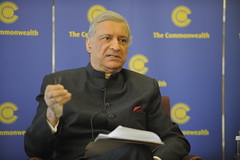
Kamalesh SharmaKamalesh Sharma image by ComSec via Flickr
By Paul Canning

Commonwealth Secretary General Kamalesh Sharma has backed LGBT rights at the start of the Commowealth Heads of Government (CHOGM) meeting in Perth, australia today.

The Commonwealth has been the focus of world wide attention by activists for the issue of discrimination against LGBT people to be discussed for the first time at CHOGM this year. Much of the lobbying has focused on Sharma.

Speaking to an audience of several hundred at the opening ceremony of the Commonwealth People’s Forum this afternoon he said the Commonwealth was about democracy, development and diversity, pointing to the 2009 affirmation of the Commonwealth values and principles.
“This includes a clear commitment to tolerance, respect and understanding,” he said.

“This means we embrace difference, and that includes sexual identity. Discrimination and criminalisation on the grounds of sexual orientation is opposed to our values and and I have had occasion to refer to this in the context of our law-related conferences.”
At the Commonwealth Law Ministers Meeting in Sydney, Australia in July, Sharma said that "vilification and targeting on grounds of sexual orientation is at odds with the fundamental values of the Commonwealth."

Human rights activist Peter Tatchell said with this statement Sharma has "shown strong leadership."
"His speech is a tacit rebuke to the more than 40 Commonwealth member states that continue to criminalise homosexuality, with penalties ranging up to life imprisonment," Tatchell said. "They comprise more than half the countries in the world that treat same-sex relations as a serious criminal offence."
In June Sharma responded to criticism of him published in the Guardian newspaper by Tatchell in an article for Kenya's Nairobi Star.

Sharma claimed that work is going on 'behind the scenes'.
"This sometimes leads to a perception that we are inactive or silent on certain issues," he wrote. "This could not be further from the truth."
Sharma cited work on ratification of human rights treaties, aiding countries with UN human rights periodic reviews (which have consistently included questioning on LGBT rights), the establishment of various National Human Rights Institutions (NHRIs) and working with human rights NGOs.

Sharma claimed that:
"I have consistently made it clear publicly that we deplore hate crimes of any nature and the vilification and targeting of gay and lesbian people runs counter to the fundamental values of the Commonwealth."
Following intense lobbying, the meeting's host, Australian Foreign Minister Kevin Rudd has said that he will call for an end to the laws criminalising homosexuality at CHOGM. The Canadian Foreign Affairs Minister John Baird has also said he will support the call.

However a report today said that India will oppose anything which involves the imposition of penalties for Commonwealth nations that discriminate against gay people.

Commonwealth advisory body, the Eminent Persons Group (EPG), which includes the openly gay retired High Court judge Michael Kirby, has recommended that Commonwealth countries repeal legislation criminalising homosexuality on the grounds that anti-gay laws are hampering efforts to combat the spread of HIV.

Reports today say that India is expected to block a push by Australia, Canada and the UK to set up a Commonwealth human rights and rule-of-law watchdog as recommended by the EPG, arguing that it goes beyond the mandate of the 54-nation group. The proposed leader of the watchdog was reported to be Kirby.

The Times of India reported yesterday that India's opposition was based on concerns such a group would only duplicate the role of the UN Human Rights Council.

According to The Australian newspaper, India's objections are rooted in its concern that a periodic review of its record on human rights by the UN next year will push for the caste system to be declared racist and because it is protecting its neighbour, Sri Lanka, from human rights scrutiny.

These are the four proposals that many LGBTI campaigners want to see on the CHOGM agenda and that they want all Commonwealth member states to adopt:
  • Decriminalisation of homosexuality
  • Laws prohibiting discrimination based on sexual orientation and gender identity
  • The enforcement of legislation against threats and violence, to protect LGBTI people from hate crimes
  • Consultation and dialogue with LGBTI organisations
Enhanced by Zemanta

Friday, 21 October 2011

This Commonwealth summit 'our best chance ever for LGBTI rights'

Commonwealth mapImage via Wikipedia
By Peter Tatchell

Australian Foreign Minister Kevin Rudd will call for an end to the laws criminalising homosexuality at the Commonwealth Heads of Government Meeting (CHOGM) in Perth, Australia, next week.

This announcement follows intense lobbying of Mr Rudd by LGBTI activists from the global north and the global south.

Mr Rudd is the host of CHOGM and will have significant influence over the Commonwealth summit's deliberations.

Lobbying the Commonwealth is paying off. It is great news. Australia did not push for decriminalisation at the last Commonwealth summit, held in Trinidad and Tobago in 2009. This announcement is positive progress.

Huge thanks to the many LGBTI groups and individuals from all over the world who lobbied Kevin Rudd and the Commonwealth Secretary General, Kamalesh Sharma.

I wrote to Kevin Rudd on 5 September, urging him to ensure that LGBTI rights are on the official agenda at the Commonwealth summit. Mr Rudd responded with a commitment to press for gay law reform throughout the Commonwealth.

Commonwealth advisory body, the Eminent Persons Group (EPG), which includes the openly gay retired High Court judge Michael Kirby, has recommended that Commonwealth countries repeal legislation criminalising homosexuality on the grounds that anti-gay laws are hampering efforts to combat the spread of HIV.

Commonwealth countries comprise 30% of the world's population but have more than 60% of the world's people living with HIV.

The EPG report is part of the formal Commonwealth agenda.

Meanwhile, Festus Mogae, the former president of Botswana, has added his voice to calls for the decriminalisation of homosexuality and sex work, in order to help reduce HIV rates.

He told the BBC's Africa Network:
"You have to assist them to protect themselves. I don't think by arresting them you help them."
Reporting on the Australian Foreign Minister's backing for gay law reform throughout the Commonwealth, the Sydney Star Observer writes:
A spokeswoman for Kevin Rudd said he would raise the issue of decriminalisation with foreign ministers from Commonwealth countries attending the 28-30 October Commonwealth Heads of Government Meeting (CHOGM).

"Australia is a global advocate of non-discrimination on the basis of sexual orientation," the spokeswoman said.

"Australia encourages all countries to decriminalise homosexuality by removing all laws imposing criminal penalties for homosexual conduct.

"Mr Rudd will be raising these matters with Commonwealth foreign ministers at CHOGM."

"Australia is encouraging all governments to respond substantively to the EPG recommendations (for decriminalisation)," Rudd's spokeswoman said.
ABC TV News also reports on the bid to discuss the decriminalisation of homosexuality during the official programme of the Commonwealth summit.

These are the four proposals that many LGBTI campaigners want to see on the CHOGM agenda and that they want all Commonwealth member states to adopt:
  • Decriminalisation of homosexuality
  • Laws prohibiting discrimination based on sexual orientation and gender identity
  • The enforcement of legislation against threats and violence, to protect LGBTI people from hate crimes
  • Consultation and dialogue with LGBTI organisations
These four demands echo proposals previously expressed by a coalition of LGBTI campaigners from the global south at meetings of the Commonwealth People's Forum, an ngo side event to the main CHOGM.

Peter Tatchell, is the Director of the human rights organisation, the Peter Tatchell Foundation. 

Updated to add:  The report by the Eminent Persons Group (EPG) to the summit, 'Time for Urgent Reform', has been leaked. It says that:
The Commonwealth could cease to exist unless it takes stronger, more public stands against egregious human rights violations in its member countries.
The leak to Canada's National Post includes a promise by Canadian Foreign Affairs Minister John Baird to join those raising LGBT rights at the summit.

The EPG report contains a proposal for a new Commissioner for Democracy, Rule of Law and Human Rights. It has been reported that this post could be taken by the openly gay former Australian High Court judge Michael Kirby.
Enhanced by Zemanta

Saturday, 15 October 2011

Video: Australian government gives up on 'offshore processing'

Source:


Australia's government abandoned a refugee-swap deal with Malaysia on Thursday and said it would now process asylum seekers on Australian soil, in a major policy back flip that heads off an embarrassing defeat in parliament.

Source: Refugee Action Coalition Sydney

“The Refugee Action Coalition welcomes the fact the government has finally faced facts with its announcement that the government will process asylum seekers in Australia. But rather than leaving them on the table, the amendments should have been completely withdrawn. The Malaysia Agreement has already been a distraction for too long,” said Ian Rintoul, spokesperson for the Refugee Action Coalition

“We are also disappointed that the government has not turned its attention to the shocking conditions in detention. [Immigration] Minister Bowen’s announcement that it will consider bridging visas to manage future overcrowding in detention centres falls a long way short of what’s needed.

“There is nothing in the announcement that gives any relief to the thousands of people languishing in detention. The government talks about ‘managing the detention system’ but it is playing with people’s lives.

“Chris Bowen has admitted he has the power to release asylum seekers on bridging visas yet seems oblivious to crisis of self harm and attempted suicide that his detention system is causing.

“There are 600 stateless people, 1,000 waiting for security clearances, and hundreds of Iranian asylum seekers that cannot be sent anywhere, that could be released immediately.

“The arbitrary and bureaucratic delays in refugee processing are inflicting increasing misery on asylum seekers languishing in detention. Innocent people are literally being driven crazy by the uncertainty.

“Federal Magistrate Court appeals are now being scheduled for February and March next year, condemning asylum seekers to many more months of detention. The fact that so many negative decisions are being overturned at every level of appeal shows that off-shore processing is fundamentally flawed.

“Like third country processing, offshore processing on Christmas Island and mandatory detention are relics of the anti-refugee policies of the Howard era. It is time those policies were killed off too,” said Rintoul.

Enhanced by Zemanta

Friday, 14 October 2011

Will the Commonwealth finally discuss homosexuality?

Current Commonwealth members (blue), current s...Image via Wikipedia
By Paul Canning

People in Commonwealth countries are being urged to support the call for a first-ever discussion about homosexuality at the Commonwealth leaders summit.

13 October, a large group of civil society organisations from throughout the 54-member state association have put forward a 'Statement of Action on the Decriminalisation of Adult Same Sex Conduct in the Commonwealth' for the Commonwealth Heads of Government Meeting (CHOGM) in Perth, Australia, 28 October.

The CHOGM leaders have never in their entire history even discussed – let alone supported – LGBT human rights. They have always refused to consider this humanitarian issue, despite the fact that more than 40 of the 54 Commonwealth member states continue to punish same-sex behaviour with criminal sanctions.

Over half the world's countries that criminalise homosexuality belong to the Commonwealth. Penalties include life imprisonment in Sierra Leone, Tanzania, Pakistan, Uganda, Bangladesh and Guyana. In some countries, including Nigeria, Cameroon and Uganda, homophobic witch-hunts take place.

The Statement says:
"The continued criminalisation of a minority for no other reason than their immutable characteristics is a form of discrimination and persecution that cannot continue amongst a community of nations that has committed itself to protecting human rights and equality before the law."
Following an article in May in The Guardian newspaper, by human rights activist Peter Tatchell, which strongly criticised the Secretary General and the Commonwealth for their failure to speak out against homophobic and transphobic persecution in member countries, Kamalesh Sharma became the first Commonwealth Secretary General to make an explicit and unequivocal public statement criticising homophobia and homophobic discrimination.

Sharma claimed that work is going on 'behind the scenes'.
"This sometimes leads to a perception that we are inactive or silent on certain issues. This could not be further from the truth."
Following further lobbying, at the Commonwealth Law Ministers Meeting in Sydney in July, Sharma reiterated that sexual orientation victimisation is incompatible with Commonwealth values.

However, obvious doubts remain about whether the Commonwealth will take any action. A year ago leaked document obtained by the Guardian showed that Commonwealth staff were told by the Secretary General it is not their job to speak out against human rights abuses

A protest march 28 October in Perth will include protests against the lack of LGBT human rights in many Commonwealth nations.

Meanwhile, a group of 'global south' LGBT activists are pleading to be let in to the Commonwealth People’s Space which takes place alongside CHOGM. This has been the only way that LGBT issues have previously seen the light at the event.

In 2007 in Kampala, Uganda, LGBT activists were humiliated and assaulted by state representatives and the public. Things changed in 2009 in Trinidad and Tobago when a breakthrough saw the Commonwealth People’s Forum (CPF) include LGBT issues in its Civil Society Statement.

However in Perth five LGBT activists from Africa, Asia, the Caribbean, and the Pacific Islands can't get in because 40% of the slots available have been reserved for Australians.

A protest letter from 15 'global south' LGBT groups says:
"Meaningful achievements on sexual citizenship and gender justice in the Commonwealth require the participation of members of civil society whose daily lives are at the core of those issues, the Commonwealth citizens whose humanity and sexuality the Commonwealth continues to allow its members to criminalise, and of representatives of the civil society organizations on the frontlines of work for change in these areas. Our inability to contribute to these initiatives at CPF 2011 (the hallmark of the Commonwealth’s commitment to civil society engagement), and to hold them accountable, will deprive efforts in this area by advocates and governments of critical legitimacy and credibility, and risk half-gains and missteps."
If you are a Commonwealth citizen you can help with the request to Commonwealth leaders to put the decriminalisation of homosexuality, support for LGBT equality and action on HIV on the official CHOGM agenda for discussion by the heads of government of the 54 member states.
  • Email the Commonwealth Secretary General, Kamalesh Sharma: secretary-general@commonwealth.int 
  • Email the CHOGM host, the Australian Foreign Minister Kevin Rudd: Kevin.Rudd.MP@aph.gov.au and also email kevin.rudd@dfat.gov.au 
  • Sign this petition organised by a coalition of HIV organisations.
Update, 19 October: Australian Foreign Minster Kevin Rudd will call for an end to laws criminalising homosexuality at CHOGM.

A spokeswoman for Rudd said he would raise the issue with foreign ministers from Commonwealth countries attending the meeting.
“Australia is a global advocate of non-discrimination on the basis of sexual orientation,” the spokeswoman said.

“Australia encourages all countries to decriminalise homosexuality by removing all laws imposing criminal penalties for homosexual conduct.

“Mr Rudd will be raising these matters with Commonwealth foreign ministers at CHOGM.” 


    Civil Society Statement of Action on the Decriminalisation of Adult Same Sex Conduct in the Commonwealth

    Wednesday, 5 October 2011

    Commonwealth lobbying urged as pressure to discuss homosexuality builds

    Current Commonwealth members (blue), current s...Image via Wikipedia
    By Peter Tatchell

    Please lobby the Secretary General of the Commonwealth association of nations, Kamalesh Sharma, urging him to use his influence to ensure that LGBT human rights are discussed by the Commonwealth heads of government when they meet in Perth, Australia, 28-30 October.

    Commonwealth leaders have never previously discussed the widespread victimisation of LGBT people by Commonwealth member states.
    You can also write to him via the postal address in my letter below. Feel free to take ideas and excerpts from my letter to use in your own submission.

    Please be polite and thank Mr Sharma for his recent statements where he said that victimisation on the grounds of sexual orientation is incompatible with Commonwealth values.

    These are the four LGBT issues we want on the official agenda at the Commonwealth Heads of Government Meeting (CHOGM). We want them agreed and adopted by all Commonwealth nations:
    • Decriminalisation of homosexuality
    • Laws prohibiting discrimination based on sexual orientation and gender identity
    • The enforcement of legislation against threats and violence, to protect LGBT people from hate crimes
    • Consultation and dialogue with LGBT organisations
    The Commonwealth heads of government have always refused to address the widespread violation of LGBT human rights. We want this to be the breakthrough summit.

    Sunday, 2 October 2011

    Video: In Australia, Amnesty leader critices 'Malaysia deal' and Serco accused of negligence and assault

    Amnesty secretary-general Salil Shetty has criticised the Australian federal government's failed Malaysia solution, sending asylum seekers to the country despite its human rights record for 'offshore processing', saying Australia "should know better".

    Source:


    Source: Corporate Watch

    Events in Australia over the last month have shown outsourcing giant Serco's claim to have a worldwide reputation to be more than just corporate speak: the company gets accused of abusing refugees wherever it is.

    The inquest into the Christmas Island tragedy in December 2010, in which an estimated 50 refugees entering Australia were killed after their boat crashed into rocks, heard that guards at the Serco-run Christmas Island detention centre were told by detainees that the boat was coming but did nothing to help them. A Serco officer allegedly told them they would have to wait until morning before they could do anything.

    Things looked even worse for Serco, whose lawyers had tried to stop the detainees' evidence being heard, after staff members admitted they had not been advised what to do if detainees told them refugee boats were about to arrive. And as that inquest adjourned until November, 50 Iranian detainees were signing a complaint accusing Serco guards at the Curtin detention centre in Western Australia of assault and another inquest was concluding, this time into the suicides of three refugees detained in the Villawood Detention Centre, also operated by Serco.

    The centre manager admitted to the inquest that some of the officers had not had sufficient training and the coroner heard how Josefa Rauluni killed himself the day he was due to be deported to Fiji after a one-and-a-half hour stand-off with Serco staff, who were reportedly taunting:

    “One way or another, you are going to the airport. The boys are going to come at get you.” 
    And just as people in the UK are wondering how a company with such a record can keep winning contracts in an ever increasing variety of public services (it is even trying to run the London Fire Brigade's training programme), aboriginal activists in Western Australia were dismayed to learn that Serco had won the contract for running prisoner transfer services in the state, which were tendered after an Aboriginal elder had died of heat stroke in the back of a G4S van. This shouldn't cause too much concern for G4S; it remains the second biggest profiteer from Australia's immigration system.

    No prizes for guessing who's the first.
    Enhanced by Zemanta

    Tuesday, 20 September 2011

    In Australia, new law protects LGBT asylum seekers

    Australian Coat of Arms (adopted 1912)Image via Wikipedia
    Source: AAP

    Australia's Federal parliament has moved to plug a gap in the protection visa system that will help people fleeing dangerous situations, including the threat of honour killings.

    The Senate on Monday 19 September passed legislation that the government says will make the protection visa application process less stressful for some refugees.

    The problem is that, at present, some applicants have to go through lengthy processes that are bound to fail before finally gaining ministerial approval for a visa.

    Under the existing laws only people fleeing persecution for one of five reasons specified in a United Nations convention - race, religion, nationality, social group and political opinion - can receive a protection visa through the usual process.

    However, some people trying to escape from serious harm, such as women fleeing honour killings and homosexuals facing persecution, fall outside those categories.

    That means their applications would be rejected initially and at review, even though Australia's obligations under other international treaties ensure they would not be sent back.

    Greens senator Sarah Hanson-Young said her party strongly supported the Migration Amendment (Complementary Protection) Bill 2011 and had backed a similar unsuccessful bill introduced by former Democrats senator Andrew Bartlett in 2006.

    Monday's amendment would bring Australia into line with other western countries, she said.

    Senator Hanson-Young said Australia had a duty to uphold its international obligations "even when the going gets rough".

    But Liberal senator Michaelia Cash said the proposed changes were not necessary because the immigration minister had discretionary powers to overturn rulings.

    She described the bill as a "cop-out at the highest level".
    "Without ministerial discretionary powers, considerable pressure would be place on the rigorous migration selection criteria," she said.

    "All this bill does is open up another avenue for onshore applications that goes well beyond the requirement of the refugee convention."
    It would provide a further "policy incentive to people smugglers".

    But government frontbencher Mark Arbib said the protection visa process needed to be fixed.
    "(At the moment) people must go through several administrative processes knowing that they are going to be rejected in order to access ministerial public-interest powers," he said.

    "We make them go through a process of applying, failing, seeking review and then failing again just so that they are them able to apply to the minister."

    Enhanced by Zemanta

    Monday, 19 September 2011

    Commonwealth may appoint gay man as 'Commissioner for Good' at annual gathering in October

    Justice of the High Court of Australia, Michae...Justice Michael Kirby image via Wikipedia
    By Paul Canning

    The Commonwealth may appoint openly gay senior judge Michael Kirby as its 'Commissioner for Good' at its October annual meeting in Perth, Australia, according to Civil Liberties Australia.

    The proposed Commissioner is a recommendation from the eleven member Eminent Person's Group (EPG), which was conceived at the Commonwealth Heads of Government Meeting (CHOGM) at Trinidad and Tobago in 2009.

    Kirby is an EPG member and former Justice of the High Court of Australia.

    The EPG was set up to advise the 2011 CHOGM in Australia on how to improve the Commonwealth's institutions to make them stronger and more effective, particularly on how to create a “stronger, more resilient and progressive [organisation] founded on enduring values and principles,” according to Kirby.

    The proposed catch-all commission for governance and liberties "is meant to address the silence and toothlessness of the Commonwealth for decades on human rights issues", says Civil Liberties Australia (CLA).

    CLA report that the Commissioner would hold office for four-to-five years, is likely to be a former judge and report directly to the Commonwealth Ministerial Advisory Group. They understand that the EPG has submitted a concise 'Values Paper', which CHOGM will be asked to endorse. They note that the appointment of an openly gay man to the new position is likely to be resisted by many Commonwealth nations.

    Updated to add: Kirby has 'emphatically denied' reports that he could be appointed. He told SX Magazine in Sydney that:
    “The creation of the office has not been adopted by CHOGM yet. And I cannot think of a ‘news’ story more likely to kill it off than to propose lobbying for a particular candidate at this stage.”
    The Australian Federation of AIDS Organisations says that Kirby will be pushing for discussion of LGBT human rights at the CHOGM meeting in Perth alongside Justice A.P. Shah, former Chief Justice of Delhi, India.

    CHOGM will see concerted lobbying with a Statement of Action of Decriminalisation of Same Sex Conduct currently drawing signatures from groups throughout the Commonwealth.

    Thursday, 1 September 2011

    Video: Australian High Court spikes Malaysia refugee 'swap' deal

    Source:


    Transcript

    KUALA LUMPUR, MALAYSIA - JULY 25:  Australian ...Image by Getty Images via @daylife
    TONY JONES, PRESENTER: A six-one decision from the High Court against the Government has driven a legal stake through the heart of the Malaysian solution and sent the Immigration Minister back to the drawing board.

    The next stop for Chris Bowen could be Nauru.

    Today's setback has been delivered to a government that's looking increasingly embattled.

    Our political correspondent Tom Iggulden was in the High Court in Canberra for today's landmark decision.

    TOM IGGULDEN, REPORTER: The Prime Minister's response to the High Court decision was brief and telling.

    JULIA GILLARD, PRIME MINISTER: Nothing in it is going to diminish our resolve to break the people smuggler's business model. We will study the decision though. Thank you very much.

    TOM IGGULDEN: The Government fought long and hard for the Malaysia solution and now it's in tatters.

    CHRIS BOWEN, IMMIGRATION MINISTER: Let's make no bones about it: today's decision by the High Court is a profoundly disappointing one.

    TOM IGGULDEN: Others say the decision's a triumph for the legal system.

    JULIAN BURNSIDE, HUMAN RIGHTS LAWYER: It takes some intellectual strength for courts to stand up and say that a government is wrong.

    Monday, 29 August 2011

    In Australia, Lebanese gay man wins asylum appeal

    Source: Herald Sun

    By Padraic Murphy

    A man whose marriage to an Australian woman fell apart after he began frequenting gay clubs has been recommended for asylum because she outed him to his family in Lebanon.

    The Lebanese Muslim man came to Australia in 2008 after being sponsored by his Australian wife, whom he met at a barbecue.

    A Refugee Review Tribunal decision said the woman became suspicious of her husband after he had difficulty consummating the marriage. He also began having sex with men.

    The tribunal said he began frequenting Prahran gay clubs, including the Love Machine, before the marriage finally fell apart.

    The man's original application for asylum failed and he took his case to the review tribunal.

    This month the tribunal overturned the original decision, describing the man as a "courageous witness". It found he genuinely faced persecution because his wife had told relatives in Lebanon about his sexuality.
    "Despite the popular view that Lebanon is the gay-friendliest country in the Arab world, some activists say that behind closed doors, sexual minorities often suffer physical and psychological abuse," the tribunal found.
    The tribunal also rejected suggestions the man could return to Lebanon if he suppressed his homosexuality.
    "Consequently, the tribunal accepts that to require the applicant to modify his behaviour in the event that he returns to Lebanon by concealing or suppressing his homosexuality, including the nature of his relationship with the witness, would amount to a persecutory curtailment of his sexual identity," the tribunal found.

    "The tribunal therefore finds that there is more than a remote chance that the applicant will encounter serious harm ... in  the reasonably foreseeable future, should he return to Lebanon."
    The man's case will now be reconsidered by the Immigration Minister before a final asylum decision is made.
    Enhanced by Zemanta

    Friday, 19 August 2011

    Video: More problems for Australia's 'Malaysia deal' on asylum 'boat people'; detainees 'digging their own graves'

    Australian Coat of Arms (adopted 1912)Image via Wikipedia
    By Paul Canning

    With Australia's proposed 'refugee swap' deal with Malaysia - which could see LGBT asylum seekers sent to that unsafe country - now held up in Australia's High Court, there was an astonishing development this week as the Immigration Department, the bureaucrats, raised whether mandatory detention itself should be ended. This comes after numerous riots and reports of increasing cases of 'self harm' in the sprawling and expensive detention estate.

    In this report on conditions at the Christmas Island detention centre, a representative of the workers says that some detainees are digging their own graves and sleeping in them.

    Source:


    ABC political discussion show 'The Insiders' discusses the Malaysia deal (after some discussion on same-sex marriage!)


    Enhanced by Zemanta

    Related Posts with Thumbnails