Showing posts with label pegah emambakhsh. Show all posts

Tuesday, 24 March 2009

Downing Street response to LGBT asylum petition

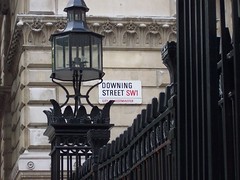
10 Downing StreetImage by Mrs. Knook via Flickr
We received a petition asking:
“We the undersigned petition the Prime Minister to urgently review the way LGBT asylum seekers are treated.”
Details of Petition
“In the light of the cases of Pegah Emembakhsh and Mehdi Kazemi, Iranian LGBT asylum seekers, who sought asylum in the UK, we call upon the Prime Minister for an urgent review of the treatment of all LGBT asylum seekers. In particular we think that the following are needed for fair treatment - 1. Compulsory training for all asylum staff on sexual-orientation and trans-awareness. 2. Explicit instructions to all immigration and asylum staff, and asylum judges, that homophobic and transphobic persecution are legitimate grounds for granting asylum. 3. Clearer and up-to-date guidance from the Home Office for asylum judges to reflect the accurate scale of LGBT persecution throughout the world using expert information from NGOs like Amnesty International and Human Rights Watch. 4. Legal-aid funding for asylum claims needs to be substantially increased.”

The Government’s response

Thank you for your e-petition requesting an urgent review the treatment of lesbian, gay, bi-sexual and transgender (LGBT) asylum seekers.

In accordance with our international obligations, the Government is fully committed to providing protection to all individuals who need it.  We have backed this promise with a considerable investment in people and processes in order to deliver a fairer and faster asylum system.  This includes a 55 day foundation training programme for new asylum case owners followed by ongoing learning and development activities.  Consideration of applications from people expressing a fear of persecution on the grounds of being lesbian, gay, bisexual or a transgender person is explicitly covered in the training.  This is reinforced by clear written instructions for decision-makers.  Decision-makers are also supported by accurate, objective and regularly updated country specific information.  Similarly, Immigration Judges all receive full training in diversity and refugee law and carry out their assessment of refused claims impartially, on behalf of the courts.

Each asylum and human rights claim is considered on its individual merits in accordance with our obligations under the 1951 UN Refugee Convention and the European Convention on Human Rights (ECHR).  Decision-makers in the UK Border Agency have clear instructions about the criteria they must apply and how they should reach a decision.  If an applicant demonstrates a need for international protection and they meet the definition of a refugee under the terms of the 1951 Convention, asylum is granted.  If they are otherwise vulnerable they may engage our obligations under the ECHR, in which case they will be granted Humanitarian Protection or Discretionary Leave.  If their application is refused, they have a right of appeal to the Asylum Immigration Tribunal or an opportunity to seek judicial review through the higher courts.  Asylum Instructions setting out the detailed procedures and criteria for deciding asylum applications are published on the UK Border Agency website at: http://www.ukba.homeoffice.gov.uk/policyandlaw/guidance/asylumprocess/

To maintain a high standard of decision quality, a Quality Audit team assess 20% of decisions made across the regional asylum teams, using an assessment form designed jointly with the United Nations High Commissioner for Refugees (UNHCR), and feed back findings to decision-makers and managers.  The UNHCR currently conduct random peer reviews of the Quality Audit team’s assessments. We recognise that the conditions for lesbian, gay, bisexual and transgender people in some countries are such that there may be individuals who are able to demonstrate a need for international protection – instructions to decision-makers are clear that they may qualify for asylum on the grounds of persecution as a member of a particular social group.

However, we do not accept that there should be a presumption that each and every asylum seeker of a particular nationality who presents themselves as being lesbian, gay, bisexual or transgender should automatically be afforded protection in the UK.  It is in keeping with the terms of the Refugee Convention that every case is assessed individually on the basis of all the available information against the Refugee Convention and ECHR criteria.

Legal aid funding is designed to help those who can least afford to pay to obtain legal advice, assistance and representation when necessary.  There is no nationality or residence qualification for receiving either civil or criminal legal aid.  The Legal Services Commission (LSC) administers the legal aid system in England and Wales.  The LSC is a non-departmental public body sponsored by the Ministry of Justice.  We do not believe that the current funding arrangements are inadequate.
Reblog this post [with Zemanta]

Wednesday, 11 February 2009

Pegah Emambakhsh wins!


Just received a message that finally, after far, far too long, Iranian lesbian Pegah Emambakhsh has refugee status in the UK.

No more detail yet but this is amazing news.

UPDATE:
"I could not believe it. I did not read any papers so far" Pegah said in a telephone conversation with IRQR today at 11:00 PM London time zone. She continued "Few hours ago I received a phone call from my lawyer that I granted refugee status. I will meet my lawyer tomorrow and I have to read that paper several time to make sure I am free from now. I hope all of people can achieve their dreams" This has been a long struggle but is a real vindication of what can be achieved when we all work together.
UPDATE: From article in The Independent:
Asylum rights groups have been pressing the British Government to introduce a moratorium on returning gay and lesbian refugees to Iran, where homosexuality is still considered a crime. But the Home Office made clear last night that it was not prepared to grant a blanket exemption in such cases. A spokesman for the UK Border Agency said: "We consider each case on its individual merits and, whenever someone needs our protection, we grant it. We constantly monitor the human rights situation in countries like Iran and press for an end to abuses, but we do not believe that everyone claiming to be a homosexual from Iran is in need of international protection."

Sunday, 2 November 2008

EU-Regulations and Asylum Issues

EU MapImage by centralasian via Flickr
Source: ILGA-Europe

Workshop held at the ILGA Europe Annual Conference , Vienna, 30 October - 2 November 2008

By Sabine Jansen, COC Netherlands

I would like to start with some explanation and a few remarks on the Conventions that apply to LGBT asylum seekers in Europe. After that I will give two examples of issues in asylum policy that form specific obstacles to LGBT people. Then I will say something about two recent cases that are important for the Netherlands and maybe for other European countries as well.

Convention matters

In theory LGBT asylum seekers who flee for reasons related to their sexual orientation or their gender identity in most European countries could qualify for asylum. In the Netherlands this is case-law since 1981. There are two possible ways.

To qualify for a refugee-status under the 1951 Refugee Convention (the Geneva Convention) one should have a well-founded fear of being persecuted for one of the grounds mentioned in this convention: race, religion, nationality, political opinion or membership of a particular social group. Although ‘Sexual orientation’ or ‘gender identity’ are not explicitly mentioned in the Convention, LGBT people can be seen as ‘members of a particular social group’, who share a common characteristic and have a distinct identity due to the perception in the society of origin. On this ground they should be protected against persecution by the Refugee  Convention. 

The second way in which LGBT people could obtain asylum is a status based on Article 3 of the European Convention on Human Rights, that forbids to send someone to a situation where he or she has a ‘real risk’ of being subjected to ‘torture or an inhuman or degrading treatment or punishment’. This is also called ‘subsidiary protection’.

These two asylum statuses are also described in the EU Refugee Status Directive, that has been adopted by the EU member states and came into force in 2004.[1] It contains minimum standards: states are allowed to give more protection than is prescribed by the Directive.

The Directive should have been implemented in your national legislation since October 10th 2006. Now that this date has expired, people can call upon the Directive itself in the national procedures. The national judge should then apply European law.

The Refugee Directive says in Article 10 explicitly that ‘depending on the circumstances in the country of origin, a particular social group might include a group based on a common characteristic of sexual orientation.’ National legislation of the EU member states must therefore include in the ground ‘particular social group’ the possibility of groups based on sexual orientation .

Article 10 continues: ‘Sexual orientation cannot be understood to include acts considered to be criminal in accordance with national law of the Member States.’ I do not understand the intention of this phrase. It resembles Country Reports with sentences like: ‘Homosexual acts are punishable by law, the penalty is three years of imprisonment. The penalty on homosexual acts with a minor against his will is seven years.’ We would call this ‘rape’ or ‘child abuse’ instead of homosexuality. This kind of information does not belong in a Country Report chapter on the situation of LGBT people. Why would the Directive describe criminal sexual orientation acts? To exclude criminal asylum seekers one could apply other articles of the Directive.

When I did research on the legal position of homosexual asylum seekers in the Netherlands, I identified several problems, of which I will now describe two examples. If you want more information about these issues, I could send you the article I wrote, although an extra problem is, that it is in Dutch.[2]

State protection against non-state actors

Sometimes LGBT people flee their country of origin, because they are persecuted directly by the authorities. But more often the persecutors are so-called ‘non-state actors’, family, neighbours etc. For a long time the idea was that a real refugee is someone who is politically active and persecuted by the state. So women and LGBTs, who often flee because of violence by sexist or homophobic non-state agents, did not fit this image. It is very important that the Directive explicitly recognizes non-state actors as actors of persecution or serious harm.

When a LGBT person is so mistreated by non-state actors that he or she decides to leave the country in search of safety elsewhere, one of the questions that is posed by the Immigration officer is: ‘Did you go to the local authorities to ask for protection?’ Sometimes the answer is: ‘Yes, but they refused to help me’ and sometimes the answer is: ‘No, because I am afraid of the police’.

A gay man from Algeria fled to the Netherlands after he was gang-raped by fifteen ‘civilians’. His asylum claim was refused, because he should have asked the Algerian police to protect him. He did not do so, because a few years earlier he was raped by a police officer and in Algeria homosexuality is punishable with three years imprisonment. According to Dutch Immigration officers the first rapist was just one policeman and he could have asked help from other or higher authorities. It’s true that homosexual acts are criminal in Algeria, they argued, but rape is too. Finally they granted him asylum, but this took almost four years of procedures.

In general, people fleeing because of persecution by non-state actors are supposed to seek protection in their home state first. Though in my opinion it is not reasonable to expect from an LGBT person to turn to the police for protection in a country where homosexuality is a crime or where the general atmosphere is homophobic.

Article 6 of the Refugee Directive states that actors of persecution include non-state actors, ‘if it can be demonstrated that the State is unable or unwilling to provide protection’. But who has to demonstrate this, on whose shoulders is the burden of proof? The general answer is: ‘the asylum seeker’, but I think the burden of proof should be on the receiving state. The state should first demonstrate that the authorities of the country of origin are in general able and willing to offer protection to LGBT people, before expecting the asylum seeker to turn to the police.

There is support for this idea in the Refugee Directive. Article 7 of the Directive says that protection is generally provided, when the state takes reasonable steps to prevent the persecution. The state should operate ‘an effective legal system for the detection, prosecution and punishment of acts constituting persecution’ and the applicant should have access to such protection. In homophobic societies this kind of protection will seldom be available. So, when someone was persecuted by homophobic non-state actors in the state of origin, you could try to refer to the Directive.

The right to privacy or private life

In 1981 the European Court of Human Rights (ECHR) decided that the provision that criminalized homosexuality in Northern Ireland was a violation of the right to privacy in Article 8 of the European Convention on Human Rights (ECHR).[3] This decision was followed by similar judgements on the criminalization of homosexuality in Ireland and Cyprus.[4]

The only time a gay asylum case was decided upon by the European Court of Human Rights was in 2004 when the Court judged the case of a gay man from Iran who sought asylum in the UK. The Court rejected his claim at the right to private life in Article 8 of the Convention. Although homosexuality is a crime in Iran, this does not mean that deportation of a person to this country is a violation of Article 3 or 8 of the ECHR. Iran is outside the European Union and this country is not a party to the European Convention.[5]

Decision-makers sometimes argue that gay people will not be persecuted as long as they act discreetly or are not openly gay. And of course, if all LGBT people would stay in the closet completely, there would probably be no harassing, rape, ill-treatment, murder, torture or discrimination of LGBTs. The Netherlands recently adopted the policy not to use this argument anymore, but for instance the UK still does: The British Home Secretary said that ‘Gay and lesbian asylum-seekers can be safely deported to Iran as long as they live their lives "discreetly".’[6]

The advice to act discreetly upon return is a violation of  the right to privacy and ‘the right to privacy includes the choice to disclose or not to disclose information relating to one’s sexual orientation or gender identity’, as the Yogyakarta principles state.[7] The Michigan Guidelines say: An individual shall not be expected to deny his or her protected identity or beliefs in order to avoid coming to the attention of the state or non-governmental agent of persecution.[8]

In the case Bensaid v. UK (2001) the European Court of Human Rights stated that ‘private life’ is a broad term and that gender identification, name, sexual orientation and sexual life are important elements of the personal sphere protected by Article 8 ECHR. It might be a good idea for people in the UK to start a procedure at the ECHR stating that the claim to act discrete is a violation of the right to privacy protected by article 8 ECHR. And the Dutch Government should convince other European members to follow their policy not to expect LGBT people to live discreetly.

Two recent cases

A case that attracted a lot of attention in the EU was the case of Mehdi Kazemi from Iran. He  first applied for asylum in the UK, after he had heard that his boyfriend was executed in Iran and he feared the same fate. Nevertheless, his case was refused. Then he fled to the Netherlands. The Netherlands has the policy to grant asylum to all LGBT people from Iran, but Mr. Kazemi’s asylum claim was refused again because of the Dublin Convention, which prevents application for asylum in more than one EU country. He was sent back to the UK. After a lot of protests and demonstrations from several LGBT-organisations in the UK and the Netherlands and a resolution from the European Parliament, Kazemi was finally granted asylum in the UK. To avoid this kind of Dublin cases in the future the Dutch Government should export the policy to grant asylum to LGBT people from Iran.

There was also the case of the Iranian lesbian Pegah Emambakhsh, whose partner was sentenced to death by stoning. The last report on her situation dates from last March, when she was still in the UK, fearing deportation to Iran. I wonder if anybody knows what has happened to her? 

Last year the case of mr. Salah Sheekh from Somalia against the Netherlands was decided upon by the European Court of Human Rights.[9] He won the case because according to the Court his expulsion to Somalia would be in violation of article 3 of the Convention. Mr Sheekh was a member of the Somali clan of the Ashraf, and as a result of this the Netherlands had to change the asylum-policy. We now have two new categories: ‘vulnerable minority groups’ and ‘groups at risk’. Vulnerable minority groups are for instance single women in Afghanistan and Christians in Iraq. Their burden of proof is much lower. A few days ago, in a meeting with Dutch government officials we heard that they plan to recognize homosexuals from Iraq and Afghanistan as ‘groups at risk’. If these asylum seekers  pass an individual examination with limited evidence, they will get a refugee-status. So that is good news, although it has a somewhat bitter taste, because very recently the categorical protection for asylum seekers from Central Iraq was ended.

This summer the European Commission presented a policy plan on asylum, as part of the creation of a Common European Asylum System (CEAS). One of the overarching objectives of this CEAS is to incorporate gender considerations and take into account the special needs of vulnerable groups. I don’t know if ILGA is already creating LGBT input in this harmonisation process, but I think this would be a good idea.

I would like to end with a subject that is, as far as I know, in the Netherlands hardly an issue: Immigration sometimes does not believe someone to be gay. Here in Vienna for instance I heard that lesbian women from Zimbabwe are denied asylum in the UK, because they have children and for that reason are not believed to be gay. And I also heard the story of a man from Azerbaijan, who sought asylum in the Czech republic. To test his gayness the Czech authorities showed him porn-videos, while putting a device around his penis, to measure his reaction to the porn. This is a gross violation of human rights and if this is true, human rights organisations should send a fierce protest to the Czech authorities.

Anyhow, I would be very interested to hear how the situation of LGBT asylum seekers is in other EU-countries. So I hope we can exchange ideas and experiences in this workshop or during this conference.

[1] Directive 2004/83/EC on minimum standards for the qualification and status of third country nationals or

stateless persons as refugees or as persons who otherwise need international protection and the content of

the protection granted, (2004) OJ L304/12.

[2] ‘Op de vlucht voor homohaat, over discriminatie en discretie’, Nieuwsbrief Asiel- en Vluchtelingenrecht 2006, nr. 3, p. 124-146.

[3] ECHR, Dudgeon v. United Kingdom, 22 October 1981, 7525/76.

[4] ECHR, Norris v. Ireland, 26 October 1988, 10581/83; ECHR, Modinos v. Cyprus, 22 April 1993, 15070/89.

[5] ECHR, F. v. United Kingdom, 22 June 2004, 17341/03.

[6] The Independent, 23 June 2008.

[7] The Yogyakarta Principles on the Application of International Human Rights Law in relation to Sexual Orientation and Gender Identity, March 2007.

[8] The Michigan Guidelines on Nexus to a Convention Ground, University of Michigan Law School, Ann Arbor USA, March 2001.

[9] Salah Sheekh v. The Netherlands, 11 January 2007, 1948/04.
Reblog this post [with Zemanta]

Tuesday, 1 July 2008

LGBT asylum briefs


Arsham Parsi, Executive Director of the Iranian Queer Organization, pictured with Patrick Carney, the force behind the Friends of the Pink Triangle, at it's launch (amid hazy smoky conditions). The Pink Triangle sits atop Twin Peaks, San Francisco during Pride.

‘Discrete’ Gays Safe in Iran: Really Ms. Smith?
UKGayNews op-ed republished in gaywired.com.

Brown’s moral compass spins unpredictably
Editorial in the Scottish Herald

In a big, bad world, out and proud Persians may not be your top priority. But stop and think about this for a moment. In our name, ministers are deporting people to face imprisonment and even death for their sexuality, and the best we can offer is some helpful advice to be "discreet". Are we saying the same of those whose ethnicity, political beliefs, faith or creed requires similar discretion? You may be Jewish, Kurdish, Sunni, Christian or anti-Mugabe, but please go home and don't be flamboyant about it.
Comment for conservativehome.com

The treatment of gay men in Iraq came to prominence earlier this year when Mehdi Kazemi was threatened with deportation to Tehran - even after his boyfriend had been executed. Conor Burns wrote about it at the time for CentreRight.com.

This Labour Government is often 'tough' when it shouldn't be - as here - and 'soft' when it shouldn't be - illegal immigration more generally. Without commenting on individual cases it would be good to see Dominic Grieve taking up this general issue.

Tara's Crossing is a new play which explores the experience of lesbian & gay asylum seekers from Guyana living in the United States.
"The story is based on gays and lesbians who are not protected well in Guyana. The play is about Vermal's life and experiences in Guyana, her quest for freedom and to be granted asylum."

In one of the scenes, Hemraj recalled, when an attorney was interviewing Vermal, he reportedly called the Guyana Consulate and was told that there were no negative issues affecting gays in the country because there are no gays in Guyana.
Letters from Caroline Lucas, Green MEP. concerning Pegah Emambakash
At the Jerusalem Global Anglican Futures Conference a reporter representing the Lesbian and Gay Christian Movement asked Archbishop Henry Orombi of Uganda to comment on the case of Prossy Kakooa, a Ugandan woman who was jailed, raped and tortured after it was discovered she was gay, and was currently fight a decision by the Home Office refuse her asylum in Britain.

Archbishop Orombi said he was unaware of the case, and after the details were related to him, said that all Anglicans, as well as all Ugandans would be shocked by the allegations of police brutality and would condemn it.

Dr Jensen summarized the views of all of the archbishops by saying, “any such violence or behaviour against gays and lesbians is condemned by us” and is contrary to Christian principles, and was utterly rejected.

However there is also this report of what was said:
When given the example of a lesbian women from Uganda who had applied for asylum in the UK after being jailed, raped in the police station, and marched for two miles naked through the streets of Uganda, Archbishop Akinola said: "That's one example. The laws in your countries say that homosexual acts, actions are punishable by various rules. I don't need to argue. If the practice (homosexuality) is now found to be in our society" he continued, "it is of service to be against it. Alright, and to that extent what my understanding is, is that those that are responsible for law and order will want to prevent wholesale importation of foreign practices and traditions, that are not consistent with native standards, native way of life."

Archbishop Henry Orombi said it was not possible, or the church's role in Uganda, to speak out favourably about gay and lesbian people. "The church's practice is to preach, to proclaim" he said, "so that people who find themselves in a position where they go away from the word of God, the same word of God can bring them back to life. And that is in Uganda as already Archbishop Akinola is saying."
From a Queer West forum, part of the international queer festival in Toronto:
"In Mexico, many people are assaulted and beaten based on what people interpret to be a lesbian or gay look," said Carolina Gama, a member of Mujeres al Frente (Women in the Front Line), a support group for Latin American LBTIQ women and transgender persons from Mexico, Central and South America living in Toronto.

"Just having short hair, loose clothes, not wearing makeup, anything not conforming to the female stereotype" would be a gay look.

Gama went on to detail the problems Latin American LGTBQ women face when claiming refugee status upon entering Canada.

"A common problem Mexican LGTBQ people face is being denied protection as a refugee because they can live in Mexico City without any aggression, so they are denied refugee status and told to go back even if they don't live anywhere near the city," said Gama. "Not every LGBTQ who is tortured, violated, beaten, raped is granted asylum in Canada."

The second speaker, Andrea Siemens, has worked extensively with Amnesty International's Refugee Network and Christian Peacemaker Teams overseas in Uganda and The West Bank and said the persecution some had to face could be found in almost all aspects of their society.

"A very widely read weekly tabloid in Uganda have at least three times published lists of 30 to 40 people that they identified to be gay or lesbian by name and at times dates of birth," Siemens said. "These people would lose their jobs, their homes and have to deal with people who can be very aggressive."

Siemens added she encountered a number of people overseas who hold the perception that the system in place to accommodate refugees or asylum seekers in Canada is easily accessible, but said in reality it can be difficult to secure status.

"Even with all the documented problems it's still very difficult for someone from Uganda identified as queer to come to Canada and say 'I'm facing persecution' and be granted asylum," Siemens said. "It's hard to believe and it works on a case-to-case basis, but one of the issues that comes up is proving it."

Sunday, 15 June 2008

gayasylumuk wants more to sign petition to Gordon Brown


MEDIA RELEASE
15TH June

FOR IMMEDIATE USE

gayasylumuk wants more to sign petition to Gordon Brown

The campaigning group gayaylumuk today called on all those moved by the plight of the 19-yo Iranian Mehdi Kazemi to support other lesbian and gay asylum seekers at risk of return to torture and possible death.

The group is calling on all British people outraged by government policy to sign the petition to Gordon Brown (at http://petitions.pm.gov.uk/Stopdeportinggay/).

This petition, established by Durham Methodist minister Walter Attwood, says: 'we the undersigned petition the Prime Minister to stop deporting gays and lesbians to countries where they may be imprisoned, tortured or executed because of their sexuality'.

The petition has almost 3000 signatures but needs many more to achieve significance in the Number Ten petitions system, established by Downing Street to affect and inform policy.

The group has also established an international petition to support Prossy Kakooza, a 26-year-old lesbian woman seeking asylum in the UK. She fled Uganda after suffering vicious sexual, physical and verbal attacks due to her sexual orientation. Her application has been refused with Prossy being told she can return and 'be discrete' when this is not an option in Uganda.

International petition for Prossy http://www.ipetitions.com/petition/ProssyKakooza/

We are also highlighting the cases of:

* Pegah Emambakhsh, an Iranian lesbian threatened by the British government with deportation to torture and possible death by stoning.
* Gay Syrian refugee JoJo Jako Yakob, who fled his homeland two years ago after being arrested, shot and beaten.
* Babakhan 'Babi' Badalov, a target of repression and persecution as an openly gay radical artist and poet in Azerbaijan.

Their claims for asylum has all been dismissed.

Spokesperson Paul Canning said, "LGBT refugees fleeing torture and possible murder are routinely being refused asylum because of UK government policy. This is at the same time as British embassy's abroad are flying the rainbow flag — it's hypocritical."

"Many other countries, such as Holland, the United States and Sweden do not treat LGBT asylum seekers this way and the evidence shows that there is no 'flood' if you adopt humane policies. The government needs to change its shameful attitude and we are calling on British people to tell them it is, indeed, shaming."

gayasylumuk is a campaign group established by Omar Kuddas. It has supporters in the UK, USA, Europe and around the world.

Further information about Prossy, Pegah, JoJo and Babi can be found on 'LGBT asylum news (formally Save Mehdi Kazemi)', the campaign's website http://www.medhikazemi.com

Further information on Rev. Walter Attwood http://www.durhamdeernessmethodist.org.uk/ministers.shtml

-- ENDS --

Wednesday, 7 May 2008

Letter from Caroline Lucas supporting Pegah Emambakhsh

NB: this letter from Caroline is from last year - latest on Pegah - but it's a good example of how these sorts of letters are written.

DR. CAROLINE LUCAS

Green Party

for the South East of England


Rt Hon Liam Byrne MP
Minister of State
The Home Office
2 Marsham Street
London SW1P 4DF

September 12th 2007

Dear Minister,

Re: Pegah Emambakhsh – H.O ref: B1191057

Pegah Emambakhsh is an Iranian woman who is being held in Yarl’s Wood Immigration Removal Centre. If deported to Iran, Pegah faces imprisonment and execution by stoning, due to her sexual orientation.

Pegah escaped from Iran and sought asylum in the UK in 2005, after her partner was arrested, tortured and subsequently sentenced to death by stoning. Her father was also arrested, interrogated and tortured for information about her whereabouts.

The UK Border and Immigration Agency (BIA) rejected Pegah’s claim for asylum and her appeal against the decision has failed. Pegah was arrested and taken to Yarls Wood Immigration Centre in Bedfordshire, where, as far as I am aware, she is still being held. However, Pegah has recently received the offer of asylum in Italy.

It was a grave miscarriage of justice and contravention of human rights that her appeal for asylum was rejected by the UK in 2005. Despite her traumatic past experiences, Pegah has been an active and respected member of the community in Sheffield, volunteering for a refugee-support organisation.

After her plight received wide media coverage in Italy, Pegah’s case has now been taken up by the Italian government, and she has been offered asylum in the city of Venice. The Mayor of Venice, Massimo Cacciari, has stated that the city “places a secure living facility at the woman’s disposal”.

I, therefore, strongly urge you to ensure that Pegah is not deported to Iran where there is little doubt she would persecuted in an extreme manner, and possibly stoned to death. Pegah is at even greater risk of persecution now that she has received visible media attention. I would strongly urge you to ensure that, if the UK is unwilling to review its position, Pegah is permitted to go to Italy, where she can live in safety and be reunited with her children.

Yours sincerely,


Caroline Lucas – Green Party MEP for South East England.


Wednesday, 30 April 2008

Iran lesbian's appeal ordeal

From Sheffield Star

An Iranian lesbian who faces imprisonment and even death if she returns to her home country because of her sexuality is still in limbo waiting for a fresh appeal for asylum to be heard.
Pegah Emambakhsh first sought asylum in Sheffield in 2005, after escaping from Iran where it is claimed her lover had been arrested, tortured and sentenced to death by stoning.

But last year her application and subsequent appeal were refused, and in August she was taken to Yarlswood detention centre ready for deportation.

Campaigners in Sheffield stepped in and she was saved from being sent back, bailed, and allowed to return to the city.

In the last two weeks Pegah has received a letter from the Home Office confirming it will look at her case again, but nearly nine months on does not know when a decision will be made.

Campaigner Margaret Spooner said: "This is one of the hardest parts – the fact it goes on and on and she has no idea when something will happen."

Wednesday, 23 April 2008

Clinton, Obama weigh in on plight of Iranian gays


From Washington Blade

Britain’s deportation of gay Iranians has emerged as a minor presidential campaign issue after a gay rights group asked each candidate to take a stand.

Equality Forum this month called on Sens. Hillary Clinton (D-N.Y.), John McCain (R-Ariz.) and Barack Obama (D-Ill.) to encourage British Prime Minister Gordon Brown to halt the deportation of gay Iranian refugees living in Britain.

Malcolm Lazin, the organization’s executive director, said such deportations are tantamount to death sentences for the gay Iranians who fled their homeland.

“We wanted to join the LGBT community in Europe by lending our voice and hopefully the voices of our presidential candidates to what we feel is a significant international human rights concern,” he said.

Obama’s campaign, the first to respond, said in a statement Monday that the senator “believes that the United States and countries around the world have both a legal and a moral obligation to protect victims of persecution based on sexual orientation or gender identity.

“Under an Obama administration, the United States will lead by setting a strong example, which includes making clear that asylum for persecuted people is a bedrock principle of American and international law,” says the statement. “Moreover, Obama will exert diplomatic pressure and employ other foreign policy tools to encourage other nations to address human rights abuses and atrocities committed against LGBT men and women.”

Ben LaBolt, an Obama campaign spokesperson, would not say whether Obama planned to write to Brown on the issue, as Equality Forum requested.

Lee Feinstein, the Clinton campaign’s national security director, said Tuesday that it was tracking the case of Mehdi Kazemi, a 19-year-old gay man living in Britain who faces execution if returned to Iran.

“The campaign has discussed this issue with the U.K. government,” he said. “We were encouraged to learn that the deportation order for Mr. Kazemi has been deferred and is now under review.”

Feinstein said the campaign would “continue to follow this issue closely.”

According to Equality Forum, at least 12 gay Iranians living in Britain risk deportation, including Pegah Emambakhsh, a 40-year-old lesbian whose case last year gained international attention.
Emambakhsh, who fled to Britain from Iran in 2005 after her partner was arrested and tortured, won a delay of her deportation in August after allies circulated her name, case information and photograph online.

Lesley Boulton, an activist leading efforts to secure asylum for Emambakhsh, said the case is still pending and welcomed Equality Forum’s efforts.

“Maybe I’m being pessimistic, but there is a sinister silence in the U.K. from our most senior politicians on LGBT asylum issues,” she said.

Also silent was McCain’s campaign, which did not respond to the Blade’s inquiries.

Lazin said the responsiveness of each campaign to Equality Forum’s request is an indicator of how each candidate will handle gay issues as president.

“Particularly on the Democratic side, most people believe both of the candidates are relatively similar in terms of their stands on our issues,” he said. “I think this is a good way to demonstrate a difference.”

Lazin said each response — or lack thereof — is revealing.

“We feel that if they respond to our request,” he said, “that will indicate how they will handle similar types of human rights concerns in their administration.”

Equality Forum’s request comes as Brown is developing closer ties to all three presidential candidates. The prime minister met with each candidate last week when he was in Washington.

“Clearly, he’s interested in building a relationship with each of them,” Lazin said, “and therefore this would be a great time for them to be making their position clear.”

Lazin said it’s important for the presidential candidates, along with gay activists and voters, to take a stand on the deportations.

“I think what’s important is our civil rights movement is an international civil rights movement,” he said. “And it’s important as an international civil rights movement to proactively take responsibility for our brothers and sisters around the world.”

Wednesday, 19 March 2008

European Parliament votes for Mehdi + Pegah

Video of the debate in the EU Parliament is now online, this covers the cases of Afghan journalist Perwiz Kambakhsh as well as Mehdi Kazemi.

It includes a very impassioned contribution by London Conservative MEP John Bowis.


The debate speakers on Mehdi were:
  • Jean Lambert (UK Greens),
  • Marco Cappato (Italian Lista Emma Bonino)
  • Eva-Britt Svensson (Swedish Green Left)
  • Raül Romeva i Rueda (Spanish Green)
  • Sophia in 't Veld (Netherlands Democrats 66.)
  • Bernd Posselt (German CDU), speaking for the Group of the European People's Party (Christian Democrats) and European Democrats - they initially opposed and then abstained.
  • John Bowis (UK Conservative)
  • Mauro Mario (Italian from Forza Italia), he dissents from the Group of the European People's Party (Christian Democrats) and European Democrats line.
  • and Eu Commissioner Louis Michel, who expresses strong agreement with Bowis.


The vote:


Friday, 14 March 2008

News update

The Independent, who have spearheaded the UK press coverage, headline today: Victory for Kazemi as Home Secretary halts deportation to Iran

The Government's surprise intervention yesterday follows an international outcry.
Emma Ginn, of the National Coalition of Anti-Deportation Campaigns:
This is, finally, a good decision. There are many flaws in the UK's so-called 'fair and efficient' asylum determination process that others, not so fortunate to attract such global news coverage, are subjected to. The whole thing seems like not much more than a lottery.
The MP who has been leading for Madhi, Simon Hughes, said that arrangements are already in place for an urgent meeting with him, his family, specialist lawyers and Hughes to prepare a new application to the Home Office.

An MEP who helped get yesterday's European parliament resolution passed, Sarah Ludford, said:

It should have come voluntarily and without the need for so much pressure. But we must not forget other gay Iranians fearing for not only their liberty but their lives, such as Pegah Emambakhsh. They deserve justice, too.
Read about Pegah's case, she is planning to apply for a judicial review at the High Court. Pegah is one of at least another 29 other lesbian or gay refugees at risk of deportation from the UK to persecution.

PinkNews points out that there are many similar cases which are being overlooked by the government.

Quoting Peter Tatchell:
The review of this case is welcome, but there are still many more which need to be reconsidered, including Pegah Emambakhsh and many other individuals who are fleeing violently homophobic countries such as Uganda, Nigeria, Iraq, Zimbabwe and Palestine.

The underlying problem is the government's whole asylum system and the way it is rigged to fail as many applicants as possible, combined with the homophobic biases of the asylum process. Asylum staff and adjudicators are given no training on sexual orientation and there is no explicit official policy supporting the right of refugees to claim asylum on the grounds of sexual orientation.
The news about Madhi is reported in at least 300 media outlets around the world:
In a written statement earlier this month, Britain's Home Office said that even though homosexuality was illegal in Iran and homosexuals did experience discrimination, it did not believe that homosexuals were routinely persecuted purely on the basis of their sexuality
The Times quotes Madhi's Dutch lawyer:
He is very much afraid of being allowed to stay in Britain but without being granted official permission. That would then put him in a no man’s land. He would be very unhappy in the long term.
And Madhi's uncle:
It has been a long time coming and a very long struggle. What I do not understand is why the Government got itself into this mess in the first place. It should always have recognised that gay people are killed for being themselves in Iran.
The Times also said that Madhi's case will be re-examined by Home Office officials who will base their decision on guidance issued last year — after his 2006 application was turned down.
It states: “Where an individual claimant demonstrates that their homosexual acts have brought them to the attention of the authorities to the extent that on return to Iran they will face a real risk of punishment, which will be so harsh as to amount to persecution, s/he should be granted refugee status as a member of a particular social group."

“In addition gay rights activists that have come to the attention of the authorities face a real risk of persecution and should be granted asylum as a result of their political opinion”.
And carries a scathing editorial, which notes:
As with other repressive regimes, Iran's criminalisation of homosexuality is often a convenient way of punishing political opponents.

The Government is not only right to provide refuge to Mr Kazemi, but is to be applauded for sending an unequivocal message to Tehran.

Thursday, 13 March 2008

EU resolution support Mehdi and Pegah

The European parliament passed a resolution for Madhi and for Pegah Emambakhsh this afternoon.

.. the EU and its Member States cannot apply European and national laws and procedures in a way which results in the expulsion of persons to a third country where they would risk persecution, torture and death, as this would amount to a violation of European and international human rights obligations.
It asked that the EU President
Forward this resolution to the Commission, the Council, the Member States, the United Nations High Commission for Refugees and Mehdi Kazemi.

Friday, 7 March 2008

Now Iranian lesbian who fled to Britain faces deportation


Independent

Now Iranian lesbian who fled to Britain faces deportation
By Robert Verkaik, Law Editor

An Iranian lesbian who fled to Britain after her girlfriend was arrested and sentenced to death faces being forcibly returned after losing the latest round in her battle to be granted asylum.

The case of Pegah Emambakhsh, 40, comes a day after The Independent reported on the growing public outcry over the plight of a gay Iranian teenager who fears he will be executed if he is deported to Iran.

Both cases have provoked international protests against Britain and led to calls for an immediate moratorium on the deportation of gay and lesbian asylum-seekers who fear they will be persecuted in Iran.

More than 60 MEPs have signed a petition asking Gordon Brown to reverse the decision on Mehdi Kazemi, 19, who escaped to the Netherlands after the Home Office refused him asylum last year. His case is still before Dutch judges who will decide this month whether he should return to Britain where he faces deportation to a country which has already executed his boyfriend.

Gay rights group claim there are dozens more cases of gay and lesbian asylum-seekers living in Britain in fear of persecution and facing harsh punishments if forced to return to Iran.

Ms Emambakhsh came to the UK in 2005 fearing for her life after her partner had been arrested by Tehran police. Iranian gay rights groups have reported that that partner is in custody under sentence of death by stoning. Speaking through her asylum representative in Sheffield yesterday, Ms Emambakhsh said: "I will never, never go back. If I do I know I will die."

Under the Iranian Islamic Punishment Act, lesbians found guilty of sexual relations can be sentenced to 100 lashes. But, for a third offence, the punishment is execution.

Ms Emambakhsh narrowly avoided deportation in August last year but only after her local MP, Richard Caborn, and other parliamentarians persuaded the Government to allow her to stay while further legal avenues of appeal were explored. She says she was already on the way to Heathrow when she learnt of her last-minute reprieve. But last month the Court of Appeal turned down her application for permission for a full hearing. Ms Emambakhsh said yesterday that she was "very disappointed" by the ruling but planned to apply for a judicialreview at the High Court. The Home Office has also agreed to consider fresh legal representations on her behalf.

The Liberal Democrat MEP Baroness Ludford has written to the Home Secretary to request her urgently to review the case of Mehdi Kazemi. Lady Ludford, the party's European justice spokesperson and a member of the European Parliament's Gay and Lesbian Rights Intergroup, said: "Jacqui Smith must recognise and act on the real threat of persecution and even execution which Mr Kazemi would face if he was to be deported to Iran."

Mehdi Kazemi, 19, came to London to study English in 2004 but later discovered that his boyfriend had been arrested by the Iranian police, charged with sodomy and hanged.

In a phone conversation with his father in Tehran, Mr Kazemi was told that, before the execution in April 2006, his boyfriend had been questioned about sexual relations he had with other men and under interrogation had named Mr Kazemi. Fearing for his own life if he returned to Iran, Mr Kazemi claimed asylum in Britain. Late last year, his claim was refused.

Terror-stricken at the prospect of being deported, he made a desperate attempt to evade deportation by fleeing to the Netherlands where he is being detained amid a growing outcry from campaigners.

In turning down Ms Emambakhsh and Mr Kazemi's asylum applications, the Home Office has said that, provided Iranians are discreet about their homosexuality, they will not be persecuted.

But Omar Kuddus, of Gay Asylum UK, demanded that Britain follow the example of the Netherlands and Germany in imposing a moratorium on all deportations involving gay and lesbian Iranians. He asked: "How many more young Iranians have to die before the British Government takes action?"

The chief executive of the Border and Immigration Agency, Lin Homer, said: "Our country guidance for such cases is published and is considered as amongst the best in the world. We have expert case workers who make decisions on such cases and there are further avenues through the courts. When and if a court decides that we should look at a case again we will do that."

News update

Simon Hughes writes in The Independent of his involvement with Mehdi's case:

This young Iranian lived in Rotherhithe with his family when he first came to the UK and he and his family have kept in touch with me ever since.
The Indie has also followed up yesterday's front page with a Leader titled 'Squalid priorities':
It is surely apparent to anyone who looks at the case history of Mr Kazemi and Ms Emambakhsh, that they face a real risk of persecution if they are deported. Only a government that has put internal political concerns before its international duty to shield those in genuine fear of their lives would be trying to return them to Iran.

Sadly, it seems that is exactly the squalid order of priorities our own Government has adopted.
What's interesting in reviewing board comment is the level of positive agreement. I honestly think that if the Government has the notion that most people would support them on this they're wrong — even with the anti-asylum climate people commenting seem to agree that knowingly sending people to possible execution is not a 'British value'.

The Indie has also covered Pegah Emambakhsh's case. Iranian gay rights groups have reported that her partner is in custody under sentence of death by stoning, nevertheless her latest appeal has been turned down. The article includes the news that more than 60 MEPs have signed a petition asking Gordon Brown to reverse the decision on Mehdi.

The Guardian's Hugh Muir gives Terry Evans a shout in his diary but applauds the East Midlands Tory who replied to him:
Thank God someone has been brave enough to say it. Enough of the bleeding hearts.
What the heck bravery has to do with it I don't know. To this line I would say, would you do it yourself Hugh? Watch a video of the results of these actions - torture, whipping and slow strangulation? Let's see if your heart doesn't 'bleed' then. This is not a 'British value'.

A Press Association story has been used in other newspapers, including by The Daily Express. Nothing by the BBC yet.

Press release by Green MEP Jean Lambert.

International Herald Tribune article includes the following:
Rene van Soeren of the Dutch gay rights group, COC, "if he had only applied in Holland his case would be over and he would be granted a residence permit without a hesitation."
Brief coverage on CNN

This includes a quote by US State Department Spokesman Tom Casey:
I am tempted to note that in his remarks at Columbia University, President Ahmadinejad asserted that they were no gays in Iran. Maybe he meant that he's kicked them all out of the country.

Saturday, 15 December 2007

Insane Asylum: how Britain betrays lesbian asylum seekers

Source: Diva magazine - December 2007


Regular asylum seekers have problems enough when they approach the British asylum system for help. It's doubly difficult for lesbian and gay immigrants, discovers ANNA WEBSTER

‘It’s a devastating process to claim asylum on the grounds of sexuality,’ says Jill Power of the Lesbian and Gay Asylum Team. ‘I don’t think anyone is prepared for how difficult and biased the system is for gay and lesbian people.’

The recent case of Iranian lesbian Pegah Emambakhsh who fled Iran following the arrest, torture and imprisonment of her partner, has highlighted the persecution that lesbians face around the world. Although exact figures are contested, homosexuality is illegal in up to 92 countries and results in the death penalty in 12 by stoning, hanging or being thrown from a high building. The Lesbian and Gay Asylum Team (LGAT) believes that Uganda, Nigeria and Jamaica are currently three of the most homophobic countries. In Jamaica a ‘Gay Eradication Day’ was held and a group of lesbians was told they would be killed if they didn’t leave their community. In the Ugandan tabloid press, naming and shaming campaigns urge readers to ‘expose all the lesbos and rid our motherland of this deadly vice’.

Like Pegah, some lesbians living in fear of this kind of persecution manage to escape and seek asylum in the UK. Many are unaware, however, that in the process of applying for asylum they are likely to experience further maltreatment.

In 2001 Rose – not her real name – was caught, in the words of Ugandan authorities, ‘committing unnatural acts’ with her partner and banished from her home village. Arrested and detained for her political activities, she was gang-raped by three police officers. When they discovered she was a lesbian ‘they became very angry’, she recounts. ‘I got more beatings, more pointing with guns. Every single minute that was passing, I knew it would be my last one.’

Rose fled to the UK and claimed asylum. ‘It was very difficult to talk about my sexuality because I was very sensitive and didn’t know who to trust.’ The UK Lesbian and Gay Immigration Group (UKLGIG) find that coming out is often difficult, particularly for people who previously would have risked death for revealing their sexuality. ‘When you come in and make your first contact with the Home Office you may never have told anyone in your life that you’re gay or lesbian, and that person in a uniform is hardly the first person you’re going to tell.’ People often don’t know any positive language for describing their sexuality, and there’s also a fear of people from their home country finding out. Rose admitted: ‘I was scared about the consequences for everyone who helped me to come here. I could be putting my friends in danger.’

PROVING SEXUALITY

If people do manage to come out, they then have to prove their sexuality, which is especially difficult if they’ve spent their whole life hiding it. LGAT helps people to build up a gay profile: what places they go to, who knows them, whether they have a Gaydar profile, and so on. Some may have evidence, such as membership of underground clubs or love letters from their country, but more often people don’t carry around such evidence. Proof of sexuality often relies on people having relationships and sex lives in the UK, and this can also be problematic. According to UKLGIG; ‘They may have been detained [on arrival], they can’t afford to go out on the gay scene, and if they’ve been imprisoned, raped or tortured, the last thing they’re interested in is becoming involved with someone else.’

Even when it is possible to gather evidence to ‘prove’ homosexuality, UKLGIG reports that the majority will be refused asylum for a number of reasons. If the person seeking asylum hasn’t realised at first that they can claim on the grounds of their sexuality or have taken time to come out, their claim will be refused as ‘late and opportunistic’ or as an ‘embellishment’.

People are also refused because it isn’t believed that they are gay or lesbian. One man supported by UKLGIG lost his case when the judge decided he ‘didn’t look gay’. If they are believed, people are often refused on the grounds that they can go back and relocate to another part of their country and ‘live discreetly’. UKLGIG finds that there is ‘a lack of cultural knowledge that in some countries it doesn’t matter where you are; if you’re known to be gay, you’re known all over the country’. This is also treating being gay as ‘something people make a decision about, rather than a part of who they are’.

A Border and Immigration Agency (BIA) spokesperson said: ‘All applications for asylum are carefully considered by trained caseworkers, based on accurate up-to-date information, taking into account all the circumstances. If an application is refused, there is a right of appeal to the independent appellate authorities against that decision. We would not remove someone with an outstanding appeal.’


The problems of claiming asylum are often compounded for lesbians, who may be refused on the grounds that they have children or have been married. Florence, a lesbian from Sierra Leone, fled to the UK after being forced, through physical abuse by her family, to marry her baby’s father. Her claim for asylum was rejected because she has a child and therefore ‘cannot be a lesbian’. Rose was refused, as ‘lesbians aren’t specifically referred to under Ugandan laws against homosexuality’, so it was deemed safe for her to return. LGAT says that ‘most of the case law and evidence is collected on gay men, so the courts will say we know this is the situation for gay men but it’s not for lesbians’.

Rose’s claim was rejected at a number of appeals. ‘Every time I was refused I was deteriorating; my mental health was at breaking point.’ She was granted temporary humanitarian protection when the stress from going through the asylum process impacted on her already fragile mental health. This protection has now ended, and she fears being deported back to Uganda, where, on August 21st, the government made fresh demands for stronger implementation of its anti-homosexuality laws.

CAMPAIGNING WORKS

The BIA doesn’t comment on individual cases, but said, ‘The UK Government is committed to providing protection for those individuals found to be genuinely in need, in accordance with our commitments under international law. However, we consider it reasonable to expect an individual who the asylum decision-making and independent appeals processes have found don’t need international protection to return to their source country. If they don’t depart voluntarily, we may enforce their return in due course.’

Reports suggest that one of the reasons Pegah Emambakhsh was refused was that she wasn’t believed to be a lesbian. She was arrested and detained in Yarl’s Wood Detention Centre, where she was reported to be in a depressed and suicidal state, awaiting deportation to an almost certain death. On August 16th Pegah was taken to the airport. Hours before being put on a flight to Iran she was saved by a last-minute reprieve, following an urgent campaign.

The Friends of Pegah began their campaign from the point when she was first detained, gaining support from the international community through the internet and making front-page news in Italy. It was this global network of support that led to her release from detention on bail, and she is now being allowed to put in a case for appeal.

For Florence, too, it’s the support and campaign work of community and LGBT groups that make all the difference: ‘I don’t know where I’d be without the help they are giving me. They are the ones that keep me going,’ she says.

By being disbelieved, detained or told they should deny who they are, lesbians like Pegah, Rose and Florence are being persecuted in the UK by the very system that is meant to guarantee their safety.

For now, Pegah’s life has been saved, showing that awareness and action to prevent the persecution of LGBT people around the world can make all the difference. ‘This doesn’t mean that she’s out of the woods,’ says the Friends of Pegah Campaign. ‘But due to the fantastic work of those supporting her, Pegah is in a much more hopeful position. We really don’t think we would have got this far without it.’

Sunday, 26 August 2007

Lesbian Iranian Asylum Seeker: British Govt. Dithers Over Possible Deportation, Italy Acts

 
Three members of the Gruppo EveryOne as they left the British Embassy in Rome on Friday  They are (left to right: Dario Picciau, Roberto Malini and Matteo Pegoraro. Photo courtesy Gruupo EveryOne

Source: UK Gay News

Two years ago, UK Gay News ran the headline “Ashamed To Be British” on an article about how a gay Algerian was treated over an asylum application.  Two years on, nothing has changed when it comes to the case of Pegah Emambakhsh, the 40-years-old gay Iranian woman who is languishing in Yarls Wood Detention Centre near Bedford facing deportation – and who knows what when she arrives in Tehran.  But it’s a different story in Italy.

While the British media is largely ignoring the plight of Ms. Emambakhsh, the Italian media featured the story widely at the weekend.

The Guardian has been the only major UK newspaper, that we know of, to report on the situation – it published a report from its Rome correspondent John Hooper on Saturday.  The local Sheffield Star, where Ms. Emambakhsh has lived for two years, has also been reporting on the case.

In Italy, gay and human rights activists, including the Grouppo EveryOne (EveryOne Group) which is spearheading the campaign, have lobbied their Government – and the British Ambassador to Rome.

The Italian Government is said to have offered Ms. Emambakhsh refuge status, if the Home Office decision for deportation is not reversed and she fails in her ‘last-ditch’ legal appeal.

While welcoming the reported offer by the Italian Government, British activists have pointed out that it would be very unusual to deport someone to any other that the country of origin.

However, Roberto Malini of the Rome-based international human rights Grouppo EveryOne thinks otherwise.

He told UK Gay News today there was provision under the European Convention Refugees, Appendix III (Twenty guidelines on forced return), Chapter II, Guideline 2 (Adoption of the removal order), for failed asylum-seekers to be removed to another ‘third party’ country.

This was adopted by the Committee of Ministers of the Council of Europe in May 2005.

“The refugee has the right to chose, even in case of expulsion, the nation where to be transferred as long as that nation fulfils some conditions, specified in the European Convention for Refugees,” he said.

“Our country [Italy], with the proposal that it is going to present to the United Kingdom, completely fulfils the required characteristics described in paragraph 3 of the appendix III of the European convention for the refugees.”

This paragraph reads:  “If the state of return is not the state of origin, the removal order should only be issued if the authorities of the host state are satisfied, as far as can reasonably be expected, that the state to which the person is returned will not expel him or her to a third state where he or she would be exposed to a real risk…”

Meanwhile, there is a planned ‘sit-in’ in front of Britain Embassy in Rome (Via XX Settembre, 80 (Porta Pia) tomorrow (Monday) afternoon.

Asylum and gay activists in the UK spent last week on the legal aspects of the case.  A strong legal team has been assembled.

Ms. Emambakhsh’s asylum application was said by her supporters to have been denied by the Home Office because she was not able to prove she was a lesbian.

However, Gruppo EveryOne has letters from lesbian women in Iran stating that she is a member of a local – and clandestine – LGBT group.

The Group also says it has a document from the Islamic Republic of Iran saying that Ms. Emambakhsh face a possible death sentence.

These documents were handed over to the British Embassy in Rome on Friday.

Mr. Malini, who was accompanied to the Embassy by Matteo Pegoraro, Dario Picciau and Steed Gamero, says that they were told by an Embassy official that British Prime Minister Gordon Brown “is paying particular attention to the case of the Iranian refugee” and that the British Government is approaching the case with a solution that respects the conventions for the Human Rights”.

Barbara Pollastrini, Italian Minister for Rights and Equal Opportunities has formally associated herself with the Pegah Emambakhsh campaign in Italy.

And her plan to allow asylum in Italy for Ms. Emambakhsh has received backing from a number of politicians.  The first to join Ms. Pollastrini  were the Minister of Social Solidarity Paul Ferrero, the Minister for the Foreign Affairs Emma Bonino and the Minister of Justice Clemente Mastella who said yesterday that the Government is “fully available” to guarantee refugee status to Ms. Emambakhsh if London deports her..

Also adding weight to the Italian campaign is the Mayor of Venice, Massimo Cacciari who has already found a house for Ms. Emambakhsh.  The Mayor of Rome, Walter Veltroni, has also said that she would be welcomed in the Italian capital.

Patrizia Sentinelli, the deputy foreign minister of Italy has said that all diplomatic channels between Rome and London have been activated in order to convince London not to deport the woman to the Iranians authorities.

Gruppo EveryOne reports that official support for Ms Emambakhsh is coming from across the political spectrum.

Many politicians have indicated that they intend to take part in tomorrow’s the British Embassy ‘sit-in’ which is being jointly organised by Arcigay, Arcilesbica and Gruppo EveryOne.

Thursday, 23 August 2007

Gays Worldwide Rally to Aid Iranian Lesbian Facing Deportation from UK

 
Hank Wilson (left) and Michael Petrellis outside the British Consulate in San Francisco before meeting with officials to support Pegah Emambakhsh’s asylum claim in the UK.
Source: UK Gay News

A last-ditch attempt to stop the deportation early next week to Tehran of a 40-years-old lesbian has been mounted by her supporters in Sheffield.  But already activists around the world are campaigning against the deportation.

Pegah Emambakhsh is an Iranian national who sought asylum in the UK in 2005. Despite appeals, her claim failed and she was arrested in Sheffield on Monday August 13 2007.  A week ago she was taken to London’s Heathrow airport but a short “stay” on the deportation was given by Home Office officials minutes before being put on a British Airways flight.

Last night, her support group Assist (Asylum Seeker Support Initiative – Short Term) pleaded for more letters and emails of support to be sent to the Home Secretary, Jacqui Smith MP, who, as Minister for Women and Equality was responsible for steering the Civil Partnership legislation through Parliament almost three years ago.

A spokesperson at Assist says that already “hundreds of letters” had been received by the Home Office, many of them from outside the UK.

“If you can’t write a letter via the post or manage to send a fax then you could obviously send an email,” the spokesperson said.  (See end of this article for adresses and fax numbers)

“But do bear in mind that emails are easily dismissed while mountains of letters and faxes hang around and embarrass people.  If you email remember to paste the contents of your letter into the body of your text rather than send as an attachment, because attachments are much less likely to be opened and read.”

Tuesday (August 28) is the deadline for the Home Office to receive further representations as to why Ms. Emambakhsh should not be deported.  It is thought that if deportation does go ahead, it could be anytime next week.

Activists from around the world are taking up the case of Ms. Emambakhsh.

In San Francisco, local activists Hank Wilson and Michael Petrellis met with the Deputy British Consul, Mary Gilbert.

“Ms. Gilbert said she would write a memo to the Foreign Office back home that she had met with us,” Mr. Petrellis said after the hastily arranged meeting.  For a report of the meeting see The Petrellis Files

“We remain in solidarity with Pegah and continue to work to prevent her deportation to Iran,” he added.

And in Rome, the Gruppo EveryOne has made representations to the British Embassy.

Roberto Malini of EveryOne Group say that the British Ambassador wrote:  “The United Kingdom repatriates only those who do not need international protection, those who can return to their Country of origin without a risk to their life.”

But the Mr. Malini went on to ask in the report of the representation to the Embassy on the group’s website:  “It is a solemn commitment, but will the British Government honour it?”

Speaking in London, Peter Tatchell of Outrage! said that his group had been working all week on getting Ms. Emambakhsh legal representation and preparing a case to put to the Home Office.

“The UK Border and Immigration Agency (BIA) have chosen not to believe that she is in danger if returned to Iran, even though the UK government are well aware of the terrible situation that gay people face there,” he said.

“The BIA will be committing a serious miscarriage of justice and a gross human rights violation if they insist on Ms Emambhaksh’s deportation.

“We are now getting Pegah new solicitors in order to make a fresh claim for asylum based on new evidence and expert testimonies.  We need a stay of deportation to give Pegah time to prepare and submit this fresh claim.”

Letters of support of for Pegah Emambakhsh should be sent to: Rt. Hon. Jacqui Smith MP, Home Secretary, 2, Marsham St, London, SW1P 4DF.  Because of the urgency and the holiday weekend, faxing the letter is suggested.  The fax number is: + 44 (0) 207 035 3262.

In either case the letter (envelope or fax) should be clearly marked for ‘The personal attention of The Home Secretary’

The Home Secretary’s email address is homesecretary.submissions(at)homeoffice.gsi.gov.uk – replace “(at)” with “@”

“So we can keep a record of what has been written please send a brief email to: pegahletters(at)mac.com to let the campaign group know who you have written to and by what form (letters, fax, email),” the Assist spokesperson requested.

■  Newspapers in Iran are now reporting on Pegah Emambakhsh.  Peyke Iran and Asr-e Iran are carrying articles in Persian.
Reblog this post [with Zemanta]

Related Posts with Thumbnails