Donations

People say we're "invaluable", "indispensable" and "an essential service" — please consider making a donation.

Saturday, 31 July 2010

Moroccans petition for sodomy law abolition

Via: bekhsoos.com

A group of gay and lesbian Moroccan citizens, with the support of their parents and friends, has launched an online petition demanding the repeal of article 489 of the Moroccan Penal Code, and that the country ensure the social, economic and political right to express their sexual orientation freely of Moroccan gay and lesbians.

Article 489 of the Penal Code of Morocco criminalizes “lewd or unnatural acts with an individual of the same sex.". Homosexuality is illegal in Morocco and can be punished with anything from 6 months to 3 years imprisonment and a fine of 120 to 1200 dirhams.

The Morrocan Government has banned books on homosexuality, introduced a teaching curriculum that "emphasises...the danger and depravity of "unatural acts" and opposed the participation of an International Gay and Lesbian Rights Representative at the 2001 United Nations Conference on AIDS.

In 2007 a court in Ksar-el-Kebir, a small city about 120 kilometers south of Tangiers, convicted 6 men of violating article 489 after a video circulated online — including on YouTube — purporting to show a private party. Following the arrests, hundreds of men and women marched through the streets of Ksar el-Kbir, denouncing the men’s alleged actions and calling for their punishment.

The group say that Article 489 is used not just to criminalize homosexuality but "encourage the public to homophobia". The online magazine Kifkif says that the petition seeks to collect ten thousand signatures, to be sent to all Moroccan political officials to urge them to abolish article 489.


Enhanced by Zemanta

LGBT rights defenders rejected by the African Union

Source: African Activist

The Ghana News Agency reports that Nana Oye Lithur, a Human Rights Lawyer, will not be appointed to represent Ghana on the African Union's Commission on Human and People’s Rights (ACHPR). The article speculates that she lost the appointment because of her support for the human rights of lesbian, gay, bisexual, transgender and intersex (LGBTI) people in Ghana.

Ghana unfortunately lost out on the appointment to the African Commission on Human and People’s Rights (ACHPR) of the African Union charged with the task of promoting human rights and justice across the Continent.

Government after intense lobbying at the just ended 15th African Heads of States Summit in Kampala, Uganda, was hopeful that her candidate, Nana Oye Lithur, a Human Rights Lawyer, would be appointed to represent Ghana on the Commission, but that did not materialise.

Jean Ping, Chairperson of the AU Commission, in a resolution at the end of Summit on Tuesday evening, announced that the Heads of State approved appointments of a number of persons to the ACHPR.

He did not give out the names of the appointees, but said the panel that worked on the selection process, found it very difficult because all the candidates presented by the various countries were highly qualified.

AU Commission officials told Ghanaian Journalists that Ghana failed to make it. The list of appointees is expected to be published by the AU Commission soon.

The officials said Ghana’s representative was highly tipped to be picked, but her recent position on homosexuality might have caused the panel not to give her the nod.

According to the Officials, homosexuality is abhorred by, and alien to African cultures and the Leaders of the African countries would not want to have people who seem to favour gay practice to lead institutions such as the ACHPR. 

“African Leaders such as those of Uganda; Zimbabwe; Tanzania; Malawi; South Africa are hardliners against same sex,” they said, adding that “such countries who have significant influence in the AU, “are critical of people who don’t share their views.”
African Activist recently posted about Nana Oye Lithur's work to start a conversation about LGBTI people in Ghana. She had come out and said that LGBTI people have rights to be respected under the law.

In related news, New Vision reports that Uganda rejected the Coalition of African Lesbian (CAL)'s application for observer status at the African Union. The African Union's Commission on Human and People’s Rights (ACHPR) oversees observer status applications.
"The African Charter and the Constitutive Act setting up the AU tell us to protect African values among our key objectives. These (gay rights) are alien to our culture and values. We shall continue to resist and fight them because common sense dictates against them. They are outlawed in Uganda and most African countries," the foreign service officer, ambassador Rosette Nyirinkindi, asserted.
She was making Uganda's contribution in the permanent representatives committee meeting on Wednesday.

Established in 2004, the CAL is a network of 19-member organisations working to eradicate stigma and discrimination against lesbians, bisexual and transgendered women in Africa, according to the executive director, Fikile Vilakazi.

Friday, 30 July 2010

ILGA launches a world Directory of LGBTI and allied organizations

Source: ILGA

This service which lists ILGA member groups as well as non members also includes trade unions, women’s or human rights organizations in an attempt to create bridges with NGOs which are not working specifically on LGBTI rights but include or support this agenda. ILGA’s membership includes for example the city of Barcelona and Amsterdam or multi-million member global trade union Public Services International.

Visit ILGA's Directory!

The unique world directory which was created thanks to a grant of IBM, is free and open to all. It aims at capturing the diversity and richness of the many groups and people of good will in the world campaigning for the equal rights of Lesbian, Gay, Bisexual, Trans and Intersex people.

Renato Sabbadini, co-secretary general of ILGA:
It’s a new service and a new challenge in ILGA’s 30 year history. How many lesbian, gay, trans, bisexual and intersex organizations operate around the world? How do people organise? What are their activities? What services do they offer to their community? At this moment, nobody is able to give a definitive answer to these questions. The directory is a first phase of a wider project which looks at providing an international platform for LGBTI groups to come together, share their info amongst an increasing number of people who are caring more and more about what is happening to gays, lesbians, bisexual, trans and intersex people around the world.
Gloria Careaga, co-secretary general of ILGA:
ILGA is now a network of more than 600 groups around the world, groups which are active at a political level in their country. With this directory, we want to go beyond and reach out to the many more groups which are part of our community. Most of them are politically active and, with their actions, and presence, they are the ones organising social change, they are the ones making it happen. We hope that by establishing contact and taking them onboard, we’ll then be able to reach out to many more people around the world and multiply the impact of ILGA’s campaigns.
For more information, contact ILGA at 0032 2 502 24 71, stephenbarris@ilga.org

ILGA is a network of over 600 groups from 111 countries fighting since 1978 for equal human rights for lesbian, gay, bisexual, intersex and transgender people. The work of ILGA is supported by the Dutch organizations HIVOS and NOVIB, by IBM, by the Swedish International Development Agency (SIDA), and by the ARCUS Foundation.
Enhanced by Zemanta

Borders Agency cleared of racism - but “significant concern” so will make changes

Source: Wales Online

By Sam Malone, South Wales Echo

Am investigation has rejected claims of institutional racism at the UK Border Agency in Cardiff following complaints by a former employee.

Yet AM Bethan Jenkins has questioned the credibility of the internal inquiry into allegations that asylum seekers were mistreated at the agency’s Newport Road offices last summer.

Louise Perrett, who was employed as a case worker at the office for three and a half months, alleged officials expressed fiercely anti-immigration views, took pride in refusing applications and kept a stuffed gorilla known as a “grant monkey”, which was placed as a badge of shame on the desk of any officer who approved an asylum application.

But despite gathering evidence from 22 people, including Ms Perrett, the investigation found “all allegations are unsubstantiated except for the concerns about the toy monkey”.

As a result it ruled no disciplinary proceedings should take place.

However, it did conclude there is reason for “significant concern” in relation to the office’s day to day workings.

Thursday, 29 July 2010

Grassroots anti-homophobia work in Kenya

Source: African Activist

By Rev. John Makokha

Other Sheep Kenya held a seminar on LGBTI issues, human rights, HIV/AIDS and religion in Kisumu on July 19, 2010. There were 45 participants drawn from diverse religious faith such as Christian, Muslim and African traditional religion and civil society. The purpose of the seminar was to address homophobia, reduce stigma, discrimination, and enhance tolerance towards the LGBTI community in Kenya.

Rev. John Makokha said that religious institutions and civil society movements should develop safe spaces for LGBTI community since gay rights are human rights. “Homosexuality is not a sin but heterosexism is a serious sin since it violates justice, truth and love. Discrimination breaks the heart of God”, he said.
“As a Christian leader, I felt I need to apologize to the LGBT community for the treatment they have received at the hands of Christians down the years in Africa due to homophobia and transphobia based on ignorance and bigotry”, he said.

He said that celibacy is an option to all people, and those who seek to force homosexual persons into heterosexual behavior are guilty of sexual violence and violation of human rights. Celibacy is a vocation to which one is called, not a way of life to which one is condemned. Sexual energy is not to be repressed in either heterosexuals or homosexual people unless the persons choose freely to live in that manner.

He said that research in Africa has shown that there is a deep problem to homosexuality since it is considered a spiritual disease and a curse. Conservative Christian fundamentalists and moralists in Kenya have expressed the desire to reach out to the homosexuals but to recognize that homosexuals are not part of God’s family. We have to stop both physical and spiritual violence against our brothers and sisters who are LGBTI since they did not choose to be what they are.

Supremes decision implications: what next for LGBT asylum claims?

By Paul Canning

On Saturday we reported that the government had confirmed in Parliament that refused LGBT asylum claims can be reviewed in the light of the Supreme Court decision.

Replying to Lord Avebury, Baroness Neville-Jones said that:
Asylum decision-makers ... have also been asked to review, in the light of the new test, cases in which a decision has already been made but in which appeal rights have not yet been exhausted. There will not be an automatic review of cases where appeal rights have been exhausted but individuals are able to ask for their case to be reviewed in light of the new judgment.
Asylum lawyer Barry O'Leary of Wesley Gryk Solicitors tell us that:
There are many lesbian and gay asylum seekers who will be effected by this extremely important judgment.

Those who are still in the asylum system (awaiting a decision or who still have appeal rights) should be approaching their legal representatives to ensure that representations/arguments are made in light of this judgment.

Those whose claims have failed because the Home Office said they 'can go home and be discreet' should be seeking legal advice as to whether they now have a 'fresh claim' on the basis of this case. They can contact their previous advisor or contact UKLGIG to see if there is a solicitor available through them.
We also note that the new country information Official Guidance Notes for both Iran and Iraq both have their LGBT sections marked in red as "under review" and those using them are advised to "consult a Senior Caseworker as necessary".

HT: Free Movement

Can Canada's queer community sponsor more queer refugees?

Gay Canada flagImage via Wikipedia
Source: Xtra!

By Dale Smith

Buried inside the recent bill on reforming the Canadian refugee system was a provision to increase the number of spaces in Canada for refugee resettlement by 2,500 — but only 500 of those would be for government-sponsored refugees. The rest would be for private sponsorship.

Days later, Immigration Minister Jason Kenney publicly encouraged more queer groups to sponsor refugees, which came as a surprise to some of those organizations.

"Is he looking to create a two-tier system?" wonders Helen Kennedy, executive director of Egale Canada. "I don't quite get where he's coming from on this because he knows that we're already doing it. MCC is already doing it. Now we're not doing it to the extent of say, the Anglican Church or other churches across Canada because we don't have the resources."

The Metropolitan Community Church in Toronto is currently sponsoring two refugees under the Joint Assistance Sponsorship (JAS) program. While private sponsorships require a financial commitment of $10,000 a year for two years per refugee, JAS sees the government provide the financial assistance while the organization — the MCC in this case — provides the social support.

"The social support is crucial, because it's helping people set up a bank account, helping them find a place to say, helping them with the subway system, finding English as a second language courses — all the stuff that surrounds supporting a refugee," says Rev Brent Hawkes of MCC.

MCC's use of the JAS is part of a longer-term plan that will allow it to build up some expertise before it considers private sponsorships, along with giving it time to fundraise. But while money is always an issue for queer organizations dealing with refugees, one of the largest concerns is the current lack of capacity and expertise.

Wednesday, 28 July 2010

UK government to refugees and migrants: our permission no longer needed to marry

WASHINGTON - MARCH 09:  Rocky Galloway (L) exc...Image by Getty Images via @daylife
By Paul Canning

Migrants, refugees and asylum seekers, those who are successful as well as those awaiting a decision - anyone subject to British government 'immigration control' - will no longer have to ask permission from the Home Secretary to enter into a civil partnership.

The Home Office announced on Monday that following an adverse House of Lords decision in 2008 that the rule was contrary to the European Convention on Human Rights it would be going through parliament to abolish it - It had originally been imposed by then Home Secretary Jacqui Smith without the approval of Parliament - and therefore they expect the rule to come to an end "in late 2010 or early 2011, subject to Parliamentary scrutiny."

The government had argued that the rule was necessary because of so-called 'marriages of convenience' but applicants were never investigated "because it would be too expensive and administratively burdensome."

Bizarrely, the rule has never applied to anyone getting married within the Anglican Church - which discriminates against lesbians and gays as civil partnership ceremonies are prohibited in churches. It also meant that a substantial fee had to be paid. In its decision the lords had said of this:
It was plain that a fee fixed at a level which a needy applicant could not afford might impair the essence of the right to marry which was in issue. A fee of £295, or £590 for a couple both subject to immigration control, could be expected to have that effect.
Enhanced by Zemanta

Report from 1st international LGBT asylum conference

By Joël Le Déroff

The University of Greenwich and a group of LGBT organisation working on asylum-related issues organised, on 5, 6 and 7 July 2010, one of the first international conferences dedicated to the rights of LGBTI asylum seekers.

The title chosen by the organisers (“a case of double jeopardy”) refers to the situation of lesbian, gay, bisexual, trans and intersex people in the asylum system: they are fleeing persecution in their country of origin, but also facing discrimination and a low level of sensitiveness to their special needs in the countries where they are seeking safety.

An illustration of this double jeopardy, and an encouraging development, came on 7 July, when the British Supreme Court delivered a groundbreaking decision (HT and J v. Secretary of State for the Home Department) on the case of two asylum seekers from Iran and Cameroon.

Following this decision, the UK asylum system will now clearly recognise that “what is protected is the applicant's right to live freely and openly as a gay man.” It makes clear that, when there is a fear of persecution, it can’t be considered reasonable to force LGB people to go back to their country of origin under the expectation that they could be “discrete” and conceal their sexual orientation forever.

S. Chelvan, the barrister who pleaded HJ and T’s cases, was a member of the conference’s organising team. He delivered a most interesting presentation on the positive consequences of the decision.

Following the conference, ILGA-Europe joined the organisers to work on the redaction of a Greenwich Declaration of Human Rights for LGBTI Asylum Seekers, which will include a call for change in asylum systems in Europe and in the world.

The conference’s website will soon be reformatted to better disseminate materials and to provide access to a resource base of information: check it out here.

Among the documentation made available by the organisers, some recent reports are of key interest to describe the problems faced by LGBT asylum seekers in Britain and in Europe:
Joël Le Déroff is Policy & Programmes Officer for ILGA-Europe

Video: Africa's Last Taboo: must see documentary now on YouTube

By Paul Canning

Dispatches is UK TV channel Channel 4’s highly successful, sometimes controversial pioneering documentary series that critically covers a vast range of topics and areas.

In a recent episode entitled ‘Africa’s Last Taboo’, Sierra Leonean filmmaker and reporter Sorious Samura traveled across Africa.

In Mtwapa, Kenya, the scene of an attempted pogrom of gays which followed false reports of a 'gay wedding' earlier this year (see our reports), he begins to discover the levels of hate and prejudice that are driven not only by communities, but also religious organisations and governments, and meets some of the young men who have suffered because they are gay.
"They would have burned him alive." "Because he's gay?" "Because he's gay," he is told.

Amazingly Samura asks some of those who participated in the pogrom, "if I was to say to you now I was gay, what would have happened?"

A local Imam and bishop confirm to him that gays should be killed.

The man dragged from the HIV clinic in Mtwapa, Kenya, HIV/Aids clinic - in pictures which went around the world - tells Samura that he had been warned by police that he would be killed.

Tuesday, 27 July 2010

London protests against executions of LGBT in Iran

Persian Gay and Lesbian Liberators supported by Gay Activists Alliance International (GAAI) held a small but vocal demonstration last Sunday outside the Iranian Embassy in London.

It was called to mark the fifth anniversary of the execution of Mahmoud Asgari and Ayaz Marhoni and to protest the ongoing death sentences given for homosexuality in Iran - these were also raised at the previous day's large rally in Trafalgar Square against the stoning sentence against Sakineh Mohammadi Ashtiani.


Enhanced by Zemanta

Zimbabwe activist Ignatious Mhambi cleared of pornography charges

Ignatius Muhambi, left and Ellen Chademana employees of the Gays and Lesbians of Zimbabwe(GALZ), arrive at the magistrates courts in Harare
Source: African Activist

Zimbabwe state witnesses failed to produce enough evidence to convict Ignatious Mhambi, an employee of Gays and Lesbians of Zimbabwe (GALZ), of violating censorship laws, The Zimbabwean Voice reports. Mhambi and colleague Ellen Chademana now face charges of undermining the authority of President Mugabe for possessing a letter describing the homophobic environment GALZ faces on a daily basis.
Mhambi was on trial facing charges of allegedly possessing pornographic material, in breach of the country’s censorship laws.

In her ruling Magistrate Sandra Mupindu who presided over the matter said that there was no prima facie evidence to prove the essential elements of the case which were possession, indecent or obscene and without lawful excuse.
She added that dwelling on the areas of dispute and controversy, the two state witnesses gave contradictory evidence and they also failed to prove on the face of it that accused had exclusive practical control of the office and therefore exclusive practical possession of the pornographic material in question.

“That the material is pornographic and can corrupt the mind of anyone likely to be exposed to it cannot be disputed. However the two state witnesses couldn’t refute that accused was not the only one who had access to the office and it could be possible that the material belonged to one of his workmates. In this case the accused should be given the benefit of a doubt. The state has also failed to prove that accused had mental or physical possession of this pornographic material, entitling the accused to a discharge and aqcuital,” she explained”
Mhambi a GALZ consultant accountant was on trial for  contravening section 26(1) of the Censorship and Entertainment Control Act (Chapter10:04) . The police alleged that they found the pornographic DVD and booklet from the office drawers, which Mhambi was using when they raided the GALZ offices on Ma y 21.
Meanwhile Mhambi still in a jovial mood was served with summons to appear in court yesterday on charges of insulting or undermining the Authority of the President.

Mhambi together with colleague Ellen Chademana are being charged for the Proclamation which was displayed in the GALZ boardroom. F ormer San F rancisco Ma yor Willie L Brown awarded the proclamation to the organization in 1997 for its activism and hard work despite working in a homophobic environment.
The timing of the arrests of the GALZ activists is suspicious and now even more so given the weak and contradictory evidence provided by the state. Zimbabwe is writing a new constitution and is in the middle of the outreach phase where people throughout the country offer their views about what needs to be included in the new constitution. Gays and Lesbians of Zimbabwe (GALZ) are defending themselves in court instead of advocating for LGBTI rights in the constitution.

IGLHRC: The little gay and lesbian organization that could

The UN building in NYC.Image via Wikipedia
Source: Foreign Policy

By Colum Lynch

For three years, the International Gay and Lesbian Human Rights Commission has toiled in obscurity to secure the approval of an obscure U.N. committee that decides who gets to participate in public U.N. meetings and debates.

Over the week 10-16 July, the group's struggle to gain "consultative status" at the United Nations - basically a grounds pass and access to open U.N. meetings - attracted rare attention from Capitol Hill and the White House. It also became a stark symbol of the shrinking influence of American social conservatives at the United Nations.

On Monday 19 July, the U.N. Economic and Social Council approved the group's application, essentially overruling a smaller NGO committee that had prevented action on the gay rights group's application for more than 3 years, making it the first American gay and lesbian group to lobby at the United Nations. The vote -- which rights activists feared would be close -- turned out to be a landslide: 23 to 13, with eight abstentions and five government no-shows.

"I welcome this important step forward for human rights, as the International Lesbian and Gay Human Rights Commission (ILGHRC) will take its rightful seat at the table of the United Nations," U.S. President Barack Obama said after the vote. "The United Nations is closer to the ideals on which it was founded, and to values of inclusion and equality to which the United States is deeply committed."

Earlier this month, Christopher Smith (R-NJ) and Trent Franks (R-AZ) rallied behind a campaign headed by Islamic countries, principally Egypt, to block a move to allow the New York-based group to secure accreditation. In a letter to U.N. members, Smith and Franks wrote that "the preservation of the rights of freedom of expression and freedom of religion require" the gay rights organizations to undergo further questioning of its views.

Video: CNN: US gay couples struggle with immigration

A gay couple struggles to spend time together because of the immigration laws. CNN's Adriana Hauser reports.

Monday, 26 July 2010

UK removal fast-track system for asylum seekers ruled illegal

CALAIS, FRANCE - SEPTEMBER 22:  A young migran...Image by Getty Images via @daylife
Source: guardian.co.uk

By Owen Bowcott

A fast-track process for deporting failed asylum-seekers, which gives them little or no notice of their immediate removal, is unlawful, the high court ruled today.

The decision will have an impact on Home Office deportation practices and could lead to more last minute, legal challenges on behalf of those fighting to remain in the UK.

The case was brought by Medical Justice, an organisation that provides independent medical and legal advice to detainees in immigration removal centres.

It argued that the practice of deporting "with little or no notice" was unlawful and targeted the most vulnerable groups such as unaccompanied children and those deemed to be at risk of suicide.

Medical Justice claimed that immigration officers had increasingly used the powers to swoop late at night and escort distressed people to flights leaving only a few hours later, depriving them of the chance to speak to a lawyer and launch last-ditch challenges to removal.

UK: Malaysian transsexual woman married to Englishman wins asylum, couple can stay together


By Paul Canning

Fatine Young, a Malaysian transsexual in a civil partnership with an English man, Ian Young, has won her asylum claim. The couple had been told by the Home Office they had no right to live together in the UK and instead should live in Malaysia.

Fatine told us:
After nearly a year struggling I am so relieved that the Home Office has approved my asylum claim, knowing that I am safe from the prosecution back home - my plight, known through the media in the UK, has touched a nerve amongst the Muslim community in Malaysia.

Honestly I'm not angry at the UK government for keep on rejecting my application, I'm just confused and scared. I don't know what have I done wrong as I know I follow everything by the book. I called my family in Malaysia to tell them the news but received no reaction from them. Ian's family and friends are happy that I got to stay here in UK.
Fatine's forced asylum claim was based on the strongly negative media reaction in Malaysia, where she is referred to by her former, male name Mohammed Fazdil Min Bahari, and because she is in a 'same-sex marriage' and could face action under sharia law. She also received death threats in Malaysian on the Facebook page set up to support the couple. An article in the Malay Mail in December spoke of claims she had "shamed Malaysia".

They first met in 2006 and fell in love in Malaysia. Fatine Young told This Morning in December that when they first applied with a company used by the UK High Commission in Kuala Lumpur in 2008 for a visa for Fatine and officials saw her passport, where because she is a pre-op transsexual she is listed as a man, she received a "terrible reaction". Fatine told us:
I was treated badly and humilated by the staff at the Visa processing centre because I look like a women but my passport is a male.
She came to the UK on a tourist's visa in December 2008, Ian proposed and they were allowed to enter a civil partnership last June and, following that, Fatine tried to regularise her situation. Her first leave-to-remain-visa was refused last September, on the grounds of an incorrect passport photo. His second bid was rejected as it was received after the visitor's visa had expired as was another using the 'Right to Family Life' provision under the Human Rights Act. Fatine was then told to return to Malaysia but by this point she had become the focus of local media attention and had no option but the asylum claim.

Though the couple say they've been accepted by Ian's family and their neighbours in Derbyshire, Ian was forced to move from his job as a school caretaker earlier this year after parents' complaints supposedly because of the media coverage in Derbyshire.

Now that the couple know they can stay together in the UK Fatine says that she wants to "start a new chapter in my life":
As soon as I've got my paperwork from Home Office, I will look for work. I know it may be a bit difficult to gain employment but I will try my best, I want to contribute something back to the government.


Enhanced by Zemanta

Lesbian seeks US help amid Ugandan crackdown ‎

Source: San Francisco Chronicle

By Andrew Aylward

Ugandan lesbian activist Val Kalende says she lost her newspaper job for her outspoken opposition to a proposed Uganda law that would impose life imprisonment and even the death penalty on gay people. She blames her country's virulent homophobia on misunderstanding and a scheming president.

"It's ignorance and fear, that's the best I can describe it," Kalende said last week in Washington as she completed a speaking tour sponsored by the State Department that was intended to raise awareness of the challenges gays and lesbians face in Uganda. "People are always afraid of things they don't understand, or new things."

Uganda's proposed anti-homosexuality law has drawn international rebuke and threats by several Western countries to withdraw aid. The Obama administration has not taken that step. Kalende's tour is an effort by the State Department to apply more subtle pressure by raising public awareness.

The anti-gay legislation was introduced in 2009 by Uganda parliament member David Bahati. In June, Ugandan President Yoweri Museveni gave a vitriolic, anti-gay speech at a prominent religious festival where he praised the work of churches in fighting the influence of homosexuality.

Kalende said she was fired from her job in Uganda after her work was criticized by Martin Ssempa, a prominent anti-gay Ugandan pastor and self-described AIDS activist who has testified to Congress and worked with U.S. foreign aid programs.

Sunday, 25 July 2010

Canada's queer community needs to help persecuted sexual minorities

Gay Canada flagImage via Wikipedia
By Nicole LaViolette

On a recent tour of the country to promote reforms to the refugee system, Immigration Minister Jason Kenney took the lesbian and gay community to task, urging them to “step up to the plate” and help resettle refugees facing persecution based on sexual orientation. Meantime, the usually conservative Supreme Court of the United Kingdom issued a landmark decision refusing to deport two gay men to countries with records of persecuting sexual minorities.

It might seem incongruous that a conservative politician and cautious judges are providing remarkable leadership on an issue largely neglected by lesbian, gay, bisexual and transgender Canadians. But while Mr. Kenney promotes the sponsorship of LGBT refugees and staid judicial Lords argue that gay men should be free to live openly without fear, most Canadians attending Pride festivals this summer will be paying little attention to the plight of sexual minorities in other countries.

To be sure, both the Canadian and British governments have spotty records on LGBT refugee rights. In 2009, Mr. Kenney appointed Doug Cryer, a long-time Conservative who opposes same-sex marriage, to the tribunal that decides whether gays get refugee status in Canada. More recently, the minister was accused of blocking any reference to lesbian and gay rights in a new Canadian citizenship study guide for immigrants. And in the spring, the Conservative government’s initial refugee-reform proposals were denounced as unfair for people facing homophobic persecution.

Saturday, 24 July 2010

UK: Abbey must stay campaign

Rainbow flag flapping in the wind with blue sk...Image via Wikipedia
By Alex Owolade

The UK Supreme Court has overturned the racist, homophobic policy of sending Lesbian/Gay, Bisexual and Transgender (LGBT) asylum seekers back to countries where they face persecution and death; telling them to conceal their identity. On 7 July, in a landmark victory for the right of asylum, the Supreme Court ruled that the immigration authorities can no longer use this policy as the basis for denying asylum to LGBT refugees.

This decision is a long overdue acknowledgement that it is completely unacceptable and inhuman to force anyone to live in permanent fear, denying their own identity, and at constant risk of exposure, abuse, violence, torture or execution.

The Court's decision is a victory for the growing global movement that is fighting courageously for LGBT liberation on every continent. This movement has secured the first victory for the Equality Act, the new anti-discrimination law that was passed in April as a result of the struggles of Britain's black and Asian communities for real equality. The fundamental and inspiring principle of the Equality Act is the right of everyone of us to equality and respect and to be the people we are, whatever our race, culture, religion, gender and sexual orientation. In reality the decision of the Supreme Court recognises the full scope of this principle: it is an implicit acknowledgement that the right to equality and respect is undermined for everyone if it is limited to some people who live, work and study in this country and denied to others.

We have to look for cases and mobilise campaigns that set examples of using the Equality Act and the Supreme Court decision to the full. This is our opportunity to build the collective movement that can ensure that the promise of the Equality Act and the Supreme Court decision and is delivered, as a living material victory, for everyone of us who faces discrimination, prejudice and persecution. 

Government: exhausted LGBT asylum cases can be reviewed

We will be examining this more closely in a future post.

UK LGBT asylum seekers who have been refused asylum and all legal avenues exhausted can now ask UK Border Agency for your case to be reviewed in light of the judgement of the Supreme Court in HJ (Iran) & HJ (Cameroon).

House of Lords / 21 July 2010 : Column WA216

Asylum Seekers [ HJ (Iran) & HJ (Cameroon) ]

Lord Avebury to ask Her Majesty's Government whether they will issue an asylum policy instruction following the judgment of the Supreme Court in HJ (Iran) (FC) v Secretary of State for the Home Department and HJ (Cameroon) (FC) v Secretary of State for the Home Department; and whether they will review decisions by the UK Border Agency which may be incompatible with that judgment.[HL1207]

Baroness Neville-Jones: Asylum decision-makers were instructed to apply the new test contained in the judgment immediately after the judgment was published. They have also been asked to review, in the light of the new test, cases in which a decision has already been made but in which appeal rights have not yet been exhausted.

There will not be an automatic review of cases where appeal rights have been exhausted but individuals are able to ask for their case to be reviewed in light of the new judgment.

An asylum policy instruction will be published within the next few months. This will reflect the judgment and we will develop better training to promote understanding of sexual orientation and identity issues in order to help decision-makers to decide on the basis of the best available information and knowledge.

HT: Free Movement 

Friday, 23 July 2010

New study of UK LGBT asylum seekers

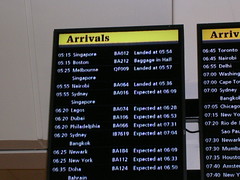
Arrival BoardImage by mikecogh via Flickr
By Stephen Higgins

Have you come to the UK because of your sexuality? Are you seeking asylum or have been granted refugee status?

Would you be interested in taking part in research exploring your experiences since you have lived in the UK?

The study involves sharing your experiences of settling into life in the UK and will particularly focus on the kinds of experiences you have had, how you have coped with these experiences, and how you have found support and strength.

The study is fully confidential and anonymous and you would be contributing to an area that has been largely ignored, ie, what happens to LGBT asylum seekers and refugees once they have settled into the UK.

If you are interested, please get in touch and I will happily discuss any questions you have in more detail with you.
Steve Higgins (Trainee Clinical Psychologist)
Professional Doctorate in Clinical Psychology,
School of Psychology,
University of East London
Water Lane,
LONDON. E15 4LZ
Enhanced by Zemanta

Thursday, 22 July 2010

Can EU law protect asylum seekers in these straitened times?

Source: The Guardian

By Rosalind English

The details of the law underlying the case of Saeedi are complex – but its message is simple. Under EU law, member states have to provide minimum standards for the reception of asylum seekers.

But the obligations themselves relate to another body of law that exists, at least philosophically, outside the boundaries of the economic imperatives of the European Union: social and economic rights.

When these were attached to the Maastricht treaty in 1992 as the social chapter, Britain used its opt-out to avoid them becoming part of British law. On this basis, Mr Justice Cranston in the high court said that these rights were not directly enforceable against the UK – that the charter was an aid to interpretation only.

Now, on a concession by the home secretary, the court of appeal has ruled this week that the EU charter of fundamental rights can be directly relied upon in the UK. The charter combines the rights guaranteed by the European convention of human rights with the fundamental social rights set forth in the European social charter and in the community charter of fundamental social rights of workers. Whether this will be the new dawn for social and economic rights, or the last straw to break the back of the camel already overburdened with obligations under EU law, only time will tell.

Wednesday, 21 July 2010

Video: An Interview with Gay and Lesbian Coalition of Kenya (GALCK)

Source: GTZ

The cultural, religious and ethnic dynamics around the subject of homosexuality continues to create controversy in the legal and political spheres of Kenya. To be homosexual is still identified as unnatural, ungodly, a taboo while stigmatization and hostility remain. Recently, threats and physical attacks against gay men appear increasing. The situation is particularly challenging to the public health discourse where HIV infection among gay men contributes significantly to the HIV epidemic in Kenya. In Kenya, the GTZ Health Sector Programme targets sexual minorities such as LGBTI in its sexual and reproductive health interventions. This is based on its rights based approach to programming that recognises sexual minorities as a vulnerable group especially to HIV infection and other STIs. GTZ has supported the Gay and Lesbian Coalition of Kenya (GALCK) to develop its strategic plan that is crucial in informing the direction for addressing the needs of its members. GTZ also supports interventions to end discrimination, stigma and social exclusion for such minorities. For instance, in collaboration with ART2BE, GTZ is supporting various best practice projects to help individuals cope with the HIV infection and with homosexuality -- related discrimination.

GTZ has recently partnered with GALCK in the production of a short video which gives a snapshot of the current situation of gay people in Kenya as well as challenges faced in society. The theme of 'diversity' cuts across the 4-minute video and highlights human rights for all. This video was presented through a panel discussion within the "13th Eschborn Dialogue: Diversity, the Culture Factor" that was held in Germany in June, 2010. The key messages and outcomes of the discussions were that: sexual diversity is a right to non-discrimination and that lobbying of civil society is the basis to increase political will. The discussions also highlighted the need to produce positive messages to gain commitment among politicians and the society and to increase the network and lessons learned in exchange with other countries, as well as the need to move beyond a human rights perspective but also look at the social and economic advantage of sexual diversity and diversity management.

Tuesday, 20 July 2010

Life in the closet in Nigeria

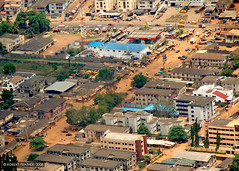
Lagos, NigeriaImage by airpanther via Flickr
Source: 234next.com

By Ben Ezeamalu and Esther Alidu

Kenneth Odunlami (not his real name) was engrossed in an activity on his mobile phone when this reporter walked into KFC, an eatery in the City Mall, Onikan. He had been waiting for 10 minutes, though he was an hour and a half late.

We were scheduled to meet at noon and, after waiting for one hour, I got tired of sitting down at the café and had to take a stroll. He had sent me his description in a text message and so when I walked in, I recognised him at first sight - neatly trimmed afro hair, well ironed shirt, light complexioned.

Mr. Odunlami, in his late 20s, is a graduate of Abia State University, hails from Delta State; and is a homosexual.

He is one of the numerous males and females who had scribbled their mobile phone numbers behind toilet doors at The Palms Shopping Mall at Lekki, Lagos, soliciting various kinds of services.

The wall post on the door

In the male toilets, graffiti-like scrawling advertising various businesses and services, ranging from sponsorship endorsements to the outright obscene, adorn all the four toilet doors; a sharp contrast with the spotless walls.

Some of the inscriptions read: "If you want to buy a gun, call John"; "Am a talented comedian"; "If you need gun, cocaine"; "Am a defensive driver, God's Power by name"; "I need a sponsor on music"; "Need a strong d**k to get your wife pregnant"; "You need a gay friend"; "If you need long time sex"; and "Need a laundry, computer engineer, private tutor," among others. Each inscription carries the writer's name and contact phone number for whosoever is interested.

"A friend of mine who was working with Shoprite told me that they (Shoprite) were planning to open a new outlet and were collecting applications. So when I went to submit my CV, I noticed people were writing their numbers on the door in the toilet," said Mr. Odunlami, a Biochemistry graduate.

Supremes decision aftermath: the blogosphere's take

blogosphereImage by micamonkey via Flickr
By Paul Canning

The Supreme Court's decision to throw out the 'discretion test', aka 'go home and be discreet', has been widely covered across the 'blogosphere' - large websites and personal blogs which as traditional newspapers slowly die, or quickly in the case of the LGBT press, have become major news sources.

In the UK, although the case itself was covered in some posts it was the nasty tabloid reaction which stirred most interest from bloggers. Perhaps this is because the meaning and implications of the decision weren't clearly spelled out in the MSM (mainstream media), such as the BBC or even The Guardian - for example that it was a milestone LGBT rights decision or that it would have a worldwide legal impact just as the Australian High Court decision on 'discretion' which it referenced had done previously. This also meant that some of the overseas reaction seemed to understand it merely as a decision for the two applicants. The big gay site Towleroad for example took an MSM lead and headlined 'Gay Men Facing Deportation From UK Granted Right To Appeal.'

There was some thoughtful analysis. The asylum and refugee blog Free Movement pointed out last week that it doesn't just apply to LGBT:
HJ (Iran) establishes that where a person would in future refrain from behaving in a way that would expose them to danger because of the risk of persecution that behaviour brings, that person is a refugee.

The context in HJ (Iran) is famously homosexuality — would a gay man or lesbian woman have to conceal aspects of their sexuality in order to avoid persecution — but the legal principle is a wider one of profound significance. It gives proper life to the Refugee Convention and does away with the slightly sordid previous approach, which allowed UKBA to return activists that had been cowed by their past experiences. I always thought that this was one of the strongest arguments that the Home Office could run in this type of case: that the fact the asylum claimant had fled their country signified that they had been very successfully persecuted and he or she was unlikely to repeat the behaviour that had already caused them such pain and misery.
New York Law School professor Arthur S Leonard notes on his personal blog that the US Supreme Court has yet to judge an LGBT asylum case and although the UK court quoted from Australian, New Zealand, Canadian, South African, and United States decisions the American case used is cited 'selectively'.

Colorlines also puts the decision into an international context and says:

Monday, 19 July 2010

India: making progress for LGBT

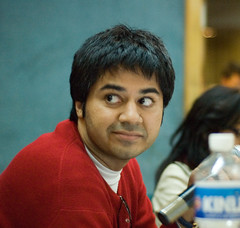
Parmesh ShahaniImage by Jace via Flickr
Source: Sydney Star Observer

By Andie Noonan

It’s almost a year since a Delhi court ruled to repeal section 377 of India’s 149-year-old penal code which made homosexuality a punishable crime.

Parmesh Shahani, Indian magazine editor and author of Gay Bombay: Globalization, Love and (Be)Longing in Contemporary India, told Sydney Star Observer, on a recent visit to Australia, his country was still in a “transition” phase.

“The change that has taken place in India hasn’t just taken place legally, it’s taken place tremendously within the social and cultural realm,” he said.

“Not just activists, regular people, company managers, workers in factories, housewives, mums dads, these are all people who read the newspapers and read about what’s happening in the rest of the world and it certainly impacts on the way they view homosexuality in India.”

Shahani — who published his book in 2008 — said although general views on homosexuality have shifted in the last few decades the court decision was a critical step.

“I think the past few years have been simply phenomenal because when the book came out, homosexuality was still criminal,” he said.

New arrests of gay men in Iran

Shiraz City norheast viewImage via Wikipedia
Source: Iranian Railroad for Queer Refugees (IRQR)

This week, The Iranian Railroad for Queer Refugees (IRQR), received several new reports of arrests of queer Iranians in the city of Shiraz, Iran.

On Sunday July 11th 2010, a private party in a suburb called Podonak was raided. The police lead the raid, accompanied by the volunteer moral militia (Basij) and revolutionary guard (Sepah). Reports vary, but we understand that between 17 and 19 people have been arrested and taken to the local intelligent service’s detention centre on Modares Boulevard

Their police files are labeled “Gang of Faggots in Shiraz” and their homes have been raided and personal belongings confiscated by the police. They are to be tried today, in both the Revolutionary and the General Courts, Shiraz.

Since the raid, we have been able to confirm the names of 9 people who have been arrested and labeled as a “Gang of Faggots in Shiraz” and we do not have information about the rest of them.

We understand that the police are going to entrap more queers in Shiraz, Esfahan and Mashhad, and fear that more arrests might take place in the coming days. We advise Iranian queers to be extremely careful with their safety, and to be aware that phones in Iran can and are being tapped. Most queers in Shiraz have deleted their Yahoo IDs, profiles, facebook accounts and other cyber communication. We have heard rumors that a party has been raided in Esfahan, but have not yet confirmed this.

The Iranian authorities have a long record of arresting and torturing LGBTQ Iranians.

For example, in September 2003, in Shiraz, a group of men were arrested at a private party in one of the men’s houses. They were held in detention for several days, where, according to one of the men, police tortured them to obtain a confession. They were tried for “participation in a corrupt gathering” and fined.

In June 2004, also in Shiraz, police arranged meetings with men through internet chat rooms. Once arrested, the men were repeatedly beaten and tortured, and sentenced to 175 lashes, 100 administered immediately. Since their arrest, police have subjected the men to regular surveillance and periodic arrests.

On May 10, 2007, eighty-seven men were arrested and beaten by the police at a birthday party in Esfahan. The police turned off the lights, shot blanks from their guns, forced everyone to lie on the ground, then walked over to them and began beating them. The police then covered the guests’ heads with bags or blouses, forced them out into the street and pushed them with batons into a military transport. The people who witnessed the event on the street reported that the clothes of the arrested men were torn and that their faces were bleeding.

On July 8, 2010, Mohammad Mostafai, an Iranian lawyer announced that three of his four clients were cleared of sodomy charges, but one, an eighteen year old youth named Ebrahim Hamidi, was sentenced to be executed.

Also on June 18, 2010 we received reports from Iran regarding three more possible death sentences for homosexuality, one man receiving 74 lashes for his homosexual act and the murder of a 23 year old bisexual man by the Iranian security forces.

These many incidents are just some of the many examples that reveal the extent to which the walls of private homes in Iran are transparent and the halls of justice opaque. It also reveals that the authorities and Islamic government's respect for privacy and personal dignity is nonexistent in Iran.

We at IRQR call on the Iranian government to end these arrests of LGBQ Iranians and to respect the basic human rights of its citizens.
Enhanced by Zemanta

Supremes decision implications: next, the world?

By Godwyns Onwuchekwa

The recent judgement by the UK Supreme court refusing the UK government from removing two gay men from Cameroun and Iran back to their respective country on the premise that they can live discreetly, sent our rippling shouts of joy across the UK and the world. So unique was the judgement that LGBTI activists, non-activists and many other people who has never supported – nor thought it matters – all joined to celebrate this assumed landmark judgement. Obviously, it was.

Gay men and women, transgendered and Intersex people continue to face endless persecution. This increases to extreme frustration as they seek shelter in supposedly progressive countries like the UK only for their hope of safety to be met with rejection. But gay men, lesbians and transsexuals worldwide live in daily violations of their rights to freedom (of expression) and dignity both from their countries and places like UK. This is a complete disregard of the dignity of life and the right to a private life for these people.

Homosexuality is a criminal offence in more than 80 member-countries of the United Nations, while in at least seven nations plus parts of Nigeria, including Saudi Arabia, sex between men can be punished with the death penalty.

But the UK continue to say to gay people to go back to these countries to ‘live discretely’; this is not only ridiculous, it is an insensitive opposite of what the British society stands and has always been known to represent.

Before going any further, let us consider a little what it means to ‘live discretely’. If you are a gay man or woman and live in Mauritania, Somalia, Nigeria, etc, you would less likely tell someone of the same sex that you feel attracted to them… that may sound like a fudge; yet it could be complicated beyond just being considered a nutter.

Sunday, 18 July 2010

Video: Stories of LGBT Mexicans seeking US asylum

Source: PuntoFronterizoCE

Cross-borderX explores the living conditions faced by GLBT members south of the border, their efforts to apply for political asylum in the US and the possibilities of obtaining it now that Mexico City has legalized same sex marriages and adoptions by gay couples.

Morocco's queer uprising

Source: Eureka Street

By James M. Dorsey

A cacophony of outrage and condemnation greeted Mithly, the Arab world's partly European Union-funded only gay magazine, when it hit the internet and underground 'newsstands' in Morocco for the first time.

Targeting the gay community in Morocco and Europe as well as Arab gays, Mithly, a play on the Arabic words for homosexual and 'like me', can only be sold under the counter in Morocco and the Arab world. The overwhelming majority of its readers access it online. For safety and political reasons, the groundbreaking magazine's editorial staff is based in Spain as are its servers.

While Mithly hopes to steer debate in Morocco and the Arab world about homosexuality into calmer, more rational waters, it does not want to rock the boat in a country where authorities are among the more relaxed in the Arab world because of tourism that has attracted a high-end gay community. Gay activists fear that a more open Mithly presence in Morocco could further fuel Islamist and populist protests and force the government to crack down in a bid to prevent the Islamists from gaining the high ground.

Like everywhere in the Arab world, homosexuality in Morocco is illegal. Homosexuals can be jailed for up to three years for what Moroccan law describes as 'lewd or unnatural acts with an individual of the same sex'. Islamist agitation has already increased homophobia in Morocco in recent months. 'The constant attacks on homosexuals by the Islamist parties and newspapers worry us,' says Mourad, a Mithly journalist.

Yemeni cultural magazine, Al-Thaqafiya, was forced to cease after publishing a film review that described homosexuality as 'part and parcel of our society'. The magazine sparked protests in parliament; the Paris based reviewer, Hamid Aqabi, says he has received death threats.

Saturday, 17 July 2010

Mongolia's LGBTs face hate crimes and discrimination

MongoliaImage by robynejay via Flickr
Source: fridae.com

By Sylvia Tan

Robyn Garner, Executive Director of the Mongolian LGBT Centre, tells Fridae more about the new documentary which highlights the under-reported threats and hate crimes taking place against the LGBT community.

The Lies of Liberty (view it at the end of this article) is a 20-minute documentary which highlights the challenges of the Mongolian LGBT community and features a transgender woman, a lesbian and a gay man who spoke of the realities of their lives. Although there are no legal prohibitions, LGBTs face possible violence on a day-to-day basis by members of ultra-nationalists parties. The transgender woman in the documentary, who related an incident in which herself and two other transgender women she knew were bundled into a car and taken to a desolate place where they were assaulted, had since received serious death threats since the documentary was shown.

Fridae speaks with Robyn Garner, co-founder and Executive Director of the Mongolian LGBT Centre, who is originally from Australia but has since called Mongolia home after moving there in 2004 to work in development communications/advocacy.

How did you come to be involved in the Mongolian LGBT Centre?

I hadn’t initially planned to become involved in LGBT activism; however I did want to outreach with the local LGBT community. That proved extremely difficult as the community, such as it was back then, was very much underground. Trying to make any contacts was an exercise in patience and trust-building. Eventually I was able to break through and meet up with some people. It was at this time that I met my now wife, Anaraa, a long-time Mongolian LGBT activist – one of only a handful in the country. She had established the Mongolian Lesbian Information Centre (MILC) and had set up a website providing information for LGBT people in Mongolia. Together we decided to take LGBT activism to new level, which we have been doing for a number of years now, locally, regionally and internationally. As part of that, we wanted to set up a LGBT human rights NGO, a process we began back in 2007. We, and our small but dedicated band of co-founders, had no idea at the time that it would take until the end of 2009 to realise that dream. But our persistence and our commitment eventually paid off and Mongolia now has its first LGBT human rights NGO.

What motivated the Centre to produce the documentary?

London protest against media coverage of LGBT asylum

The Movement for Justice LGBT asylum banner, made for Pride London 2010, was at the demonstration
Source: Demotix

By Peter Marshall

A protest took place outside the newspaper offices in London Thursday 15 July calling for an apology and retraction for the homophobic views printed in The Daily Star, Daily Express and Daily Mail about gay asylum seekers. London, UK.

Following the UK supreme court decision a week ago which prevented the deportation of two gay asylum seekers on the grounds that immigration tribunals had to follow the 1951 UN Convention on the Status of Refugees when making decisions over the right to asylum here, the right-wing press had a field day with blatantly homophobic and anti-immigration headlines and reports.

According to a letter to The Guardian signed by NUJ General Secretary Jeremy Dear, other trade union leaders and activists and MPs Jeremy Corbyn, John McDonnell and Caroline Lucas, "In reality, only one in 50 people who claim asylum on the basis of sexual orientation is admitted to the UK." Currently many are sent back to their country of origin and told to be "discreet" about their sexuality in countries where they may face prison or even the death penalty for being gay - to lie about their sexuality for the rest of their life. Many LGBT people seeking asylum here are fleeing from attempted murder, serious assault or rape."

A longer statement on which the letter was based is available on the web and many more have added there support. A Facebook group was set up to organise a protest outside the Express offices in the city of London on Thursday evening, to demand "an apology and retraction of the vile views published in The Daily Star, Daily Express and Daily Mail and that they publish the truth about the persecution which LGBT refugees and asylum seekers face in their home countries, and about homophobia here in Britain."

People arrived with banners and placards to attend the protest on the street outside the offices. There were speeches from representatives of a number of the organisations supporting the demonstration calling for an end to racism and homophobia in the press. NUJ members working for these papers are often appalled at the way their stories are edited to support the racist editorial line, and headlines added which misrepresent their reports.

The organisers also urged people to write in complaint to the papers’ editors, post comments on-line and register a complaint with the Press Complaints Commission. The stories seem both to offend against Section 12 of the PCC's editor's code on discrimination, but also more importantly to Section 1 (i) on Accuracy of reporting, as the judge's comments about the freedom to go to Kylie concerts and drink multi-coloured cocktails" were clearly used in an entirely different context and with quite different intention.


Video of the protest

London protest against executions of LGBT in Iran

Source: Gay Activists Alliance International (GAAI)

Gay Activists Alliance International is supporting a Persian Gay and Lesbian Liberators called protest 25 July to mark the fifth anniversary of the execution of Mahmoud Asgari and Ayaz Marhoni.

Mahmoud Asgari, 16, (Persian: محمود عسگري) and Ayaz Marhoni, 18, (Persian: عياض مرهوني) were Iranian teenagers from the province of Khuzestan who were publicly hanged in Edalat (Justice) Square in Mashhad, northeast Iran, on July 19, 2005. They were executed after being convicted by the court of having raped a 13-year old boy.

The case attracted international media attention. Outrage! said that the teenagers were executed for consensual homosexual acts and not rape. Some people found the photographs of the hanging were deeply disturbing and many human rights activists found them a powerful, emotional indictment of the death penalty.

On July 22, 2005, Amnesty International issued a news release saying:
"According to reports, they were convicted of sexual assault on a 13-year-old boy and had been detained 14 months ago. Prior to their execution, the two were also given 228 lashes each for drinking, disturbing the peace and theft."
On July 27, 2007, after researching reports on the hangings, Human Rights Watch released letters to Iran's President and the head of the judiciary. In writing to the Iranian leadership, Human Rights Watch condemned the use of the death penalty in Iran. It stated that the two "were put to death on July 19 after they were found guilty of sexually assaulting a thirteen-year-old boy some fourteen months earlier," but did not address whether those charges were accurate. Its public statement noted:
“Death is an inhumane punishment, particularly for someone under eighteen at the time of his crimes,” said Hadi Ghaemi, Iran researcher for Human Rights Watch. “All but a handful of countries forbid such executions. Iran should as well."
LGBT rights in Iran since the Iranian Revolution of 1979 have come under governmental persecution, with international human rights groups reporting public floggings and executions of lesbian, gay and bisexual individuals.

Reports suggests that LGBT persons are threatened and forced into sex change operations or likely to face torture and/or execution

Iranian President Mahmoud Ahmadinejad, speaking to Columbia University, said that homosexuality does not exist in Iran, though a spokesperson later stated that his comments were misunderstood. Homosexuality is a crime punishable by death under the country's theocratic Islamic government. Any type of sexual activity outside of a heterosexual marriage is forbidden. Gay men are treated far more harshly under the law than lesbians, and some men undergo sex change operations to avoid harsh penalties that include imprisonment and/or execution.

GAAI are asking for you support and solidarity to join us in this event to support our LGBT community, and against the continuing persecution and murder of LGBT persons in Iran.
Sunday, July 25 at 12:00pm to 2:30pm

Embassy of the Islamic Republic Of Iran
16 Princes Gate
London
SW71PT

Related Posts with Thumbnails