Donations

People say we're "invaluable", "indispensable" and "an essential service" — please consider making a donation.

Wednesday, 31 March 2010

Leading African clergy and civil society groups call on Uganda to stop the Anti-Homosexuality Bill

Desmond Tutu 2007 at the Deutscher Evangelisch...Image via Wikipedia
Source: Civil Society Coalition on Human Rights and Constitutional Law, Kampala

Press statement

Leading African clergy and prominent individuals, as well as more than 60 civil society and human rights groups from 10 sub-Saharan African countries have endorsed a statement calling on the President, Government and Parliament of Uganda to reject the Anti-Homosexuality Bill in its entirety.

The Anti-Homosexuality Bill provides for severe punishment, inclusive imprisonment, for those engaging in same sex relations, as well as for members of the public who fail to report such activities to the authorities.  The original draft also provides for the death penalty and life imprisonment.  The Bill has already gone through the first reading in Parliament and is now before the Legal and Parliamentary Affairs Committee. "We are very concerned that it could become law within a few weeks or months", said Adrian Jjuuko, Coordinator of Uganda's Civil Society Coalition on Human Rights and Constitutional Law.    

The statement has been endorsed by leading African clergy such as Archbishop Emeritus Desmond Tutu, the current Archbishop of Cape Town, the Most Reverend Dr. Thabo Cecil Makgoba and Canon Gideon Byamugisha of Uganda. Others endorsing the statement include Pius Langa, the former Chief Justice of South Africa, and other jurists, academics, truth commissioners and human rights activists.

In the declaration, the endorsing individuals and organizations reaffirm their commitment to the universality of the human rights of all persons.  They note that "all forms of discrimination, in particular against vulnerable groups, undermine the human dignity of all in Africa".  The statement declares that the Bill "promotes prejudice and hate and encourages harmful and violent action against marginalized groups in Africa".

"Civil society organisations throughout Africa are mobilizing to persuade Ugandan Parliamentarians to block this pernicious Bill", said Phumi Mtetwa, executive director of the Lesbian and Gay Equality Project in South Africa. Godwin Buwa, a lawyer with the Refugee Law Project in Kampala said that "if the Bill is passed, even in diluted form, it would constitute a massive setback for human rights in Africa".

The statement calls on African governments and the African Union to call on the President and Government of Uganda to withdraw the Bill and to respect the human rights of all in Uganda, without exception.

The list of individuals and organizations continues to grow and will be updated regularly.  The full list can be viewed at www.alp.org.za and www.ugandans4rights.org


CALL BY AFRICAN CIVIL SOCIETY: REJECT THE ANTI-HOMOSEXUALITY BILL   

NGO Letter to Secretary Clinton on LGBTI Refugees

NGO Letter to Secretary Clinton on LGBTI Refugees

LGBT Iranian and Palestinian/Israeli films debut


Source: Moviefone

By: Tim Macavoy @ London Lesbian + Gay Film festival

You may remember Iranian President Mahmoud Ahmedinijad proclaiming that there were "no homosexuals in Iran". Well director Bahman Motamedian has something to say about that with Khastegi (Sex My Life).

Currently, in Iran, it is more acceptable to live as the opposite gender, than to be homosexual, which is actually punishable by death. And so a large number of couples choose for one of them to transition. That's not to say that in all trans cases this is the reason, but it points to a sad indictment that in order to keep love, they must unwillingly change gender.

Seven young transsexuals struggle with their identities in Tehran, amidst a forceful and patriarchal Iranian society. This film is categorised as "documentary", although it is mostly acted and scripted, employing some documentary style techniques. It may meander along fictional lines, but that doesn't make it any less true, informative and compelling, funny and tragic.

The genetically female taxi driver who identifies as male is potentially a work of comic genius, were it not for the fact that real people do struggle in these situations. But I couldn't help but laugh as she confronts her 'betrothed' with the line: "next time you want to get married, see the bride first. Do you really want to marry this?"

Korean-American Buddhist Yun Suh has chosen the lgb people of Israel and Palestine as the subject of her first feature documentary in City of Borders. "Why?" you may ask. Well, I did too. So I asked, seemed like the sensible thing to do.

Yun Suh says that she was working as a journalist in Jerusalem when she kept seeing the same phone number written on walls around the city. Graffiti claimed that this man was responsible for earthquakes and plague, and that everyone should call him. So she did. But instead of cursing him with death threats (as he was used to) she started a conversation and discovered the man was called Sa'ar, the first openly gay city council member, and owner of the only gay bar in Jerusalem, Shushan.

And so begins a brilliant documentary about the uniting force of being an outcast in a perpetual warzone.

"Here's a group that's been cast away by both sides, but is modelling for a larger society what tolerance and co-existence can look like" say Suh.

Apart from the extraordinarily brave Sa'ar, this group consists of Boody, a young Palestinian who crosses the border into Israel "not to make bombs" as he says, but to party at the Shushan. He finds an accepting community in the bar and becomes "the first Queen of Palestine, Miss Haifa", his drag name. Sadly Boody is forced to leave the country due to death threats, and moves to America (where he can face such enlightened comments as: I've been to Palestine...well Morocco").

Exemplifying the opposition and potential union of Israel and Palestine are lesbian couple Samira and Ravit, who come from different sides of the border, but fell in love as co-workers. Suh found Samira easily because she is an outspoken activist, and adds intelligence, humour and guts in abundance to this feature.

I know a few film makers in Tel Aviv, which is so liberal and cosmopolitan, it's practically an West European city, and so it was interesting to see the biggest tension within the gay community was not necessarily between Jew and Arab, but old and new world. The fleeting glimpse we get of Tel Aviv, shows a modern community that cannot understand the marches in Jerusalem and Ramallah, as they just cause violence. But the lgb people of the West Bank do not want to move away and leave what they see as an essential part of their identity behind.

Shushan is now closed, but it's legacy clearly remains. A detailed, informative and hugely funny documentary I'm sure you will enjoy.
Reblog this post [with Zemanta]

Botswana stops MSM HIV/AIDS prevention

Source: African Activist

Botswana's Ministry of Health has intervened to block US funding for HIV/AIDS prevention efforts targeted at men who have sex with men (MSM) and their partners because homosexuality is illegal in Botswana, the Sunday Standard reports.

The Botswana government has intervened to stop an initiative by the United States government to fund HIV-AIDS interventions targeted at same sex partners. Sunday Standard can reveal that the Ministry of Health stepped in at the eleventh hour to halt a call for proposals, issued by the US government under its Presidents’ Emergency fund for HIV and AIDS(PEFPAR), for HIV-AIDS intervention initiatives for same sex partners, on the grounds that the its target groups are classified as unlawful in Botswana.
African Activist recently posted about the work of Uyapo Ndadi, the Executive Director at Botswana Network on Ethics, Law and HIV/AIDs (BONELA). At the time of the posting, Ndadi had planned to present the findings of an HIV/AIDS study at the National AIDS Council (NAC). The Sunday Standard continues:
BONELA recently revealed the findings of their private investigations into the extent of HIV-AIDS prevalence on same sex partners. They had hoped that more funding from the US would help them intensify their research.

“This is another opportunity gone down the drain. It is a case of serious denials on the part of government” [Ndadi] said...

The project would in the end increase access to high quality HIV prevention, care and treatment services for men who have sex with men (MSM) and their partners.

It consisted of two components, implementing a needs assessment in six identified urban areas and designing and conducting a needs-based and targeted HIV prevention intervention aimed at reaching MSM, with prevention messages.
On February 19, AllAfrica.com reported on Ndadi's plans to advocate for the decriminalization of homosexuality in Botswana.
Uyapo Ndadi is set to fight it out with government in court over section 164 of the Penal Code, which criminalises same sex relationships.

Homosexuality is regarded as abominable and sinful, it is perceived as a crime and homosexual sex is punishable with a possible jail sentence if convicted.

Tuesday, 30 March 2010

Australia: Transgender Malaysian and Pakistani accepted as a refugees

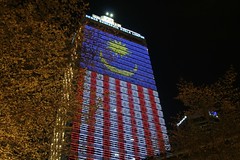
malaysia flagImage by SJ photography via Flickr
Source: Australian Gay and Lesbian Law Blog

The Refugee Review Tribunal has upheld the claim for refugee status of a transgendered woman from Malaysia, on the basis that she would be persecuted in Malaysia, due to her status.

It appears that most transgendered people in Malaysia work as prostitutes, in part because they cannot obtain other employment in part due to stigma, and in part because they cannot change the gender on their compulsory ID cards, which shows them in their old gender. Most live below the poverty line.

The applicant had been rejected by her mother and sisters, and society in general, and arrested and fined for being a prostitute, as it was assumed that as her ID showed that she was male, was in an area where prostitutes were known, and was found with a male, she must have been a prostitute.

The applicant had applied to the Department of Immigration and Citizenship, been rejected as falling within the class of people as a refugee, and appealed to the Tribunal.
Statements by the applicant were heart rending:
    In Malaysia I do not count as a person. I am not considered to be a man because I look like a woman. I am not considered to be a woman because my identity card says that I am a man. I have no rights to obtain employment or open a bank account, or even to get health insurance in my name. Because I can’t open a bank account I can’t purchase a house. If I am sick and go to the hospital, they will put me in the men’s ward. Any prescription or receipt they give me will be issued in the name of [applicant’s former name]. The pharmacy calls out that name and it is very embarrassing for me to answer to that name in front of everyone. People laugh at me and I worry that someone will try to beat me or assault me because I am transgender. It is not possible for me to change my identity card to say that I am a woman.

    I cannot live in Malaysia There is nobody to take care of me and I am not allowed to work because of my identity. I was arrested three times just because of who I am and I was forced to pay money just so that I wouldn’t be put in jail. I did not do anything wrong but Malaysian society and the government thinks that there is something wrong with who I am. I do not want to work as a prostitute and that is the only life for me there. I am a transgender person I am being persecuted by the government and by the authorities in Malaysia who will not allow me to survive....

Never mind Latvian gay rights and the EU, what about Iraq's pogrom of gays?

Source: Left Foot Forward

By Paul Canning

Stonewall and Ben Bradshaw's talking points got another outing last week and scored what must have pleased both them and Gay Times no end, a 'gotcha' moment for Cameron on gay issues.

What is frustrating as political leaders do these rare interviews on gay issues is that there's one area where their glaring failure rarely gets questioned: LGBT asylum and - allied to that - support for LGBT in those parts of the world where they are most at threat.

The UK has a terrible record with case-after-case of people fleeing torture, arrest, 'honour' killing and the like needing campaigning and years of expensive legal effort to force the Home Office to grant them sanctuary.

Harriet Harman was booed at the London Pride rally two years ago following the well-publicised case of Mehdi Kazemi. The teenage Iranian had seen his boyfriend murdered by the Mullas but it took a massive campaign before Jacqui Smith relented. Home Office Minister Lord West actually said that "we do not consider that there is systematic persecution of gay men in Iran."

Campaigners have sought Home Office changes for years to little effect.

Only last month the High Court blocked the government from deporting a Ugandan lesbian who was on a police list.

Now we have the leader of Iraqi LGBT, an incredibly brave man who has saved countless lives from the pogroms in Iraq, being denied asylum and hence travel rights - so he can take up American and European offers to talk with politicians and visit TV studios.

Yet only Johann Hari's recent interviews of Brown, Cameron and Clegg for the Independent has mentioned asylum. This produced the irony of Cameron sounding more liberal than Brown as Hari asked the same question about the policy of telling people to 'go home and be discrete'. It also produced a bizarre Daily Mail headline 'Cameron: Gay refugees from Africa should be given asylum in UK' - when Africa hadn't been mentioned.

But Hari did the same thing as other gay journalists and zoomed in on the Conservative's relationship to eastern European homophobes.

Those journalists' priorities match those of gay and lesbian Labour MPs and Labour LGBT. This when we have executions in Iran, a 'kill the gays' bill in Uganda and looming repression in the rest of Africa plus that ongoing pogrom in Iraq. None of those MPs has raised a finger to help (yes Brown did complain to Museveni but one isolated swallow doesn't make a summer).

The Foreign Office proudly trumpets its gay rights work but its almost entirely European. It's second Human Rights report has some information about Iraq - sourced from the same person Labour's Home Office says does not have a "compelling" case. Only Labour's Michael Cashman MEP has a record to be proud of on international LGBT issues.

By contrast look at what's happening in the US State Department through Hillary Clinton's leadership on truly international gay rights work.

As the booing of Harman showed LGBT voters are aware of Labour's big failing on LGBT asylum. And no ammount of spin helped by gay journalists and pointing at the Tories can cover up the big homophobic stink emanating from the Home Office.

Mehdi Kazemi: a reminder

Video: Please help save lives in Iraq


Many thanks to David Grey.

Video: LGBT Africa discussion at London film festival

This panel discussion at the BFI London Lesbian and Gay Film Festival took place after showings of the following short films:

  • The Kuchus of Uganda
    Particularly inspiring in light of changes in the law that happened after this film was made, this is a documentary about SMUG (Sexual Minorities Uganda), a group of radical LGBT activists who risk their lives in order to push for queer rights. Piehl follows this brave group as they try to reason with medical academics and struggle to undo the damage done by colonial laws and years of Missionary intervention in Uganda.
  • The House of Rainbow
    The House of Rainbow MCC church operated in Nigeria for two years. This is a portrait of the group and their charismatic preacher celebrating their 2nd birthday. The church is unfortunately no longer able to operate.
  • Mosa
    A young woman tries to get on with her life after becoming the victim of 'corrective rape', a common practice in South Africa.


Further video at House of Rainbow YouTube channel

Monday, 29 March 2010

How the United Kingdom is Hurting LGBT Rights in Iraq

Photo credit: Jayel Aheram
Source: Change.org

By Michael A. Jones

In recent years, Iraq has become one of the most dangerous places in the world for LGBT people. In the wake of the U.S. invasion and the toppling of Saddam Hussein, scores of LGBT people have been systematically beaten, tortured and murdered in Iraq in what human rights organizations describe as one of the worst anti-gay pograms in the world.

One organization, the U.K.-based "Iraqi LGBT," has become one of the leading global LGBT groups working to help LGBT people escape violence in Iraq. Their leader, Ali Hili, is considered the founder of an "underground railroad" system that helps LGBT people in Iraq leave the country through a network of safe houses. Some activists, including the U.K.'s Peter Tatchell, say that Hili is responsible for bringing anti-gay violence in Iraq to the world's attention.

Yet, for a man who has helped LGBT people seek refuge from brutal thugs, the UK government is not doing Hili any favors. Three years ago, Hili applied for asylum in the UK. Today, his application is still caught up in major government bureaucracy, and now it's having a dramatic impact on Hili's ability to keep Iraqi LGBT operating at full speed.

Concerned about violence in Iraq? If you are, send the UK government and Home secretary Alan Johnson a message that they need to prioritize the asylum application of Ali Hili. Yes, in some cases the phrase "a matter of life and death" is tossed about cavalierly. This is not one of them. Iraqi LGBT is literally saving people from anti-gay death squads. And each day that Hili's application remains caught up in government hiccups, it makes that work all the more harder.

Perhaps the biggest issue here is that until Hili is given asylum, he can't travel. And that's quite the problem when your job is to raise global awareness about anti-gay violence in Iraq. Hili has been asked to speak all over the world, yet each time a request comes in, he has to decline because the U.K. government hasn't acted on his asylum claim.

Instead, Hili has been given rather offensive answers from the U.K.'s Border Agency. Hili has been told that his case just isn't that compelling.

Excuse me, but maybe the U.K. government could give a definition of compelling. Because if Hili's life -- literally running an underground network for persecuted people to escape a violent country -- isn't compelling, then what the hell is?

The real kicker in all of this is that while the U.K. government won't throw Hili a bone regarding his asylum status, they are all too happy to use the information documented by Iraqi LGBT. So they are literally giving credence to Iraqi LGBT's work, and yet telling the founder of the organization that he just needs to deal with government slowness.

As Paul Canning wrote in Pink News last week, that's just unacceptable.
"[Hili] cannot go visit the U.S. Congress. He cannot visit the European parliament. In both places there are very important people, those who can practically help, who want to hear firsthand of the situation [in Iraq]," Canning writes.
While the U.K. government twiddles their thumbs, LGBT people are being targeted in Iraq. Simply put, rather than operate a bureaucracy that runs like molasses, the U.K. government ought to be bending over backwards to make sure that Hili and Iraqi LGBT are able to do their important work. This is a matter of life and death.

Urge the UK Home Secretary to get his act in order, and expedite Hili's request for asylum. Hili's been waiting for three years. How many more years will he have to wait, and how many more LGBT people in Iraq will suffer because of the barriers imposed by the U.K. government on Hili's organization?

Michael Jones is a Change.org Editor. He has worked in the field of human rights communications for a decade, most recently for Harvard Law School.

New book tells stories of South African gay men

A new book launched today about the lives of South African gay men
has become something of an internet sensation since publisher Robin Malan announced it – its Facebook group has 1200 members and counting.

Yes I Am! is compiled by Robin Malan and Ashraf Johaardien and takes its cue from ‘the first time’. The experiences of some forty writers, from the famous to the unknown, come together, in stories, poems, letters, diary-entries, SMSes and email.

Among the stories they tell are of first love in the face of colour legislation that outlaws it, love that blossoms despite religious injunctions against it, a chance finding of a condom in the jacket pocket of a life partner, the sheer fun of being young and gay in an early-morning that makes Cape Town look gorgeous …

Brushing shoulders with a swathe of new and emerging writers are two actor Knights (Sir Antony Sher and the late Sir Nigel Hawthorne), two winners of the Alan Paton Non-Fiction Award (Edwin Cameron and Jonny Steinberg), the Dean of Cape Town Rowan Q Smith, novelists Damon Galgut, André Carl van der Merwe, Gerald Kraak and the late K Sello Duiker, legendary TAC activist Zackie Achmat, theatre director David Lan, literary agent Tony Peake, playwrights Peter Krummeck, Nicholas Spagnoletti and Pieter Jacobs, arts journalist Shaun de Waal, imam Muhsin Hendricks, defrocked and then reinstated DRC minister Laurie Gaum, the late Delmas Treason Trialist Simon Nkoli, the late actor Blaise Koch … and the alter-ego of that phantom ex-Ambassadress Evita Bezuidenhout, Pieter-Dirk Uys.

Among the newer voices are Peter Damm, Andy Mullins, Drummond Marais, Pieter Fourie, Roger Diamond, Imraan Jaffer, Marius Roux, Tshetlo Selebalo, Fourie Botha, D Watson, Twanji Kalula, Shaundré Balie, Kai Lossgott, Werner Ungerer, Steve Colborne, Rahiem Whisgary, Fabian Ah-Sing, Kyle Carson, Mothusi Mathibe and Alisdair Campbell.
Reblog this post [with Zemanta]

Kenyan gay activist amongst those targeted by American hate group

Poster digitally altered to hide David's face and contacts
Source: Southern Poverty Law Centre

A leading anti-abortion webmaster who is widely known for his extremist tactics is behind a new Internet site taking aim at gay and abortion rights supporters with ties to Kenya.

Neal Horsley — best known for his “Nuremberg Files” website targeting physicians who provide abortions — now controls ProjectSEE.com. (“SEE” stands for Stop Exporting Evil!) Horsley’s latest website features “Not Wanted” posters with the photographs and, in some cases, contact information of purported gay rights activists and abortion providers working in Kenya. It lists the names of others, along with an appeal to “send us INFO!” The website encourages readers to print out the posters and distribute them in the United States and Kenya. (Abortion laws are highly restrictive in Kenya and homosexual activity is illegal. In recent weeks, Kenyan activists have reported a rash of anti-gay violence, including the Feb. 12 beating of a man outside a health center that provides HIV/AIDS services, according to Human Rights Watch.)


“Project SEE Coalition roving photojournalists on the ground in Africa and the USA are currently gathering evidence which we hope will lead to the arrest and conviction of members [of] the international conspiracy to violate anti-abortion and anti-sodomy laws worldwide,” the website states. Elsewhere, it adds: “We advocate that abortionists and women determined to murder babies be driven back into filthy back alleys like other murderers, and advocate ‘homosexuals’ be likewise driven back into the closet, arrested and prosecuted for sodomy according to God’s law.”

One of those targeted by the website is Kenneth Hieber, who owns a New York-based travel company, Gay2Afrika, Inc., that caters to gays and lesbians. “I was repulsed. Absolutely repulsed,” Hieber, whose photograph appears on “Not Wanted” posters published on ProjectSEE.com, told Hatewatch. The posters refer to Hieber as a “shoga” — a derogatory Swahili term for homosexual — and one of them includes a biblical verse in Swahili (Leviticus 20:13) calling for the death penalty for homosexuals. (“If a man also lie with mankind, as he lieth with a woman, both of them have committed an abomination; they shall surely be put to death. Their blood shall be upon them,” according to the King James version.) The website also identifies Hieber as the CEO of Gay2Afrika and provides Hieber’s work address and phone number. Emblazoned on a snapshot of the Gay2Afrika website are the words, “Is Homo-Sex-Tourism Coming to your Town?”
Hieber said this characterization of Gay2Afrika is false. “We are a company that serves with the utmost dignity and respect the gay and lesbian traveler to Africa. To even begin to contemplate that we are potentially selling sex tourism is absurd.” He also said ProjectSEE.com has made him sufficiently concerned that he is increasing security for himself and his staff. “I feel very threatened personally,” said Hieber, a naturalized U.S. citizen from South Africa.


Hieber E-mailed Go Daddy, the website host for ProjectSEE.com, which urged him to ask his local law enforcement agency to investigate and then to contact Go Daddy if the website needed to be taken down, according to an E-mail Hieber forwarded from Go Daddy’s Abuse Department. (Hieber said he contacted the New York Police Department shortly after discovering the website on March 8. Officers said they did not believe the website constituted a direct threat, though they would consult with their legal department. Hieber hasn’t yet heard back from the NYPD, which did not respond to a request for comment from Hatewatch.) Christine Jones, general counsel for Go Daddy, said the company has checked the Web links it received in the complaint about ProjectSEE.com. “Because there’s nothing that’s per se illegal, even though there seem to be things that could offend some people, our current position is we’re going to leave it up,” she said. As it did with Hieber, the company typically asks people to speak to their local police about whether there’s a legitimate threat. “We’re not in a position to be the decider of fact in these cases,” Jones said.

Horsley, 65, of Carollton, Ga., is listed as the registrant and administrator for ProjectSEE.com, which in some ways resembles a toned-down version of his “Nuremberg Files.”  In the late 1990s, the self-described former marijuana trafficker created the online listing of abortion providers and other supporters of abortion rights, with the names of those who’d been murdered crossed out and the names of those who’d been wounded in gray. This website became a central issue in a civil lawsuit brought by Planned Parenthood and several abortion doctors against some of the nations most hard-line anti-abortion activists and groups. (Horsley was not a party to the lawsuit.) Though there were no explicit calls for violence on the website, a federal jury decided in 1999 that it constituted a “true threat” and thus was not protected by the First Amendment. The plaintiffs were awarded $107 million. The trial judge also ordered Horsley to take down his website.

Even after a federal appeals court largely affirmed the verdict, Horsley was undeterred. By 2001, he’d launched his www.abortioncams.com website, which featured videos and photos of patients entering and leaving abortion facilities. In 2008, he was found guilty of obscenity for a campaign sign showing the head of an aborted fetus. Earlier this month, Atlanta police arrested Horsley and charged him with making terroristic threats, disseminating threats through the Internet and criminal defamation, according to the Fulton County Sheriff’s Office. The Atlanta Journal-Constitution reported that the charges stemmed from threats he allegedly made against the singer Elton John, who told Parade magazine that he believes Jesus was gay. Horsley was released yesterday from Fulton County Jail after posting a $40,000 bond. Horsley did not respond to several phone and E-mail messages this week.

Also promoting ProjectSEE.com is Michael Bray of Wilmington, Ohio, who was convicted in connection with a series of 1984 bombings in Maryland, Delaware and Washington, D.C. The bombings targeted clinics, the American Civil Liberties Union and the National Abortion Federation, a trade association of abortion providers. According to Bray, the 1993 killing of abortion doctor David Gunn was a “rational way of following the Operation Rescue dictum: ‘If you believe abortion is murder, then act like it.’” Shortly before the trial of Michael Griffin for Dr. Gunn’s murder, Bray was among 34 signers of a “defensive action statement” that asserted Griffin was justified if he killed Gunn because he did it to save the lives of unborn children. Bray, 57, is listed as a contact on ProjectSEE.com and endorses the site in an online statement. In a brief phone interview, he said he’d given support to the site, but was not directly involved in it.

Meanwhile, the International Gay and Lesbian Human Rights Campaign, the Gay and Lesbian Alliance Against Defamation (GLAAD) and other human rights and faith-based groups are discussing how to challenge the website without further endangering the leaders in Africa who are being targeted by it.

Jonathan O’Toole, the ProjectSEE.com editor, did not return a phone message seeking comment.
Reblog this post [with Zemanta]

Sunday, 28 March 2010

South Africa: Multiple Identities and Multiple Discriminations


Source: Behind the mask

By Jerina Messie

The constitutional rights of South Africa's gay people are facing an increasing threat from radical elements in the conservative sector, Christina Engela of the Gay and Lesbian Alliance Against Defamation (GLAAD) said, also stating that gays and lesbians still have a long way to go before they can be equal to heterosexuals in terms of human rights.

As the country celebrated Human Rights Day on Sunday 22 March, Engela said despite having human rights protections for gay people enshrined in the constitution, lesbians, gays, bisexuals, transgender and intersex (LGBTI) people still experience homophobia in their homes, the workplace and in print and electronic media and other public forums in the country.
"Gay people can marry, but under a separate Act, and also, without a choice of in or out of community of property, and also without the freedom of choice to have a religious ceremony or not - and as Apartheid made us all keenly aware, separate is not equal - but it certainly is separate", Engela said.

"At this stage I am not sure if the next ten years' battle around our human rights will so much be about promoting them, or about holding on to them."
Meanwhile Carrie Shelver of People Opposing Women Abuse (POWA) says gay people can not judge their success by a number of laws they have but by how they are treated in the country and that still discriminates against them.

She however acknowledges that Human Rights Day provides the gay community an opportunity to remind society again that LGBTI rights are human rights.
"We can not speak of human rights without taking into account the basic rights of LGBTI people since human rights really are inclusive of all people irrespective of their sexual orientation", Shelver emphasizes.
Tebogo Nkoana of Gender Dynamix believes that Human Rights Day is about "celebrating our human rights - the freedom of accessing some of the rights given by the constitution of South Africa."

He adds "For us transgender people [it is about] acknowledging that the constitution of South Africa gives us the right to change our gender identity."
"Human rights in South Africa are a vital aspect to fostering a culture of equality and freedom and democracy. They have to apply to everyone, and everyone has to be represented and protected equally in the process of defending and enshrining human rights as a social value," Engela concludes.

~~~~~~

Source: ILGA

Interview of Phumi Mtetwa by Patricia Curzi on racism and discrimination

Video: 20 years of the International Gay and Lesbian Human Rights Commission

Reflections on the work of the International Gay and Lesbian Human Rights Commission celebrating its 20th Anniversary in 2010 as it works to end discrimination based on sexual orientation, gender identity or expression. IGLHRCs work spans the globe with staff in the Americas, Asia and Africa working to bring human rights to everyone, everywhere.


Reblog this post [with Zemanta]

Saturday, 27 March 2010

Islamists hunt gays as authorities close gay conference in Indonesia


By Paul Canning

LGBT attendees at a gay conference in Indonesia have reported being "staked out" by Islamists at their hotel.

According to the Associated Press Indonesian police ordered the cancellation Wednesday 24 March of the International Lesbian, Gay, Bisexual, Trans and Intersex Association, or ILGA regional conference, which was due to take place in Surabaya, East Java's capital with participants from 16 countries.

The decision was made after considering public objections by Muslim groups and the Indonesian Council of Ulemas (MUI), Indonesia's top Muslim clerical body, police said.

Abdussomad Bukhori, a prominent member of the cleric council, said the board would oppose any kind of gay event.

"The event will hurt Indonesian Muslims because lesbians and gays are contrary to Islamic teaching," he said. "We will continue to reject any kind of homosexual event."

"There are indications that the event could trigger a social crisis and cause public unrest," national police spokesman Brig. Gen. Sulistyo Ishak said. "This ban was issued for the sake of public order."

However Poedjianti Tan, the head organiser from Surabaya-based Gaya Nusantara, the longest-running gay rights advocacy group in the country and host of the conference, said that police had already given their approval for the conference to be held. However the document bore the wrong date. The document was to be amended by the police and collected early in the week but before they could do it news of the conference made the front-page of a local newspaper on Tuesday.

“The problem is the newspaper articles,” she said.


Conference participants reading a newspaper report of the conference

An estimated 50 to 60 members of conservative Indonesian Islamic groups on Friday March 26 arrived at the hotel where many conference participants were staying.

Organisers had earlier announced that the conference, which was to be held at the Mercure hotel Friday through Sunday, has been officially cancelled although informal meetings were held on Friday morning in several guestrooms at Oval hotel. Many conference participants who were supposed to stay at the Mercure were transfered to Oval hotel after a 20-strong crowd had protested outside the Mercure on Thursday.

Conference participants, who were in the middle of lunch in the hotel lobby at about 1.30pm on Friday, were abruptly told by organisers to return to their rooms as they had received word that protesters were on their way to the hotel.

Is Morgan Tsvangirai's anti-gay talk just political posturing?

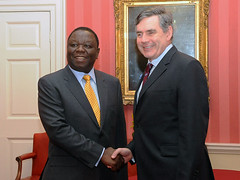
Gordon Brown and Morgan TsvangiraiImage by Downing Street via Flickr
By Paul Canning

The fight to include protections for LGBT in Zimbabwe's new constitution has received world-wide attention following predictably harsh homophobic statements by President Robert Mugabe.

What has upset many Zimbabwean human rights activists and opposition supporters has been their echoing by Zimbabwean Prime Minister, former Nobel Peace Prize nominee and erstwhile President Morgan Tsvangeri.

New Zimbabwe reports that Tsvangirai, speaking after Mugabe at a ironic International Women’s Day celebration event (ironic as Mugabe has used rape as a weapon in repressing Zimbabweans), said (translated from the original Shona): “The President has spoken on the issue of gay rights, men who breathe to other men’s ears. Never, I don’t accept that culture. Why do you look for other men when women make up 52 percent of the population? Men are few.”

Afrik.com reported Tsvangirai's remarks as: “I don't agree with the idea of a man breathing hard on the neck of another man while humping him."

The country's power-sharing government, headed by Mugabe and Prime Minister Tsvangirai of the MDC-T party, is shortly to embark on nationwide public hearings about the drafting of a new constitution.

The drafting of a new people-driven constitution is part of a series of democratic reforms aimed at ending the repressive laws and policies of the nearly 30-year Mugabe era.

The anti-gay posturing has been building since the MDC-T submission to the National Constitutional Assembly (NCA) was made last October. It says, under the Bill of Rights section, that:
In addition, the right to freedom from discrimination, given our history of discrimination and intolerance, must be broad to include the protection of personal preferences, that is gays and lesbians should be protected by the constitution.
The inclusion followed ongoing lobbying by Gays and Lesbians of Zimbabwe (GALZ), who organised a major Sexual Orientation Indaba (conference) on February 26 involving many other NGOs and have made their own submission to the NCA. Some members of the Constitutional Parliamentary Committee (COPAC) have said that prospects are good for a constitutional change in favour of gay rights, saying it was wrong to assume that Mugabe's views are shared by all Zimbabweans. Irene Petras, Director of Zimbabwe Lawyers for Human Rights, told the Indaba that LGBTI rights had been discussed in three of COPACs thematic committees, which she described as "encouraging".

According to the South African Mail and Guardian the MDC-T position "holds that homosexuality is a private issue and cannot be criminalised".

When the MDC-T draft proposals were published in October some MDC-T MPs immediately went to the state media to complain that the new draft constitution "was not crafted by the MDC but by other unknown, shadowy and sinister forces."

But it was a March 14 front page article in the Mugabe supporting Sunday Mail about a supposed collision course of Mugabe's Zanu-PF and MDC-T over including sexual orientation in the new constitution which led to Tsvangari's comments.

MDC-T immediately issued a statement describing the Sunday Mail's claims of gay rights support as "false and malicious".

More press reaction followed and Mugabe seized on a 'wedge issue' - like numerous other African politicians -  and with Tsvangari by his side forced his hand, his comments followed Mugabe's.

What is worrying activists is that Zanu-PF have proposed anti-gay constitutional provisions which seize, like Kenyan and Ugandan politicians, on the non-issue of same-sex marriage. In another tactic copied from other African countries but also widely used for many years in similar ways against Tsvangeri and MDC-T they have said that Zimbabwe is "under pressure from its [foreign] donors wishing to promote homosexuality".

One largely absent tactic, unlike elsewhere, is to say that homosexuality is 'un-African'. Largely because of the sensational sodomy trial of Zimbabwe’s first post-independence president, the late Canaan Sodindo Banana, in 1998.

Bollywood: behind closet doors

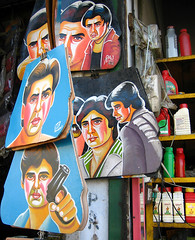
Back-view Bollywood: multipleImage by Meanest Indian via Flickr
Source: The Age

By Matt Wade

Bollywood isn't known for holding back. But something is missing from its assortment of muscle-bound idols and glamorous leading ladies: openly gay stars.

The glitzy entertainment hub, like the rest of the country, still likes to maintain traditional sexual identities, at least in public. But behind closed doors the sexual behaviour of many Indian men and women is much more complicated.

Ashok Row Kavi, an expert on India's sexual minorities, estimates that 40 million to 50 million Indian men have sex with other men, though most are married and relatively few would call themselves gay.

Mr Kavi, who in 1984 became one of the first Indians to come out openly as gay, believes that those who identify with India's gay community make up just 5 to 10 per cent of the country's homosexuals. They tend to be English-speaking and wealthy and are concentrated in major cities, especially Mumbai.

Sujan, a 21-year-old sex worker at Mumbai's busy Andheri railway station, reflects this complexity. He has been selling sex on the streets of Mumbai for four years and identifies himself as a homosexual. But every three months or so he switches to a traditional sexual identity when he goes home to his conservative Rajasthan village. ''It's different when I am in my village,'' he says. ''I have told my parents I will get married.''

Mr Kavi, an adviser to UNAIDS, has identified at least 13 distinct groups of men who have sex with other men in India, apart from the gay community. This includes India's traditional Hijra, or transgender community, itinerant transport workers such a truckies and the aspiring male actors who flock to Bollywood each year. Male film extras have been identified as vulnerable to HIV infection because many sell sex to survive between roles. They may also have to exchange sex for work.

''There is a gay culture very prevalent in Bollywood, but it's very internal and very protected,'' says Vivek Raj Anand, chief executive of the Humsafar Trust, a leading gay support group. ''In India we have this great contract of silence. It's like 'you know and I know and it's only when we start talking about it that it becomes a problem'.''

India has been talking more about homosexuality since a judgment by Delhi's High Court eight months ago effectively decriminalised homosexuality. It overturned a 150-year-old section of India's penal code, drafted during British colonial rule that outlawed ''carnal intercourse against the order of nature'' and imposed a 10-year jail term on offenders.

Activists say police harassment of gay people has declined significantly since the ruling.

But the court's intervention has coincided with a sharp rise in attacks on gay people, including a spate of brutal murders.

''The violence in the past few months is something I have not seen for 15 years,'' says the Humsafar Trust's Vivek Raj Anand. ''These are terrible hate crimes. For the first time in my life I have got threatening calls.''

Social activist Dr Anjali Gopalan, whose Naz Foundation made the petition that led to the court decision to decriminalise homosexuality, says it has done little to help lesbians. ''At some level there is an acceptance of male homosexuality but not women's,'' she said.

Mr Kavi, who founded India's first and only gay magazine, Bombay Dost, says gay identity politics is being shaped by rapid social and economic change.

Friday, 26 March 2010

Comment: Iraq is the most dangerous place on earth for gays


Source: pinknews.co.uk

By Paul Canning

It often shocks people to hear this but talk to Iraqi gays who've made it out and they'll tell you – life was better under Saddam.

Baghdad played the role that Beirut does now as a sanctuary for Middle Eastern gay life with clubs which men from the Gulf and Saudi Arabia flocked to.

In sharp contrast, for the past six years Iraq has been the worst place in the entire world to be gay. Far, far worse than Uganda or even Iran. Hundreds of gays, lesbians and trans people have been hunted down and killed in the most vile ways imaginable – and imagination is the right word. Doctors have confirmed reports of men have had their anuses glued shut by militia forces and others have accused the government of being involved.

No one has been prosecuted and the Iraqi government has failed to do anything to stop it. So Iraqi gays have helped themselves. They have created safe houses, although many have been discovered and become a new killing field.

Many have fled but they have faced a cold wall of indifference and they have needed friends and luck to actually make it to sanctuary.

Our government, the British government, has turned its back on those who have arrived here. All have initially been refused asylum. The system instead has told them that Iraq is safe and they should go home.

I am not making this up. Faceless bureaucrats in Alan Johnson's department (and Jacqui Smith's and John Reid's before him) have had the front to write "Iraq is safe" on gay asylum letters.

Why? How? Because they can. Because no one, no gay MP, no LGBT group, no one has pressured them, forced them, to do otherwise.

It gets worse. Because of an "unfit for purpose" system, their claims take years to resolve, wasting untold amounts of taxpayers' money as other bureaucrats and Johnson's hired gun lawyers fight them to the bitter end despite the mountain of evidence that Iraq is a deathzone for gays.

In the meantime they survive on handouts as they're not allowed to work. They are stressed out in ways those of us lucky enough to be born in the 'west' cannot begin to imagine, fearing that Johnson's agents will pick them up and put them on a plane to Baghdad.

Of course there are people helping Iraqi gays who make it here, though they are few. Most of all Iraqi gays are helping themselves.

Chief amongst them is Ali Hili, the leader of organised group Iraqi LGBT. It is he who first brought the world's attention to the pogrom against gays in Iraq. He has had the balls to be the public face and has paid the price in death threats and a fatwa against him.

But he is stuck in what John Reid described as an "unfit" system. This incredibly brave gay leader is just another number and the failure to grant him asylum is affecting the ability of Iraqi gays to draw the world's attention to their plight.

He cannot go visit the US Congress. He cannot visit the European parliament. In both places there are Very Important People, those who can practically help, who want to hear firsthand of the situation.

He has already told the Foreign Office. This other branch of the same government, whose gay minister Chris Bryant proudly touts its work on supporting gays around the world. The Foreign Office is extremely keen to take Ali's evidence, write it up in their Human Rights Report and use that to sell the caring-and-sharing face of the UK government, especially to gay voters.

So when you read the letter from some minion in the UK Border Agency saying that his case is not "compelling", that his case cannot be expedited so he can go visit Washington and New York and Brussels, what do you think? Does it make you angry?

Yes? Do something. Ask your MP – you can find them on this website theyworkforyou.com/ – to ask the Home Secretary Alan Johnson to intervene.

Johnson can do it. Remember Mehdi Kazemi? The young gay Iranian who Jacqui Smith insisted could be safely sent back despite all the evidence including the execution of Mehdi's teenage boyfriend? Well, she intervened and Mehdi is now safe. But it took an enormous effort to make that happen so – please – don't just read this and be angry. Write your MP, write Johnson and the Prime Minister. Tell everyone you know what's going on and ask them to do something as well.

The Ali campaign can be found here http://bit.ly/alihili

USA: With ban on H.I.V. immigrants now history, relief and revision

Statue of Liberty?Image by jordi.martorell via Flickr
Source: New York Times

By Scott James

John Newman fondly recalled the eight years he taught first and second grades in Vallejo public schools — he felt appreciated, and was once named “Teacher of the Year.” It was the 1990s, before he got sick and was told to leave the United States.

“I was accepted by co-workers, neighbors and employers,” Mr. Newman said. “But I was not welcome by the government.”

Mr. Newman, a Canadian, contracted H.I.V., which causes AIDS and nearly killed him. Breakthrough drugs brought back his health. Then he discovered that a law many considered cruel required him to leave his home. Sadly, he returned to Canada.

Now the stories of people like Mr. Newman are becoming public. Experts say tens of thousands shared similarly interrupted lives thanks to a 22-year United States ban on allowing foreigners with H.I.V. to live in this country.

President Obama described the ban as “rooted in fear rather than fact.” It became a dead letter in January.

“The people affected by this have lived in the shadows,” said Steve Ralls, a spokesman for Immigration Equality, a nonprofit organization working to end immigration restraints based on H.I.V. status and sexual orientation.

Mr. Ralls said the phones at his group’s legal aid headquarters in New York “started ringing off the hook and they have not stopped” since the ban was lifted. He said people were being reunited with lives — and in some cases spouses and families — they had been forced to leave behind.

The ban was imposed in 1987 when H.I.V.-positive foreigners were added to a list of inadmissible undesirables that included prostitutes and felons, said Christian Schmidt, a San Francisco immigration lawyer.

“They didn’t let you in,” Mr. Schmidt said. Those already here were tested. If results were positive, they had to leave.

The ban grouped H.I.V. — which is infectious and transmitted in blood and through sexual contact — with tuberculosis, a contagious airborne disease.

Critics said that by incorrectly inferring that H.I.V. was spread by casual contact, and equating the sick with criminals, the ban demonized those infected. “It’s really impossible to underestimate the stigma caused by this law,” Mr. Ralls said.

The ban “set a very bad precedent,” he said. “It undermined H.I.V. awareness and testing.”

Foreigners avoided testing, which Mr. Ralls said might have worsened the spread of AIDS.

The United States was the only industrialized country with such a policy; the handful of others included Iran, Iraq and Syria.

Out4Immigration protest LGBT platform exclusion at DC immigration march


Source: Out4Immigration

Thanks to all Out4Immigration members who rallied in DC over the weekend as part of the Reform Immigration for America (RIFA) march and in San Francisco yesterday, with a march through downtown to Sen. Dianne Feinstein’s office. Thanks in large part to the actions of Todd Fernandez (second from left in the photo) in organizing an 11th hour phone bank to the Center for Community Change (CCC) on Friday afternoon, a same-sex binational couple was given a speaking slot at the DC rally.

Until Todd put out the word to our members and allies – there were no plans for an LGBT voice among the more than 200,000 immigrant rights’ activists who descended on Washington (although there were plenty of us in the crowd - those pictured with Todd, including Donald Hitchcock from ACT On Principles, second from right, wore face masks to protest our silence). It is essential that whenever there is a rally for immigrant rights and comprehensive immigration reform in the coming weeks that we come out and demand our families are included in this battle.

Comprehensive immigration reform is not “comprehensive” unless it includes everyone affected by the broken immigration system. This includes same-sex binational couples, LGBT Americans with foreign partners who are denied the same rights as our heterosexual counterparts to sponsor our partners for a green card.

In the San Francisco Bay Area, we are welcomed into the immigrant rights’ fold, thanks in large part to Amos Lim. From the very early days of the battle for same-sex binational couple immigration rights, Amos worked from the ground up to build coalitions with other immigrant rights' groups. He saw the fight for the passage of the Uniting American Families Act (UAFA) as two-fold: the bill could pass as a stand-alone, or someday it could be included as part of a much larger immigration overhaul that the United States so desperately needs. When the Bay Area needs someone to talk about our families – there is only one call they make: Amos Lim from Out4Immigration.

Amos’s speech (see text) was well-received by the crowd of 1,500. It was interrupted by applause several times. “I feel the immigrant community here is finally understanding that we are affected, too. They understand that when we talk about family, our family is no different from theirs, and we should not be discriminated against.” Afterward, Amos was approached by many of the marchers who want to tell him we have their support and to thank him for speaking out.

Chris Barnett is another Out4Immigration member who traveled at his own expense to Washington DC last weekend to rally for our rights. He joined up with a small group of other same-sex binational couples who were holding a vigil at the Washington Monument, passing out stickers and fliers, and holding up photos of their partners who they are currently separated from due to our broken immigration system.

On Monday, Chris followed up on a recent Bay Area meeting O4I had with Senator Feinstein’s staff and met with her DC staff. It has been a relentless goal of O4I to get Sen. Feinstein to co-sponsor UAFA. We have been told by her staff that she supports CIR and would prefer to see a bill that reforms the whole system rather than piecemeal legislation. This is good news – but it doesn’t stop us from continuing to ask the senior Senator from the most populous state to stand up for her same-sex binational constituents.

So – again, a big thanks to those mentioned above for stepping up representing all of us. We hope this post inspires you to take a lead in the coming weeks as CIR moves to the center of the national stage. In San Francisco, we owe special thanks to Erik Schnabel for organizing for O4I to have a presence yesterday and Martha McDevitt-Pugh from Love Exiles, who came home from The Netherlands to be at the march. Thanks also go to the sponsors of the march and rally, including Reform Immigration for America, SIREN, CCISCO, BOCA, PIA, SEIU, UFCW Local 5, Dolores Street Community Services, Asian Law Caucus, EBASE, ICIR, and Padres Unidos.
Reblog this post [with Zemanta]

Malawi protest in London: Free Steven and Tiwonge


Photo by Brett Lock of OutRage!

By Peter Tatchell

African and British human rights campaigners rallied outside the Commonwealth’s head quarters in London on Monday 22 March. They were protesting against the prosecution and imprisonment of the Malawian same-sex couple, Steven Monjeza and Tiwonge Chimbalanga, on charges of homosexuality, and against the Commonwealth’s failure to condemn their arrest and detention in Chichiri prison.

The keynote speaker at the protest was Edi Phiri, a gay Malawian who fled his country after he was badly beaten and had threats to kill him. He said:
“I urge my President and government to intervene to release Steven and Tiwonge. These two men don’t deserve the way they are suffering in jail.

“The delay in the trial and the postponed verdict is a sign that the government and judiciary are split. Some officials want to convict and others don’t. They keep on putting off the verdict. It is unfair to treat Steven and Tiwonge like this.

“International solidarity protests are really important to make sure these men get their freedom.

“Malawi’s anti-gay laws are not African. They were imposed by the British colonisers nearly two centuries ago,” said Mr Phiri.
Similar concerns were echoed by protest coordinator, Peter Tatchell, of the London-based lesbian, gay, bisexual and transgender (LGBT) human rights group OutRage!:
“The judge has refused Tiwonge and Steven bail. Imprisoning them for three months without a verdict is an abuse of law and a violation of their right to a swift and fair trial. These men are innocent until proven guilty. So why are they in prison?” he queried.

“Tiwonge and Steven love each other and have harmed no one. But they could be jailed for up to 14 years.

“This protest was organised in response to an appeal for help from the jailed men. From their prison cell in Malawi, Steven and Tiwonge sent a message to me in London, urging international pressure to secure their release.

“Tiwonge and Steven have been arrested, prosecuted and held in jail solely because of their sexual orientation. We want them released, all charges dropped and the repeal of Malawi’s anti-homosexuality laws. These laws violate the equality and non-discrimination provisions of Article 20 of the Malawian Constitution and Articles 2, 3 and 4 and the African Charter of Human and People’s Rights, which Malawi has signed and pledged to uphold,” added Mr Tatchell.

Thursday, 25 March 2010

Jamaica’s gay underground Christians

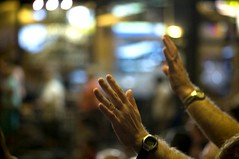
Hands raised in worshipImage by D G Butcher via Flickr

Source: Bay Windows


By Rev. Irene Monroe

Sometime in the late hours of Saturday night the call will come in. Philbert (not his real name,) like many of his Christian lesbian, gay, bisexual, transgender, and queer (LGBTQ) buddies, waits anxiously for the call in order to know the time and place of the van pickup, and where it’ll drop them off to a safe and secluded place for Sunday worship. Last week’s worship service was in Montego Bay, just 50 miles from Negril’s Grand Lido, one of the flagship resorts in Jamaica, where Philbert works the night shift at the bar. This week Philbert hopes for a closer worshipping space, perhaps a safe space in Gales Valley, just 40 miles from work.

Every Sunday Philbert and his friends have to worship in a different space. The risk is too high if it’s discovered that they’re queer.

"My experience as a gay man living in Jamaica is one which is marked by periodic incidences of abuse, both verbal and physical. I have lost count of the number of times I have been verbally abused, called ’battyman’ [Jamaican slang for ’homosexual,’] ’chi-chi,’ ’sodomite,’ ’dirty battybwoy,’" an unnamed gay man shared on the Jamaican Forum of Lesbians, All-Sexuals, and Gays (J-Flag) in 2003.

When Jamaica’s leading gay rights activist, Brian Williamson, was murdered in his home in June 2004, multiple knife wounds savagely mutilated his body. A Human Rights Watch researcher witnessed the crime, reporting a crowd gathered after the killing, rejoicing and saying, "Battyman, he get killed!" Others celebrated Williamson’s murder, laughing and calling out, "Let’s get them one at a time," "That’s what you get for sin," and "Let’s kill all of them." Some sang, "Boom bye bye," a line from renowned Jamaican reggae artist Buju Banton’s then popular anti-gay song about killing and burning gay men. (Banton has a long history of advocating the killing of LGBTQ people in his lyrics, yet he was nominated for a Grammy in 2009 for his album "Rasta Got Soul.")

In 2005 a gay man was harassed at the beach, and a mob pursued him. To avoid the wrath of the homophobic mob he ran into the sea and drowned.

In 2007 a pastor’s church was attacked by an angry mob on Easter Sunday because of the presence of people accused of being homosexuals were at a funeral service he performed earlier in the week.

And in November 2008, Rev. Richard Johnson, one of the leading Anglican priests on the island, was found nude and stabbed 25 times, in the rectory of St. Jude’s Anglican Church in Kingston, because he was thought to be gay.

Homophobia is so intense in Jamaica and so consistently goes unchallenged that people who speculate about who’s LGBTQ can easily plot to kill them, and unabashedly announce their intent with impunity, because the police won’t protect Jamaica’s LGBTQ citizens from mob led murders and violence; they instead incite the country’s homophobic frenzy by either being present and inactive during these assaults, or by following and watching them all the time.

Profile of Human Rights Watch's Boris Dittrich


Source: BAR

By Matthew S. Bajko

The call came out of the blue in January to his desk in New York City. On the line was a lawyer with the legal team behind the federal lawsuit seeking to strike down Proposition 8, the California ban against same-sex marriage.

A witness in support of the anti-gay, voter-approved measure had just testified that because the Netherlands adopted marriage rights for gays and lesbians in 2000 that incest and polygamy were also now legal in the European Country. With only 30 minutes before plaintiffs' attorney David Boies was to cross-examine the witness, an associate of his was scrambling to find out if the man's claims on the stand were true.

"I was very pleased I could explain what is going on. It appeared the witness had read something on the Internet and it was something made up. It is shocking how rumors and vague notions of things end up as arguments in American discourse on same-sex marriage," said Boris O. Dittrich, advocacy director of the LGBT program at Human Rights Watch.

It is just one example of the behind-the-scenes role Dittrich has played since taking his job with the international organization three years ago when he left the Dutch Parliament. In 1994 Dittrich, 54, became his country's first openly gay member of Parliament and his first act was to introduce a measure extending legal protections to married same-sex couples.

It took the Netherlands six years to pass Dittrich's law, and the world's first legal same-sex weddings took place April 1, 2001. The politician's doggedness – he maneuvered himself into the leadership of his party and used same-sex marriage and other progressive issues as bargaining chips to form a government with two opposition parties – set into motion the first domino to fall in the fight for marriage equality.

"In the next 10 years a lot of other countries will follow," said Dittrich, who spent several days in the Bay Area this week and spoke Tuesday at a Commonwealth Club LGBT member-led forum.

Having accomplished his goals in government, Dittrich opted to end his political career. He took the position with Human Rights Watch to continue to influence public policy on the world stage but with a less visible role to play.

"I asked myself, do I want to be a politician the rest of my life or do something else? I love the U.S. and wanted to live here," said Dittrich.

Since 2008 he has worked with a pro-gay Ugandan group and used his political connections to meet with government ministers in the African country to press them to respect LGBT people. So the introduction of a virulently homophobic law in Uganda came as no surprise to Dittrich.

During one meeting with a Ugandan minister, Dittrich handed the man a book that explained how protecting sexual minorities was required because Uganda had signed on to several United Nations treaties in support of human rights.

"He took the book and threw it on the table and said, 'That is what we do with human rights in Uganda. We have different problems to work on in Uganda,'" recalled Dittrich.

Outside of government offices, however, Dittrich defers to Ugandans to be the public voice on LGBT rights issues.

"Otherwise it is easy for the government to say a Western organization wants to impose its views on us," he explained.

Another voice Dittrich was instrumental in convincing to speak out against such harsh laws is the Holy See and the pope. At the request of Human Rights Watch, the Vatican issued a statement in December in favor of decriminalization of homosexuality. Dittrich, in turn, has been pressing Catholic bishops in Uganda and other countries to speak out against sodomy laws.

Next week, at the invitation of Pope Benedict XVI, Dittrich will be meeting with Vatican officials. He has requested a private conversation with his holiness.

Influence in U.S.

Wednesday, 24 March 2010

Action alert: Iraqi LGBT need your help

The UK government through its Border Agency has decided not to give priority to the asylum application of Iraqi LGBT leader Ali Hili, in exile in London. The application has been outstanding for nearly three years and while it is outstanding, Ali cannot travel.

This decision directly impacts not just on Ali but on harshly persecuted Iraqi lesbians and gays through the reduced ability of their sole visible leader to raise their profile internationally.

Can you help?

As you may be aware, numerous human rights organisations and journalists have documented the pogrom against lesbians and gays in Iraq. Iraqi LGBT estimates that over 700 LGBT have been assassinated over the past few years. The United Nations High Commissioner for Refugees has advised 'favourable consideration' for asylum claims because of the situation.

As the public leader of the only group representing lesbian, gay, bisexual and transgender (LGBT) people both inside Iraq and in the diaspora, Hili has received a fatwa from inside Iraq as well as numerous threats in London which have forced him to move. He is under the protection of the Metropolitan Police.

US Senator Kirsten Gillibrand and Congresswoman Tammy Baldwin spoke last month of their concerns for LGBT both in Iraq and as refugees, in a letter to US Secretary of State Hillary Clinton co-signed by 64 other Congresspeople.

Hili has received many requests to speak about the situation in Iraq internationally, including from US-based groups such as the Gay Liberation Network and the International Gay and Lesbian Human Rights Campaign, which he has been unable to pursue.

His solicitor, Barry O'Leary, wrote to the UK Border Agency (UKBA) in August 2009 that: "he desperately wishes to do this [travel] in order to further the aims of his organisation, that is, supporting lesbians and gay men in Iraq and bringing the world's attention to their plight."

Six months later, the UKBA told O'Leary that:
  • the assistance given by Hilli to the Foreign Office "does not count"
  • the fatwa does not mean that Hilli "falls within the classification of clear and immediate vulnerability"
  • that the delay in deciding Hilli's asylum case (since July 2007) "is not in itself an exceptional circumstance"
  • his case is not "compelling"
Peter Tatchell says of Ali:
"It was Ali Hili of Iraqi LGBT who first alerted the world to the organised killing of LGBT people in Iraq - way back in 2005. For a long time, he was a lone voice."

"Mr Hili was also the person who set up the 'underground railroad' and safe houses inside Iraq, to give refuge to LGBT people on the run from Islamist death squads and to provide escape routes to neighbouring countries - which saved the lives of many Iraqi LGBTs.

Ali must travel!

The UK Foreign Office Human Rights Report for 2009 specifically names Iraqi LGBT over other NGOs as a key source of information. Hili has met with them numerous times. The report quotes Foreign Office Minister Bill Rammell condemning persecution of LGBT in Iraq.

Foreign Office Minister Chris Bryant wrote in his blog on Feb. 24: "I know some people dismiss LGBT rights as something of a sideshow in international relations, but I am proud to say that the FCO has argued for a decade that human rights are a seamless garment."

Yet the same government through the Home Office is effectively aiding that persecution through the failure of government recognition to Iraqi LGBT's leader.
We want the UK government to expedite Ali Hili's asylum claim so he is properly able to tell the world about what is happening to LGBT in Iraq.

How you can help


GoPetition

Write to the UK Home Secretary, Alan Johnson, to ask that he intervene in Ali's case that his asylum application be prioritised. Please mention Ali's Home Office reference which is S1180507/7. (Get a standard letter - please personalise and remember to sign it)
Rt Hon Alan Johnson MP, Home Secretary, 2 Marsham Street, London, SW1P 4DF
Telephone: 020 7035 4848
public.enquiries@homeoffice.gsi.gov.uk
Write to UK Prime Minister, Gordon Brown, to ask that they ask Johnson to intervene in Ali's case. Please mention Ali's Home Office reference which is S1180507/7. (Get a standard letter - please personalise and remember to sign it)
The Prime Minister, 10 Downing Street, London, SW1A 2AA
Email the Prime Minister’s Office
Write to your MP to ask that they ask Johnson to intervene in Ali's case.

If you are outside the UK, ask politicians, prominent persons and organisations to invite Ali to your country and make Brown and Johnson aware of this request.

Ask those politicians, prominent persons and organisations to issue their own public statement in support of Hili's asylum prioritisation from the UK government.

Write to newspapers, write blog posts in support of Ali, tell people about Ali.

Please copy any letters to the campaign in support of Ali Hili to gayasylumuk@gmail.com

Join the Facebook page

Related Posts with Thumbnails