Saturday, 31 October 2009

Misery follows the 'jungle camp' raid


By Jean Lambert

Looking over this desolate landscape, it is hard to believe that just a month ago this was the site of Calais's migrant "jungle" camp. Save for the odd lone shoe or broken radio this area, where trees and bracken once provided refuge, has been cleared and ploughed into a muddy wasteland.

With the media looking on, the resident migrants were dramatically removed by the French authorities last month. Knowing of the impending raid, many had dispersed in advance, some of whom are now living on the streets in Paris. Of those who were detained, some were deported and others were later released. Weeks later, hundreds have returned to Calais, where they are again sleeping rough and surviving on food handouts.

I visited Calais and the Sangatte refugee centre, a facility run by the Red Cross to provide shelter and food, 10 years ago. I was told at the time that it encouraged migrants. Nicolas Sarkozy, then the interior minister of France, demanded its destruction in 2002 and with it, hopefully, the problem.

A decade later and many criticisms of the French authorities made then are still valid. The UNHCR is currently operating on the streets as there is no refugee centre, and while permission has been granted to use a building to process asylum seekers, its provision is a continuing cause for dispute between the authorities involved.

There has been increased and targeted police harassment, with young men saying they have been picked up and held overnight in cells then dropped miles from Calais to find their way back alone.

And it is very difficult for the migrants, a large proportion of whom have travelled overland from Afghanistan, to find information on asylum in any language other than French. When I visited Sangatte with fellow Green MEPs, we tried to remedy this situation by producing a booklet on asylum procedures in six languages. I have heard that this is still in circulation today.

While the French want to deter mass migration to Calais, it's clear that people will continue to pass through it to reach the UK for the foreseeable future. We now need to address the immediate humanitarian situation.

A centre to provide basic amenities – such as showers, drinking water, medical care and overnight shelter – is the most urgent need, since these people are extremely vulnerable. Many are under 18 and therefore legally classified as children. Despite fears, tighter laws on immigration to the UK mean that a camp of a similar size to Sangatte is unlikely to ever rematerialise. A separate office should also be set up where people can find information as well as lodge and follow their asylum claim through the system. One man I met had his papers to prove he was a legitimate refugee, but he was still without accommodation and the stability necessary to pursue language courses or work. Providing these centres could help people like him move on with their lives and would ensure that those under 18 are identified and protected.

Current EU legislation requires that asylum seekers are dealt with in the first safe country they enter, although national asylum standards vary hugely. As well as having connections to the UK, many want to wait until they arrive here to apply because our system functions relatively well.

The EU is trying to address this by upgrading all national systems to the same high standard. This would mean that no matter where someone applies for asylum their claim would be assessed by the same criteria and their reasons for wishing to settle in a certain country could be taken into account, if they are allowed to stay. The proposed European Asylum Support Office is designed to assist this improvement.

Along with colleagues in the European parliament, I have also called for a new status for those who are not eligible for asylum, but who cannot be returned to their country of origin – for instance if that country is in conflict, or indeed if the supposed country of origin won't accept them. Unable to return home or work or claim benefits, they can be left destitute and fall into the hands of gangs and illegal activity. Awarding them a legal status could give them leave to remain temporarily and the chance to earn a basic living.

What is clear is that until the conditions of their countries of origin are improved people will continue to arrive in the EU, in search of security, work, education and a better life. France's tactics for dealing with migrants have failed to solve the problems in Calais; indeed their approach has hindered the process of registering and monitoring people's movements. Now they must ensure that internationally agreed asylum and human rights are upheld, and with developments in European legislation I hope that long-term solutions can be found.

Asylum seekers discussed at ILGA-Europe annual conference

Source: ILGA-Europe

Asylum seekers workshop at ILGA-Europe annual conference, Malta, 31 October 2009

Description of the workshop:
The EU legislation on asylum defines minimum standards that explicitly include the possibility of granting protection in case of persecution on the ground of sexual orientation. The studies carried out by LGBT organisations show that the implementation by Member States is far from satisfying. In the coming years a “Common European Asylum System” will be establish. It is time to look at the best possible interpretation of the existing directive, looking for harmonisation in the light of best practices.

Presentations from the workshop can be retrieved below.

Presenters:
Joël le Deroff, ILGA-Europe’s Policy Officer, Søren Laursen, LBL (Denmark), S. Chelvan, ALEGRI (UK) & Yahia ZAIDI (Abu Nawas, Algeria)

Main issues discussed:
  • Presentation on how asylum decisions are taken in Denmark – highlighting the fact that in many cases LGBT applications are rejected in the first stages\In most countries the definition of a refugee is the convention one in 1951 – is it still valid?
  • LGBT is considered as a basis for refugee claim in the convention. New EU legislation includes sexual orientation as a ground for persecution – however still not enough.
  • Sexual identity is more than just sexual conduct.

Main outcomes:
  • LGBT asylum seekers are not getting the help they need. Most of the times it’s a matter of whether officer/agent believes your experience. How to tell if a person is really LGBT?
  • We need to obtain insight into decisions from other European countries – Good practice.
  • Belgium asylum seekers assisted by local social workers. Need to be taken into consideration that LGBT asylum seekers might find presence of their communities in the same open centre.
  • According to the UNHCR Guidance Note on Sexual Orientation and Gender Identity, if the state forces people to be discreet, that’s a violation of human rights. Everyone has a right to an identity.
  • In reality when society is against you, that is a form of persecution. Discrimination leads to persecution.

Arab winds of change

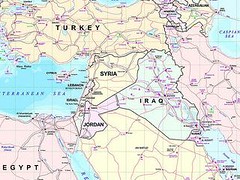
Middle_East_MapImage by openDemocracy via Flickr
Source: The Guardian

By Brian Whitaker

"Women, bloggers and gays lead change in the Arab world." That is the headline of an article by Octavia Nasr for CNN's blog AC360°. "Several new lines are being drawn in the Middle East's desert sand simultaneously," she writes. "If they continue to be drawn at this rate longer and thicker, it's hard to foresee any governments, censors or jails being able to stop them."

Though Nasr sounds a bit overexcited about the existence of a feminist mag in Arabic in which "no one dares to advertise" and a few other developments which are interesting straws in the wind but scarcely signs of an imminent revolution, I think she has a point. If asked where change is likely to come from in the Arab countries, I would not put much faith in "reformist" politicians and opposition parties – they're mostly no-hopers – but I would definitely put feminists, gay men, lesbians and bloggers very high on my list.

It's important not to exaggerate what they are actually achieving at the moment, but let's consider their potential as challengers of the status quo and drivers of change. The "Arab problem" is mostly perceived in terms of the regimes: the lack of democracy, authoritarian rulers who trample over people's rights, and so on. That was the perception of the Bush administration in particular and it led to the simplistic idea that regime change was the solution.

It's now very clear (as I explain in my new book, What's Really Wrong With the Middle East) that this was a mistake. You can overthrow dictators, you can force countries to have elections and you can even insist on voting procedures that are reasonably fair, but that doesn't bring freedom unless it forms part of a much bigger social transformation.

What has emerged in Iraq, for example, is not so much a model for the rest of the Middle East (as originally intended by Bush and the neocons) but a model of it. As the smoke drifts away, Iraq is emerging as a fairly typical Arab state with most of their usual negative characteristics – a government with authoritarian aspirations, institutionalised corruption and nepotism, pervasive social discrimination and a rentier economy that produces little besides oil – plus, for good measure, resurgent tribalism and sectarianism.

Arab regimes, by and large, are products of the societies they govern and it is often the society, as much as the government itself, that stands in the way of progress. In Kuwait, for instance, it was not the hereditary emir who resisted granting votes to women, but reactionary elements in the elected parliament – and there are plenty of similar examples.

Khaled Diab, an Egyptian who contributes regularly to Cif, summed it up pithily when he told me: "Egypt has a million Mubaraks." In other words, the Mubarak way of doing things is not confined to the country's president; it is found throughout Egyptian society, in business and in families too. The Arab family as traditionally conceived – patriarchal and authoritarian, suppressing individuality and imposing conformity, protecting its members so long as they comply with its wishes – is a microcosm of the Arab state.

Changing the power structures within families (and in many parts of the Arab world this is already happening) will also gradually change the way people view other power structures that replicate those of the traditional family, whether in schools and universities, the workplace, or in government. This is where women come in. In an Arab context, demanding the same rights as men is a first step towards change. Asserting their rights doesn't mean that all women have to be activists for feminism. Even something as simple as going out to work – if enough people do it – can start to make a difference.

Contrary to popular opinion, most human rights abuses in the Arab countries are perpetrated by society rather than regimes. Yes, ordinary people are oppressed by their rulers, but they are also participants themselves in a system of oppression that includes systematic denial of rights on a grand scale.

In these highly stratified societies, people are discriminated for and against largely according to accidents of birth: by gender, by family, by tribe, by sect. Women, as the largest disadvantaged group, can play a major role in overcoming this and helping smaller disadvantaged groups to do the same. Once the equality principle is accepted for women it becomes easier to apply it to others.

Discrimination against gay people has only begun to be challenged in the Arab countries during the last few years. In a patriarchal system, where masculinity is highly prized, any deviation from the sexual "norms" and expected gender roles is not only subversive but is regarded as extremely threatening. The vigilante killings in Iraq are the nastiest example – not just of men who are thought to be gay, but others who simply don't dress and behave "as men should".

The third group driving change are the bloggers. A recent survey found 35,000 people blogging in Arabic, plus countless others who use Facebook, Twitter, etc, to communicate over the internet. There has been much debate about the extent to which this is reshaping public discourse and undermining censorship, but that is not really the main significance of blogging and the internet in the Middle East. The traditional "ideal" of an Arab society is one that is strictly ordered, where everyone knows their place and nobody speaks out of turn. Basically, you do what is required of you and no more. You keep your head down, don't make waves and let those who supposedly know better get on with running things.

The point about bloggers is that they want none of that. They are engaged, they are alive, and they'll speak out of turn as much as they like. Put all these elements together and you can see how, sooner or later, the edifice could start to crumble.

Reblog this post [with Zemanta]

US HIV travel and immigration ban repeal: The Inside Story


White House announces end to HIV travel ban

Source: Washington Post

By Garance Franke-Ruta

President Obama called the 22-year ban on travel and immigration by HIV-positive individuals a decision "rooted in fear rather than fact" and announced the end of the rule-making process lifting the ban.

The president signed the Ryan White HIV/AIDS Treatment Extension Act of 2009 at the White House Friday and also spoke of the new rules, which have been under development more more than a year. "We are finishing the job," the president said.

The regulations are the final procedural step in ending the ban, and will be published Monday in the Federal Register, to be followed by the standard 60-day waiting period prior to implementation.

A ban on travel and immigration to the U.S. by individuals with HIV, the virus that causes AIDS, was first established by the Reagan-era U.S. Public Health Service and then given further support when Sen. Jesse Helms (R-N.C.) added HIV to the travel-exclusion list in a move that was ultimately passed unanimously by the Senate in 1987.

A 1990-1991 effort to overturn the regulatory ban failed in the face of outcry and lobbying from conservative groups and bureaucratic turf disputes. The ban was upheld in 1993 when Congress added it to U.S. immigration laws.

The Senate finally voted to overturn the ban as part of approving legislation reauthorizing funding for the President's Emergency Plan for AIDS Relief, or PEPFAR, in 2008, and President Bush signed it into law on July 30 of that year. Sen. John Kerry (D-Mass.) and then-Sen. Gordon H. Smith (R-Ore.) led the process in the Senate.

"This really proves that immigration laws that exclude families and stigmatize individuals are destined to fail," said Rachel B. Tiven, executive director of Immigration Equality, a group that has mobilized more than 20,000 comments in support of ending the ban.

"The climate has really changed," she said, attributing the end of the ban to a diminishment in "misinformation about HIV and AIDS."

The lifting of the ban removes one of the last vestiges of early U.S. AIDS policy. "We're thrilled that the ban has been lifted based on science, reason, and human rights. Our hope is that this decision reflects a commitment to adopting more evidence-based policies when confronting the AIDS epidemic and developing a comprehensive national AIDS strategy," said Kevin Robert Frost, CEO of amFAR, an AIDS research foundation.

Until today's announcement, the U.S. was one of only 7 countries with laws that bar entry of people with HIV, the group noted.

Friday, 30 October 2009

Latest Anti-Gay Surge in Turkey Against Another LGBT Organization

Source: Kaos GL

Black Pink Triangle Association in Izmir is the fifth LGBT (lesbian, gay, bisexual, transgender) organization that faces closure threat from the Turkish government. The first hearing will take place on February 19, 2010. The reason for closure threat is once again being against the law and morality.

According to the information provided to the association, the Governors Office of the City of Izmir is demanding closure of the Black Pink Triangle Association.

Black Pink Triangle Association members stated that: "The prosecutor's demand for closure of our association is clearly a violation of civil rights. Establishing an organization a constitutional right and they want to take that right from us.

When Black Pink Triangle Association was founded on February 20, 2009, all the necessary legal documentation was filed to the Governors Office.

On May 26, 2009 the association received a notification from Governors Office requesting the organization to correct some of the mistakes on the application form. However the Governors Office also demanded correction of some of the founding statues of Black Pink Triangle Association claiming that the associations objections are against Turkish "moral values and family structure.

Although the mistakes in the application form were corrected, the Association refused to change the statues as per Governors request. They also stated that Kaos GL (an LGBT organization in Ankara) and Lambda Istanbul (an LGBT organization in Istanbul) have exact same statues and after long legal battles they were able to exist as legal and legitimate institutions.

On October 16, 2009, following the receipt of Black Pink Triangle Associations response, Governors Office filed a lawsuit against them and demanded closure of the institution.

Black Pink Triangle Associations lawyer Ceylan Elif Ozsoy stated to Kaos GL that she found the action disturbing. She also pointed out the similar actions were taken against Kaos GL, Pink Life and Lambda Istanbul organizations and they failed.

Turkish authorities have targeted other LGBT organizations in the past as well:

In September 2005, the Ankara Governors Office accused the Ankara-based group KAOS-GL of establishing an organization that is against the laws and principles of morality. Similarly, the Ankara Governors Office attempted in July 2006 to close the human rights group Pembe Hayat (Pink Life), which works with transgender people, claiming to prosecutors that the association opposed morality and family structure. In both cases, prosecutors dropped the charges.

In December 2006, the Ankara-based editor of Kaos GL, Turkey's only magazine for LGBT people, 29-year-old gay activist Umut Guner, was indicted under a vague statute banning "obscene" material, and faced up to three years in prison. Authorities seized the magazine's entire press run. Guner was acquitted later.

In another series of legal attacks on LGBT organizations and publications in Turkey, on May 29, 2008 a court in Istanbul, the nation's largest city, ordered the dissolution of Lambda Istanbul. Founded in 1993, the group is Turkey's oldest LGBT organization, and has organized Gay Pride marches in that city every year since 2003. On January 2009, the 7th Judicial Office of the Supreme Court of Appeals has overturned the ruling of Istanbul's 3rd Civil Court of First Instance, which had decided to close down the Lambda Istanbul Association for a violation of general morals.

--
Kaos GL is a LGBT organization and a legally registered non-governmental organization that publishes a bi-monthly magazine to completely cover Turkey. Please refer any questions to: news@kaosgl.com and refer to the web site for information: http://news.kaosgl.com/

Reblog this post [with Zemanta]

Thursday, 29 October 2009

Why more binational couples are leaving their homelands for Canada

Legend {{legend|#c0c0c0|No information}} Homos...Image via Wikipedia
Source: Xtra

By Noreen Fagan

I walked with purpose, my boots hitting the floor in a tempo that echoed my urgency. My mouth was dry and anxiety had sunk into the creases on my face. My family walked behind me, no one daring to talk in case my composure collapsed. I knew where to go and what to do. In my hand — now sweaty — I gripped an unassuming brown envelope that carried my family’s future in it. Our Canadian immigration papers.

It was just after midnight in early March 2007. We were walking down a wide hallway from the plane into Toronto’s Pearson International Airport, towards a glass window with signs directing new immigrants inside. We entered the room and went to the last counter that was open, handed our papers over to a small woman who, in a matter of fact way, stamped our papers, took our photographs and confirmed our permanent resident status before shuffling us toward customs. Like it was nothing.

It didn’t register right away that we were basically home free. Less than an hour later we walked out of the airport. We were tired but exhilarated — the relief was palpable. Only then could I let myself breathe. We hugged: me, my partner Tamara and our two boys. But it was Sebastian, our eldest son, who stirred up the emotion in all of us when he stopped and, referring back to the immigration officer said, “Mum, I like this country. That was the first time we have ever been called a family.”

Walking out of the airport that night, stamped papers in hand, was the last step on a journey that began when I first came out as a lesbian in Lusaka, Zambia in 1993. At 30 years old, I left a seven-year marriage and, with two young sons, embraced my sexual orientation in a country where proven incidents of homosexual conduct could land you in jail for up to 40 years.

It was then that I began my search for a place that my family could call home. It was a journey that, when I met my partner Tamara, turned epic. It took us from Zambia via the United States to Canada.

My partner is American and I am Zambian. We have been together for 12 years and have raised two sons — we are a family in our eyes, in our friends’ eyes, in the eyes of the Canadian government — but not according to the Zambian or United States governments. There, we have no status and no chance of living as a couple or a family.

“We considered a marriage between Noreen and my gay brother but what kind of a message is that to give your children?” says Tam when people ask her about other options. “Trying to teach them tolerance and pride, telling them there is nothing to be ashamed of — but, you need to lie to the social workers, your teachers, just about everyone.”

When it came down to it, living in the US was a short-term answer to a lifelong commitment. My sons and I moved there from Zambia in 2000 knowing that the chances of living there permanently depended heavily on the political climate. After four years of living together in the US, with no recognition as a couple or a family in sight, we applied to immigrate to Canada — something we later learned is a common strategy for binational same-sex couples.

The decision was wrought with emotion. Tam was devastated that she would have to leave the US, her family and her job. In turn, I was angry that, as a queer couple, we had to pay a high price for living in the US — higher taxes because Tam was considered a single person, $20,000 a year in university fees in order to keep my student visa. There was no possibility of socking away any money with a family of four living on one salary and with no idea of what the future held.

In the end, it was the boys’ future and our desire to see them in a welcoming environment that caused us to buckle down and start the lengthy application process. We spent months completing paperwork and pooling family funds. After the application was in, we waited anxiously for two years until we were finally accepted as permanent residents of Canada.

By Aug 11, 2008, we were ready to finally move. We packed the last of our things in a minivan and headed off to Canada, leaving behind our friends and our community in Carrboro, North Carolina. It was one of the hardest things that I have ever done — to leave friends who had become like family to us. Leaving them was, and still is, a harsh reminder of the sacrifices we have made in order to be accepted as a family. Though we’re certainly not the only ones.

According to a 2006 US census report, there are approximately 35,800 binational queer couples in America. Unlike heterosexual couples, who have both social recognition and the legal option to marry, these queer couples will be looking at ways to remain together. American immigration activists have come to recommend that families with one US partner and one international partner move to Canada. Groups like Immigration Equality now offer resources for queer Americans seeking to take the plunge.

For many of these queer couples, leaving their home country is a difficult step but, for Glen Tig and Chitpol Siddihivarn, it was more than that — it was a personal disaster.

Tig and Siddihivarn met in 2000 in Chapel Hill, North Carolina. Siddihivarn came from Thailand on a visiting scholar’s visa to complete his PhD in oral biology. After two years of living together, they realized they had no reliable way of staying together in the US and applied to immigrate to Canada.

Tig and Siddihivarn became permanent residents of Canada in 2003 but continued living in the US so that Siddihivarn could finish his doctoral work at the University of North Carolina. When Siddihivarn went to the American consulate in Toronto to request a final extension to his student visa, his passport was taken
and his visa cancelled.

This catapulted the couple into six months of chaos. Instead of having six months to plan their move — as they first anticipated — they had mere weeks.

The timing of the move and the move itself cost them both emotionally and financially. Tig was undergoing medical procedures in North Carolina to treat an aggressive form of bladder cancer, and his mother was coping with a life-threatening illness. She died while they were in Canada and Siddihivarn was not able to cross the border to pay his respects or to support Tig through her funeral.

“When we were cast out, all hell broke loose on many, many fronts,” says Tig. “We were dealing with the PhD limitation, we were dealing with finances, we were dealing with cancer, death, all of it. Shockwaves of that are still going on.”

The unexpected expenses that came with the move nearly ruined them financially — they sold their house, emptied every bank account, ran up credit card debt, borrowed money from friends and sold land they had hoped to build on in the future. None of these expenses would have been incurred if they were a heterosexual couple.

“It is specifically related to being gay. It is specifically related to not having another option available to us that straight people have available to them,” says Tig.

The US government doesn’t recognize any gay couples as couples (even for those married in one of the six US states where it’s legal). In contrast, Canada recognized gay common-law partnerships in 2000 and same-sex marriage in 2005. Canada also has a (relatively) liberal immigration policy.

For Tig and Siddihivarn, their first months in Toronto were enlightening. As new immigrants, they got driver’s licenses, OHIP cards and social insurance numbers, rented an apartment and opened bank accounts — all openly as
a couple, without anyone questioning
their relationship.

“We were treated with so much ordinariness, there were no people looking away with their eyes, there was no gulping,” says Tig. “Everybody just assumed that we were a couple.”

Tig and Siddihivarn adjusted to the “ordinariness” of being a gay couple in Canada — they became citizens in 2007 and married in 2008. They have since moved to Vancouver and Siddihivarn is doing his residency at UBC. Tig still travels back to North Carolina where he continues with his private therapy practice. However, in their private lives, they prefer to keep the story of their immigration exodus to themselves.

“Gay people don’t understand it, straight people don’t understand it,” says Tig. “It’s just beyond belief that, for our segment of the population, the liberties, freedoms and acknowledgment we get here are so profoundly significant, and the problems of being forced to leave the country you are born into are so disturbing.”

There are only 19 countries in the world — including Canada — that have queer-friendly immigration laws. South of the border, in a country that professes to be a leader in human rights, the majority of Americans cannot fathom the immigration problems that queer couples have to face.

“I guess I have been shocked at people’s ignorance,” says Susan Jessup, a US citizen looking to make Canada her new home. “I was ignorant too before I was put into this situation. Some [people] get that Canada is this gay haven, but other people don’t understand.”

Susan Jessup and Adi Shimoni have been together for four years. They are looking to move to Canada as a way out of their immigration quagmire. Shimoni, an Israeli, came to the US to complete her Master’s degree in occupational therapy and then transferred her status to a work visa. Although she and Jessup have hired multiple lawyers and sought new jobs in the US, Shimoni’s visa is only valid for six years. She has one year left before she is required to leave the country.

Initially, Shimoni explored the option of getting a green card through her employer, The Children’s Developmental Services Agency (CDSA). The CDSA agreed to sponsor her and contributed US$2500 towards the application. However, one of the requirements for obtaining a green card is that the applicant shows he or she has extraordinary skills and makes the prevailing wage set by the federal government. Shimoni’s income fell just below the stipulated amount and, because of budget cuts, the organization was unwilling to commit to writing a letter stating they would increase Shimoni’s wage by US$2000 annually.

“They [the CDSA] were unwilling to see it as an immigration issue,” says Jessup. “They could not get past the fact that it looked like a salary increase.”

With the unexpected obstacle in their way, they did what many binational queer couples in the US do — looked for other alternatives, chose what sacrifices to make and decided how to move on together.

Fed up with their lives being on hold, and willing to take the jump, Shimoni and Jessup have started their application to immigrate to Canada.

“Our whole lives have been uprooted, and we don’t want to walk through this process again,” says Jessup. “I have never lived in another country, so for me that will be a whole new experience. I am scared — I am 42 years old and I feel that I am going to be starting all over again.”

For Shimoni and Jessup, the immigration application will be relatively straightforward — they are both skilled professionals and meet Canada’s immigration requirements.

But for other gay couples wanting to come to Canada the process may be harder. Since November 2008, applicants have had to meet tough new prerequisites before their application will even be considered.

The immigration process is long, hard and the outcome uncertain. But for so many of us who have gone through it and been accepted, it means a new lease on life — a new beginning.

Despite the nightmare of uprooting our lives, for us, at least it was worth it. It is just over one year since we arrived in Canada. Sebastian is in university and our youngest son is in his last year of high school. Tam kept her job in the US and telecommutes from home when she is not travelling. I know where I am going, what I am doing and I walk towards my future with a purpose. I am happy — we are in a place we call home and on a journey to rebuild and establish ourselves in a new community.
Reblog this post [with Zemanta]

Wednesday, 28 October 2009

US: Growing Calls for Immigration Reform That Leaves No Family Behind

United States Capitol Dome.Image via Wikipedia
Source: Huffington post

By Steve Ralls

Congress has promised to begin the process of reforming America's broken immigration system later this year. There is widespread consensus that reform is urgently needed, and a growing insistence among lawmakers that any reform effort must adhere to our nation's long-standing commitment to family unification. Under current immigration law, millions of families remain separated because of inexcusable visa backlogs, unnecessary bureaucratic paper trails and discriminatory policies that do not recognize lesbian and gay families for the purposes of equal immigration rights.

For all of those families, time is of the essence. Every day, loved ones are forcibly separated from each other. For too many, the American dream is one that cannot yet be shared with their spouse, sibling or significant other.

This Friday, Congress will hold two briefings which signal the beginning of immigration reform efforts. Those two events -- one focused on family immigration policies and one on the much-needed DREAM Act -- will also be a starting point to ensure that critically important components of reform, like young people and families, aren't left on the Congressional cutting room floor.

So it's no mistake, and welcome news, that Friday's family immigration event will include a voice from the lesbian, gay, bisexual and transgender community, too. And in the days leading up to that event, Members of Congress are speaking out in the press about the need to ensure that LGBT families are not left behind.

Friday's conversation on family immigration issues will include Steve Orner, a gay American citizen whose Indonesian partner was forced to leave the country -- earlier this morning -- because Steve is unable to sponsor him for residency in the United States. Steve and his partner were forced to sell the home they bought together because, under U.S. immigration law, they do not qualify as "family."

That would be news to Steve's 88-year-old father, Allen Orner, who will travel from Connecticut to Washington on Friday to join his son on Capitol Hill and tell Congress how the American immigration system has ripped his extended family apart.

"This has been devastating and very sad for the entire family," Allen recently said. "[Steve and his partner] bring such happiness to every gathering, cheerfulness to every event, as well as concern for anyone who is having problems. They are favorite uncles for the young people in our family. A loving, devoted couple, they bring much joy into our lives."

"Our family needs our missing spouse/son/brother/uncle back at the Thanksgiving table where he belongs," Steve's mother, Doris, added.

An estimated 36,000 LGBT binational families, like Steve's, are either already separated or facing separation soon.

That has led a growing chorus of lawmakers to publicly call for an end to discriminatory immigration policies that impact gay families. In two op-eds published this week in prominent Capitol Hill newspapers, three Members of Congress have called on their colleagues to join them in passing immigration reform legislation that will benefit all families, including LGBT families, too.

In Monday's issue of Roll Call, Congressman Mike Honda (D-CA), the lead sponsor of The Reuniting Families Act in the House of Representatives, wrote that the issue of inclusive reform is one that hits home for families across the country ... and in his home district, where Aung Moe and Vivek Jayanard are waiting for their wives to be able to obtain residency in the U.S. and Judy Rickard is preparing to leave the country in order to remain with her long-time partner, Karin."

Honda writes that "Judy Rickard will permanently leave America this November in an effort to keep her family together. Under U.S. law, she cannot be reunited with her partner, Karin Bogliolo, a UK national. Judy would have preferred to keep working at San Jose State University and sponsor Karin for residency in America, just as married heterosexual couples can. But U.S. law does not allow for that. Judy is taking early retirement from her 27-year employment at San Jose State. Facing reduced pension for the rest of her life, Judy is choosing Europe because our country will not let Judy and Karin live together. The result is a loss for my district and a loss for the university."

"In an effort to safeguard Aung's, Vivek's and Judy's families," Honda writes, "I reintroduced the Reuniting Families Act (H.R. 2709) in Congress to allow all Americans to be reunited with their families. I did so because I know that the more educated, legal and healthy immigrants become, the higher their income, the higher their taxes paid, and the fewer emergency and social services used.

"Furthermore, the more reunited immigrants are, and thus happier, the fewer dollars we lose in remittances to other countries."

"Failure to pass this legislation," the Congressman continues, "means failure to provide American workers with a critical support system. Families do together what they cannot do alone -- start family businesses, create American jobs and contribute more to this country's welfare."

"Failure is simply not feasible," he concludes. "We must seize every opportunity this year to get our economy back on track, and one clear way of doing so is to reunite America's workers with their families. The irony with anti-immigration sentiment, which fears a further recessed economy if liberal legislation passes, is that, in fact, it is more fiscally prudent to pass policy that legalizes, insures, employs, reunites and educates our immigrants."

And in today's issue of The Hill, Senator Patrick Leahy (D-VT) and Congressman Jerrold Nadler (D-NY) call on lawmakers to support their bill, The Uniting American Families Act, and include the measure in upcoming immigration reform bills.

"This bill would grant same-sex couples the same immigration benefits -- and responsibilities -- as opposite-sex couples, under the same existing legal framework," they write. "It is cosponsored by 22 senators and 117 members of the House of Representatives and has the support of a diverse coalition of businesses and civil rights organizations, including the NAACP, the American Bar Association and the Anti-Defamation League."

"We must change the law to end the gratuitous cruelty being imposed on Greg, Jaime and the thousands of other couples just like them around the country," the two continue. "We urge Congress to incorporate UAFA into the forthcoming comprehensive immigration reform. No immigration reform we enact can be truly comprehensive unless it also addresses this deprivation of the civil rights of bi-national families. There is no rational reason to continue this discriminatory treatment. It is long past time that Congress did something about it."

Those words are welcome news to Steve Orner's mom, who notes that, "[T]his is not just Steve and Joey's story. It's the story of tens of thousands of others caught in the same situation."

"I hope that when Congress realizes this discrimination is bringing such pain to families like ours," she added, "they will act to remedy the situation."

As Congress begins to debate immigration reform, all of our families -- gay and straight -- can stand together to ensure that none of us are left behind. If we do, Aung Moe and Vivek Jayanard can welcome their wives to the U.S., and Steve Orner can bring his partner back home.

It's a win-win situation that makes countless families' lives immensely better.
Reblog this post [with Zemanta]

Tuesday, 27 October 2009

Obama's Civil Rights Czar promised to protect gays: by deporting them?!


Source: queerty

When we hear this tried crap about Obama being too busy for gay rights, and how he's got bigger things to deal with, it helps, but remains unfortunate, that we have stories like Genesio "Junior" Oliveira and Joe Smith (a fake name) — two men forced to leave the United States because this nation endorses discrimination.

Wasn't assistant attorney general Tom Perez — Obama's "civil rights czar" — just saying how he was going to stick up for queers? Yes, he was: "We must fight for fairness and basic equality for our LGBT brothers and sisters who so frequently are being left in the shadows [and to] ensure that there's a level playing field in which our LGBT brothers and sisters are judged by the content of their character."

So how come it's Perez's own Justice Department that just let expire an asylum claim from Oliveira, who was raped in his native Brazil and fled to the U.S. seeking safety from homophobic attacks. The application was denied, but before being forced to return to Brazil in 2007, he and partner Tim Coco legally married in Massachusetts in 2005.

Except, guess what, the Defense of Marriage Act means the federal government doesn't recognize that marriage — so without an asylum claim, Oliveira has no legal standing to remain in the U.S. (The AP notes "Oliveira was denied a visa to return to Massachusetts last year for the funeral of Coco's mother." The pair haven't seen each other since January, though they web chat every night.) Even with Massachusetts' U.S. Sen. John Kerry lobbying Attorney General Eric Holder on his behalf, Oliveira is out of options. And $250,000 in legal fees.

Oh, there is this option: Suing the government in federal court, claiming DOMA is unconstitutional. Even Obama agrees it is! And yet, he refuses to instruct his underlings to see the law's faults and reconcile how keeping Oliveira in the U.S. would be a human rights WIN.

And then there's the case of D.C.'s Steve Orner and his foreign partner, identified only as “Joe Smith," who testified before Congress on Friday about binational gay couples, two days after he said goodbye to Smith, who was forced to return to his native Indonesia. Smith, who holds a PhD from an American school, had been approved for a green card, but lost his job before his visa came through. But there's no such thing as the Uniting American Families Act yet, which means Smith returns to his closeted life in Indonesia, where being gay can get you arrested.

But hey, what else can you expect from AG Holder? While he was busy reciting Obama's gay talking points on Friday at a University of Maine lecture — DOMA bad! DADT bad! — he reminded everyone that he must still uphold those laws on the books. And as for his prescient arrival in a state whose same-sex marriage fate is about to be decided? "[The president and I] are of the view it is for states to make these decisions. That federal law [DOMA] is not necessarily a good piece of legislation, and we are going to work to repeal it."

You know, whenever.

Reblog this post [with Zemanta]

US man sentenced to prison in immigration fraud case

Source: Seattle Times

By Mike Carter

A self-proclaimed immigration expert who advised his clients to falsely claim to be gay to win asylum in the U.S. was sentenced this morning to 18 months in prison by a federal judge in Seattle.

Steven Mahoney, who operated Mahoney and Associates in Kent for nearly nine years, pleaded guilty in April to conspiracy to commit immigration fraud. Mahoney, 41, admitted that he filed as many as 99 false immigration applications, according to the U.S. Attorney's Office.

Mahoney's estranged wife, Helena, received a six-month prison sentence.

U.S. District Judge John Coughenour said the sentences should send a message to the community "that this type of behavior will not be tolerated."

According to the indictment in the case, Mahoney told immigrant clients to falsely state they were homosexual on immigration documents and that they feared persecution or even death if they returned to their own countries. Likewise, he advised others to claim discrimination over religious beliefs.

He was paid up to $4,000 for each false application he filed, according to the indictment.

In one instance, involving an individual identified in the indictment as A.K., Mahoney is alleged to have advised him to say on immigration applications that he was gay and that the militia in his country had attempted to rape his wife because of his sexual orientation, according to the indictment. Helena Mahoney allegedly helped the man obtain "documents about the gay community to assist A.K. in preparing for his asylum interview," the indictment alleges.

Another immigrant, identified as G.V., reportedly submitted documents to the immigration officials claiming that he was afraid he would be maimed if he returned to his homeland "when in truth ... G.V. was not afraid of such maiming," according to the indictment.

It's not clear whether any of the immigrants mentioned in the indictment was granted asylum status and allowed to stay in the U.S.

In seeking prison time, federal prosecutors said persecution of gays and Jews in Eastern Europe is real.

"By advising immigrants to falsely claim that they were gay or Jewish, [the Mahoneys] diminished the chances of those who genuinely seek asylum for those reasons," prosecutions said in a news release.

Reblog this post [with Zemanta]

Jamaican Opposition sides with Govt on No to same sex marriage

{{pt|A primeira-ministra da Jamaica Portia Sim...Image via Wikipedia
Source: Gay Jamaica Watch

Yesterday during the debate on the Charter of Fundamental Rights and Freedoms in Parliament the Opposition party the Peoples National Party PNP joined the institutional discrimination action to oppose Gay Marriage in Jamaica. The Charter which is being debated on the question of gender and rights sand freedoms for gays and lesbians in particular has had infused deliberately the invented gay marriage issue which was never a point of contention by the GLBT community or JFLAG for that matter.

As JFLAG recently described the gay marriage issue as a smoke screen to push the anti gay agenda and as I see it it's an invented discussion from very early in the debate as far back as 2006. Mrs Portia Simpson Miller on her feet in parliament said.


PNP sides with GOVT on NO to gay marriage (if the player doesn't work)

The PNP seems to have forgotten that it has a large active GLBT support base and with her leadership being brought into question several times one wonders what will the community say or do about this. Obviously this is just to side with the popular view as our politicians are weak as rats and only pander to the public in order to avoid controversy and criticisms. The gay marriage issue was invented by the religious right chiefly among them is the Lawyer's Christian Fellowship with one of its chief personalities Shirley Richards.

See Gay Marriage - An Invented Issue by the christian right movement post with references to previous submissions made by them on the Charter of Rights Bill debate. Here is another grandstanding by our opportunist politicians who use issues like this to make themselves shine in the eyes of the public and again the GLBT community is side stepped in the name of convenience when even within the PNP at practically ALL levels of the party there were and are gays let us not fool ourselves for one minute. We must call it as we see it,
  • what are we afraid of in giving rights and recognition to GLBT people?
  • do people feel as of gays are somehow going to poison or infect others with homosexuality?
  • are society's mores going to change simply because GLBT people are allowed their own set of rights?
  • why is the GLBT community not talking more about this and other issues actively?
  • why is everyone acting as if gays aren't in both political parties at various levels?

We have a long way to go in just doing the right thing without worrying about loss of political capital, the PNP now looks hypocritical in all this some time ago when Ernest Smith made those awful and unfortunate remarks in Parliament it was the PNP surprisingly who produced a press release condemning the PM's actions and his use of his Parliamentary privileges.

See these posts
Institutionalised homophobia is on folks and we are again shafted in the name of political cowardice and theocracy with a government face.

H

You might also like:

Reblog this post [with Zemanta]

Monday, 26 October 2009

Iraqis claim abuse and assault after failed deportation


Source: The Guardian

By Owen Bowcott

Allegations of assault, racist taunts and operational chaos have emerged from Iraqi asylum seekers the Home Office attempted to deport to Baghdad.

Three of the men put on the UK Border Agency's (Ukba) first flight to the Iraqi capital last week have told the Guardian they were beaten by British security guards and that no Arabic translator accompanied them.

The commander of Baghdad airport was reportedly so infuriated by the unexpected arrival of the chartered plane on Thursday that he threatened to set fire to the aircraft if it did not leave within two hours. Details of the operation – involving as many as 100 private guards and about 40 failed Iraqi asylum seekers – suggest the secret expulsions degenerated into a humiliating retreat.

However, the Ukba and the security company involved in the deportations have denied allegations of mistreatment and said they had not received any complaints.

News of the planned removals leaked out last Monday but the Home Office would not confirm the departure until four days later. The United Nations high commissioner for refugees has condemned the decision to return Iraqis to the central provinces of the country because of the risk of suicide bombings, kidnappings and sectarian violence. Until the policy switch last week the UK had only repatriated failed Iraqi asylum seekers to the Kurdish region on the grounds that north-eastern Iraq was relatively safe. Thousands of Iraqis are facing deportation from Britain but the Iraqi government appears to be hardening its line against enforced returns.

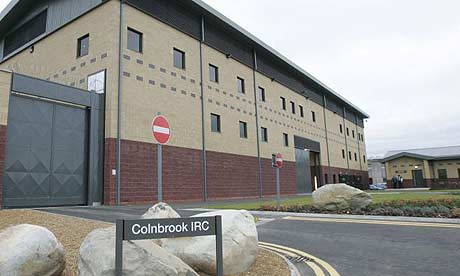
Kawa Ali Azad, 33, is back in Colnbrook immigration detention centre near Heathrow after an enforced 6,000-mile round flight and a detour to Italy. Speaking by telephone to the Guardian, he said he had been put on a bus and driven to Stansted airport. "It was like a kidnapping. We had no food for 12 hours. We were kept out of sight at the airport then put on an Italian charter flight. When we arrived in Baghdad, there was an Iraqi officer with sunglasses and eagle decorations on his shoulders. [The British immigration official] started to talk to him but his English was not good so I went to help translate. The British officials didn't have an Arabic translator.

"[The airport commander] said he had received a message from his boss there was an Italian flight but was never told it was transporting deported Iraqis – otherwise he would not have let it land.

"He said to the immigration official he had two hours to refuel the plane and leave or he would take further action. He would not take responsibility for the Iraqis because of the danger of kidnapping and bombs. The immigration officer asked what 'further action' meant and he said would burn the plane with all the people on board if it didn't leave. "

When most of the Iraqis were put back on the plane – only 10 were let into Baghdad – relations with the security guards, who had remained on the plane, deteriorated. "The security guards were white English. I was called all sorts of words … I started crying and said I hadn't done anything," said Azad, who arrived in the UK in 2002.

"They slapped me on the mouth and handcuffed me. I still have the bruise. I was also spat at. When the plane stopped in Italy, we had to swap aircraft. I heard them talking to Italian security and they said we were a group of terrorists being transported. They put a jacket over my head and I received kicks."

The second plane eventually carried them back to Stansted.

The security firm, G4S, said it had not received any complaints about the behaviour of its staff. "We take all allegations of this kind against staff most seriously," the firm said. "If we have any complaints coming through, we will look at them carefully and they will be investigated. There are procedures within the immigration detention centres for detainees to register complaints."

Lin Homer, chief executive of the Ukba, said: "Ukba ensures that every person that we have to deport is treated with dignity and respect. A Ukba official was on board the flight in order to monitor how the escorts treated the returnees and have established that they behaved in a professional manner."
Reblog this post [with Zemanta]

Iranian transgenders are not secure in Iran


Source: Iranian Railroad for Queer Refugees  - IRQR


Iranian transsexuals in fact experience humiliation, assault and abuse, if not outright death - and not just by government agents, but also by neighbours, family members, and those considered friends.

We have received reports very recently from our contacts in Iran exemplifying the torment endured by transgendered persons. On Saturday October 10, members of Basiji forces fired a gun at Sahar, an Iranian transgender, in the Abbasabad Street of Tehran. Sahar was hit in the shoulder and was taken to hospital by her friends. Once she is out of hospital, however, her safety is not assured.

According to another report, on Wednesday October 14, Iranian transgender Mahsa was knifed by two motorcyclists at an intersection in Tehran. Her lung injured, Mahsa was taken to hospital by a friend. So far no one knows who attacked her. We asked one of our representatives in Tehran to see Mahsa at hospital, but she is not allowed to accept visitors now. Our representative did talk to her by phone and reported that she may be well enough for release from hospital in the near term.

Like their gay and lesbian friends, transgenders are always in danger of being beaten and arrested by Basiji forces, which are loosely organized volunteer militias supported by local clerics. Basiji forces are not required to show their identification, and cannot be held accountable for their actions. Transgendered people are also the targets of special government police forces. Even when these police forces do not have specific orders to arrest transgendered people, they can easily fake a reason for arrest, take them into custody, and form a criminal file on them.

Once this criminal file is created, the accused can be taken to Mafased (a government organization responsible for dealing with moral "corruption"), imprisoning him/her for days and subjecting him/her to physical and psychological torture. The incarceration and abuse can be extended simply by having him/her sent to the judicial system for trial. At that point, the judge arbitrarily decides whether to set the person free or not. This court process is by itself a horrifying and tormenting process, with the accused transgendered persons forced to endure the judges' and officers' often sexist, brutal and demoralizing words and deeds.

Sunday, 25 October 2009

German-Turkish Author Seyran Ates: 'Islam Needs a Sexual Revolution'


Source: Der Spiegel

Interview conducted by Susanne Beyer and Henryk M. Broder
 
In the run-up to the Frankfurt Book Fair, German-Turkish writer Seyran Ates discusses her new book, which describes the necessity of a sexual revolution in the Islamic world, the recent integration debate in Germany and the arrogance of German women's rights activists.

SPIEGEL: Ms. Ates, in your controversial new book, you call for a sexual revolution in the Islamic world.
Ates: You don't know how necessary that is.
SPIEGEL: But what exactly do you mean by a sexual revolution?
Ates: My use of the term is based on Wilhelm Reich and his book about the sexual revolution. I believe that the Islamic world must grapple with the consequences of rigid sexual morals, not unlike the way, as he describes, the Soviet Union dealt with its own circumstances. It must pursue the path of change, just as any totalitarian system must do when it wants to become a democratic society. Part of the process is that sexuality has to be recognized as something that every individual determines for himself or herself. Institutions like moral and religious police must be abolished. People who have sex before marriage cannot be punished or ostracized by society. Parents must be confronted with the question of why they do not allow their 16-year-old daughter to have a boyfriend, while their sons can brag about how many girlfriends they have. Sex education must be taught in the classroom. Parents shouldn't have to do it, but they should accept it when the schools do it. Young and old people who are already living a self-determined sexuality in the Islamic world have to be more confident and make their voices heard.

SPIEGEL: Where do you see signs that the time has come for such a development?
Ates: Many young people have sex before marriage, and many aren't even great believers in the institution of marriage. Just look at these young people. They are burning up with passion. They have such a lust for life, and yet they are so inhibited. People in the Middle East are poets, writing poetry from morning to night, and what do they write poetry about? About desire. The little boy in the street does it, and so do the construction worker and the academic. They are all writing poetry about the same subject, the subject that is suppressed more than anything else.
SPIEGEL: You mention people in the Middle East, but there are Muslims all over the world. The world's largest Islamic country is Indonesia, an Asian country. In fact, it's impossible to refer to Muslims as a uniform group.
Ates: I think it is possible. There is a strong cultural connection among the world's Muslims: religion. I find that it's a wonderful religion, but the cultural interpretation of this religion has led to sexual repression. It wasn't terribly different in the West not very long ago. But I don't want to make a blanket judgment and treat all Germans and Muslims the same.
SPIEGEL: It's also difficult to pass judgment about a community that may not be all that homogeneous. Thilo Sarrazin, a board member at the Bundesbank (Germany's central bank), came under fire recently when he complained about German Muslims, particularly in Berlin. Was he right?
Ates: I believe that Mr. Sarrazin's remarks were to the point and correct. We have serious problems in our multicultural society. Mr. Sarrazin isn't the first to have brought them up.
SPIEGEL: In other words, he was completely in the right?
Ates: No, it's more complicated than that. Mr. Sarrazin is a German, and when a high-profile German publicly refers to Turks having no "productive function," there is great potential for misinterpretation. I know Turks on the street who say things like that, but they're allowed to. Mr. Sarrazin isn't -- no matter how good the rest of his article was, and regardless of whether everyone who is so upset about it now actually read it. But we Muslims have to lead these discussions, because they are about us.
SPIEGEL: Okay, then tell us what you've experienced. You were one of those supposedly typical girls, living with your parents in Berlin and being kept away from love.
Ates: Sex was not discussed in my family. And steps were taken to ensure that I had as little contact with boys as possible. Naturally, I wasn't allowed to have a boyfriend. None of it was actually said. They didn't sit down and say: Dear daughter, you are a girl, and that's why you can't have a boyfriend, because we don't want you to sleep with a man before marriage. Or: Dear daughter, you have a hymen, and we have to make sure that that hymen remains intact until your wedding. The entire system is designed so that everyone is given unspoken instructions on what to do -- or rather, what not to do.
SPIEGEL: Why is the hymen so important?
Ates: Because it was capital, capital between my legs.
SPIEGEL: How do Muslim parents manage to enforce this obedience you describe? Many German parents can't even get their children to carry their plates from the table to the dishwasher.
Ates: German parents have forgotten how much they can rely on their children's affection. Children are loyal. From the moment they are born, they grow into a system from which they want acceptance, love and acknowledgment. Many German Turks severely isolate themselves from the world around them. That too creates a sense of community.
SPIEGEL: Nevertheless, in your book you describe a world that is internally divided in several ways. You argue that there is a double standard, a discrepancy between the façade and the inner life.
Ates: Yes, that's the way I see it. I conducted interviews for my book. Many young people I interviewed complained that they could only have anal sex, because of the hymen. The parents suspect and know about it, and yet they do not release their children from their absurd demands. If that isn't a double standard, what is?

'I'm Not Saying Everything Works Perfectly in the West'
SPIEGEL: In German-Turkish director Fatih Akin's film "Against the Wall," there is a scene in which two Turkish men are sitting there, playing a board game. One of them says: Should we go to the whorehouse? The other one says: Don't you have any of your own women to fuck? Then the first man smashes a bottle, holds it up to the second man's throat and says: Never mention the word fucking again when you talk about our women. Do you think that's a realistic scene?
Ates: Yes. The men in the cafés talk about their sexual escapades, but never about those with their own wives. The wife is sacrosanct. Married couples told me that sexuality in marriage has been more or less reduced to a perfunctory act.
SPIEGEL: Why do you believe that this differs from many marriages in other cultures?
Ates: It doesn't necessarily have to be different, but the point is a completely different one. Many Muslims don't even allow themselves to think about what exactly sexuality means in their marriages. It's simply accepted that the men have their fun in brothels.
SPIEGEL: German husbands also frequent brothels.
Ates: But they certainly don't make such a point of letting their wives know about it. Turkish men who frequent brothels don't necessarily discuss it directly with their wives, but it's often very clear that that is the case, and that the women are expected to accept it.
SPIEGEL: This hidden passion you describe -- if you think it's so powerful, why doesn't it prevail over religion?
Ates: Conservative forces have a lot of political power in the Islamic world. They have power and control over half the population, namely the women. They spread fear and they use violence. Making sexuality taboo enables them to isolate themselves from the West, which, of course, is a monster and is to blame for all the bad things in this world. Our religion, they say, helps to keep us from being taken over by the West. We are the better ones, the authentic ones. This mentality makes it possible to avoid even mentioning one's own failure.
SPIEGEL: Is the West a valid role model for sexual revolution?
Ates: I just want to point out a natural path to freedom. All people want to be free. That isn't something the West invented.
SPIEGEL: How do you feel about the treatment of pornography and violence in the West?
Ates: We have attained a self-determined sexuality in the West that I would like to see in the rest of the world. Of course, there are always excesses: child pornography, prostitution as a flat-rate service, sexuality that happens too early and is devoid of emotion. I'm not saying that everything works perfectly in the West. I believe that we Muslims can also mirror the West, and that we can all ask ourselves what went well, what went wrong, and why.
SPIEGEL: You claim that because many Muslim children are supposedly afraid to challenge authority at home, they are more likely to characterize female German teachers as sluts.
Ates: There is so much condescension and so little recognition, love, affection and encouragement of children. They have to vent their anger at some point.
SPIEGEL: Muhammad had a dozen wives. Is he a role model?
Ates: When an Arab man needs a justification for having several wives, he says: It was the same with Muhammad.
SPIEGEL: Christian men don't have that excuse.
Ates: No, but it's a shame that Christians worship such an asexual man. Muslims are in a better position, in that respect, but this need of the man to have several women, legitimized by Muhammad, has led to a hidden and extreme sexualizing of Islam.
SPIEGEL: You call for a revolution, but doesn't that take a lot of time?
Ates: Look at the student uprisings here in Germany. Something happened, and suddenly young people took to the streets. We saw the same thing in Iran after the election: The young people were prepared to protest. We now have this one opportunity to drive up the boiling point, using all the democratic and political means at our disposal.
SPIEGEL: But there is one thing you can't change: The lack of simultaneity between the West and parts of Islamic societies in terms of cultural development.
Ates: That's the big problem we have: the acceptance of this lack of simultaneity in religion and culture. If we could at least acknowledge its existence. They've come a lot further at universities in Turkey than the protagonists in the integration debate here in Germany have.
SPIEGEL: What troubles you about that?
Ates: Particularly here in Germany, there are some very deep archaic self-images -- including those among leftist German feminist women -- of the whites who behave like big sisters. It's very arrogant. These women rail against the Catholic Church and its rigid sexual morals, but they insist that we tolerate Turkish women wearing the headscarf, because they believe that this enables the women to preserve their culture. But as far as I'm concerned, this headscarf is nothing but an expression of oppression and inhibition, and of the fact that the men would prefer to hide the women.
SPIEGEL: Do you believe in God?
Ates: I believe in God.
SPIEGEL: Did you fast during Ramadan?
Ates: I do not fast during Ramadan.
SPIEGEL: Do you pray five times a day?
Ates: I pray, but not five times a day.
SPIEGEL: Do you go to the mosque?
Ates: I don't go to a mosque, because there are no mosques that appeal to me. One of my latest ideas is to establish a free, progressive mosque.
SPIEGEL: With a female imam?
Ates: Exactly, with a female imam and with equal access to all parts of the mosque for men and women. There must be an end to the presence of conservative Muslims, who want to reserve Islam for a specific group. We liberal Muslims don't want the separations among Shiites, Sunnis and Alawites. We want to participate jointly in a contemporary interpretation of Islam.
SPIEGEL: How does your God feel about sex?
Ates: My God is very open about sex, having created me as a person for whom it's important. Of course, my conviction that God exists is also based on personal experiences. When I was 21, in my third semester of studying law, I was shot in a counseling center for women from Turkey. I lost a lot of blood and had a near-death experience. It was as if I was having a dialogue with a higher power and was given the chance to decide whether I wanted to leave this world or return to it. I never saw religion exclusively as something negative.
SPIEGEL: Nevertheless, you have come a long way from the things that once influenced you. Your new book was almost titled: "I'll Fuck Whoever I Want." Were your parents aware of this?
Ates: No, and I'm very happy now that the publishing house stepped in, because my book is completely serious. "I'll fuck whoever I want" was the sentence Hatun Sürücü, a Turkish girl from Berlin, said to her brother before he murdered her, and that's how I came up with the idea to use it as my title. My parents, by the way, have come a long way. They respect my life today, even the fact that I'm a single mother. They love their grandchild. My father now says that he can't imagine a Turkish man who could put up with me. He understands what I've accomplished. I once said to my father: You know, having a child and wanting a man doesn't seem to work, so maybe I'll end up with a woman, after all. He said: You know, I was thinking the same thing myself.
SPIEGEL: How were your parents able to get that far?
Ates: Out of love for me. And because they did not refuse to accept the influences of the West and the modern world. My parents were farmers, with almost no education at all. They came to Germany to offer their children a future and to improve their own economic situation. At first, the needs of their children played no role in the way we were raised. But my mother learned how to read and write at 50. They have since returned to Turkey, where they now live in a house with a garden and view of the sea. They have 13 grandchildren. And they allow us, their five children, to live the way we please. They are proud that we all have a profession. My parents' dreams came true because they were willing to grow.
SPIEGEL: Ms. Ates, we thank you for this interview.

Air Italy will fly no more charter flights for UKBA

Air Italy Boeing 757.

Image via Wikipedia


From: "Cesari Francesco"
To: "'ncadc@ncadc.org.uk'"
Date: Thu, 22 Oct 2009 15:53:48 +0200
Subject: R: Charter flights leased by UK Border Agency

Dear Mr O

We paid a lot of attention at your e-mail and I inform you that in future we will refuse to operate air transport with asylum seekers or refugees.

We are an Airline operating regular and charter flights and sometime "flights on demand", usually rescue flights for other airlines and humanitarian flights.

The flight reported was our first and last experience.

I take this opportunity to give you greetings and best wishes for your noble cause.

Rgrds

Francesco Cesari

Francesco Cesari
Resp Operazioni Terra
Ground Operation Post Holder
Corso Sempione, 111 - 21013 Gallarate (VA) ITALY
e-mail: Francesco.Cesari@airitaly.it
web-site: www.airitaly.it

~~~~~~~~~~~~~~~~~~

Da: John O [mailto:ncadc@ncadc.org.uk]
Inviato: giovedì 15 ottobre 2009 9.56
A: Press
Cc: JohnO@ncadc.org.uk
Oggetto: Charter flights leased by UK Border Agency
Charter flights leased by UK Border Agency

Hi Air Italy,


a number of refused asylum seekers in the UK were removed yesterday evening from Stansted Airport on a Air Italy charter leased to UK Border Agency to Iraq.

Do you have a press release or comment, is this the first charter flight that Air Italy have provided for UK Border Agency, will Air Italy be providing future charters?


With thanks,

John O


Reblog this post [with Zemanta]

Saturday, 24 October 2009

Video: Being Gay in Kenya

Report from Kenyan TV channel KTN.

Australia tells Bangladeshi asylum seekers ‘Prove you’re gay’

The Central Business District of Sydney, Austr...
Source: Sydney Star Observer

By Ani Lamont

A Bangladeshi couple may have to have sex in front of witnesses to prove they are gay in order to secure asylum in Australia.

The couple, who cannot be named, have been told to prove they are gay when they appear before the Refugee Tribunal for the fourth time in more than 10 years.

Their barrister, Bruce Levet, said short of forcing the couple to have sex in front of witnesses, physically proving their sexuality was difficult.

“I’ve been bending over backwards to try and think of some way to prove these guys are gay,” Levet told Sydney Star Observer. “They don’t frequent gay bars, they are in a monogamous relationship — so it’s not like we can do what would be easiest to do, to get stat decs from different blokes they’ve slept with. One of them is a particularly private person, and they don’t live in mainstream gay society — so it’s incredibly difficult trying to prove this.

“They don’t really know anyone in gay society. They’re not frequenters of gay establishments, they came here together, they’ve lived together exclusively for 20 years.”

The couple came to Australia in 1998 and have been fighting for asylum since then on the grounds that, as gay men, their lives would be at risk if they returned home.
Originally, the Refugee Tribunal ruled the pair would be safe to return to Bangladesh if they lived discreetly.

That decision was overturned by the High Court. However, afraid of a pink tide of refugees, the Commonwealth tried to prove the couple were not gay.

At their second tribunal appearance the men were forced to undergo DNA testing to prove they were not related after it was suggested they were brothers. The tests proved they were not related on the maternal side, but paternal tests were inconclusive and the tribunal ruled the pair were not gay.

At the third tribunal appearance one of the men was asked if he had sex that day and, when he answered yes, if he had used lubricant. When he refused to answer, he was ruled a dishonest witness and the application was again denied.

Levet said he may attempt to get a gay or lesbian psychiatrist to provide evidence or, as a last resort, ask the couple to have sex in front of a witness.
“They’ve said, if worst comes to worst, they’ll do it but they’d regard it as horribly embarrassing and terribly intrusive,” he said.

“I think the assumption is, because these guys are gay, they must live in some sort of bathhouse environment. I want to find a way to disprove this without subjecting them to that.”

~~~~~~


Judge blasts 'biased' refugee tribunal

Source: The Australian

By Michael Pelly

A FEDERAL Court judge has denounced the Refugee Review Tribunal for its treatment of a gay Bangladeshi couple, finding it twisted facts and ignored evidence as it heard their claim for asylum.

Justice Jeffrey Spender said the tribunal's ruling that the men were not homosexual and would therefore not face persecution in their homeland was "not an exercise in honest fact finding".

The men even took DNA tests to disprove claims they were related, but the judge said the tribunal had "irrationally and indefensibly" found the results indicated they might be cousins.

The tribunal also found that one man was not a credible witness because he refused to answer questions about whether they used lubricants during sex on the grounds such matters were personal. Justice Spender said the tribunal decision was "deliberately calculated" to get round problems caused by a High Court ruling and "not made in good faith".

"Such a finding is one that is not reached lightly, and unsurprisingly is one that is very rare," he added.

The case will now return to the tribunal for a fourth time, but barrister Bruce Levet doubts his clients will ever get a fair hearing. "On the last occasion, I was ashamed to be a lawyer and an officer of the court," he said.

The men arrived in Australia in 1999 and applied for protection visas. The first tribunal accepted they were homosexual but ruled they would not face persecution if they were "discreet about such matters".

The High Court said the tribunal did not seriously consider the threat of physical harm, including bashings by police, and ordered a review of the decision. This time the tribunal found the men were not homosexual but close relatives who had been married to women. At one point the men became so desperate to prove their credibility, they offered to have sex in front of a witness nominated by the tribunal.

Mr Levet said his clients were "terrified at the thought of having to return to Bangladesh". They have bridging visas and are living in southwest Sydney.

"The only way the tribunal could find against them was if they stuck to the (second) finding that they were not gay, even though the first tribunal made an actual finding they were gays in a gay relationship." Justice Spender noted the "improbable" decision of the third tribunal was based on its opinion of the witnesses, which would normally make it immune from review.

But he said it was unfair to declare "J" not credible, simply because he failed to answer a question about lubricants which had been prefaced with "Now you may not want to answer this question".

He said that the material sought by the tribunal had "the flavour of interrogation" and that the treatment of the DNA tests had been "contrived to support a predetermined result".

"The tribunal was guilty of bias, in the sense that it was predisposed to making its ultimate finding that the appellants were not in a homosexual relationship," Justice Spender said.

Reblog this post [with Zemanta]

Related Posts with Thumbnails